


What is a Trading Journal for Beginners
Table of Contents
Understanding the Core Role of a Trading Journal
You’ve been trading for weeks but haven’t seen consistent profits despite studying technical analysis and keeping up with market news. You might be wondering why your strategy isn’t working as well as hoped. One important tool many traders overlook is a trading journal.
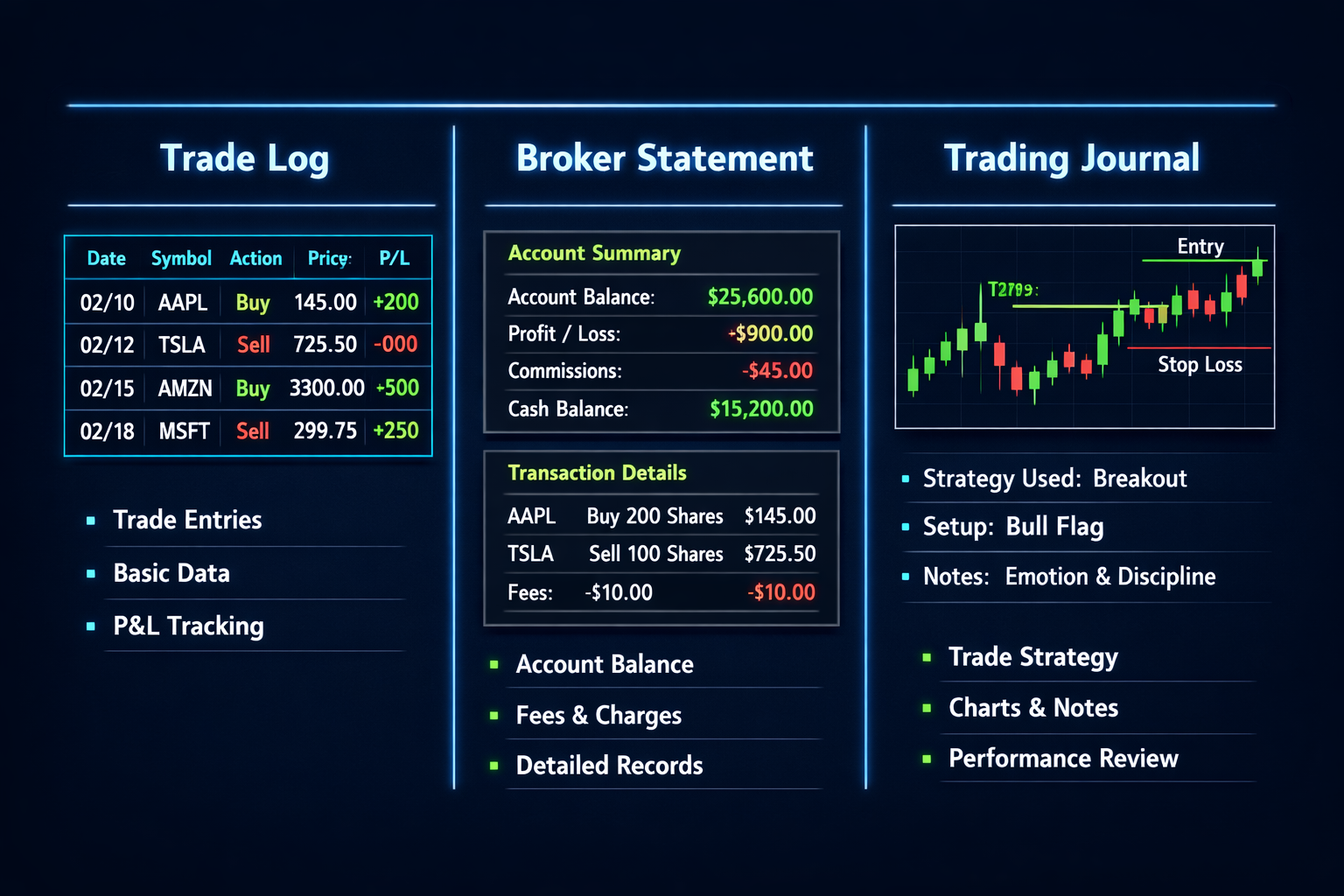
A trading journal goes beyond simple trade logs or broker statements by providing in-depth insights into your trades. Trade logs just record transactions, while broker statements give you financial summaries but don’t offer personal analysis. A trading journal fills this gap by helping you track performance and reflect on your mistakes over time.
By keeping a trading journal, you can focus more on continuous improvement rather than just relying on past performance data. It helps you understand your trading behaviors better and refine your approach based on real-world experience.
Distinguishing Between Trade Logs, Broker Statements, and Journals
Imagine you’re tracking your trades but aren’t sure whether to document every detail or focus more on qualitative insights. This confusion often arises when beginners mix up trade logs with trading journals.
A trade log records each transaction’s details, like buy and sell orders, prices, and times. A broker statement, meanwhile, gives you an overview of your account activities from your broker, including deposits, withdrawals, interest payments, and fees. In contrast, a trading journal goes beyond these basic records by incorporating qualitative analysis, reflections on trades, and emotional states that influence decisions.
Here’s how they compare:
| Feature | Trade Logs | Broker Statements | Trading Journals |
|---|---|---|---|
| Purpose | Track transaction details | Provide account summary | Analyze trading performance |
| Content | Buy/sell orders, prices, times | Deposits, withdrawals, fees | Trade analysis, reflections, emotions |
| Focus | Quantitative data | Financial and quantitative data | Qualitative insights |
| Value to trader | Keep a record of trades | Monitor account health | Improve trading strategy |
Trade logs differ from journals in that they focus on the numbers rather than qualitative analysis. Journals are key for improving your trading by reflecting on emotional factors, identifying patterns, and refining strategies.
Understanding these distinctions is crucial because beginners might think a trade log can replace the reflective nature of a journal. This mistake can hinder personal growth since journals offer insights that numbers alone can’t provide.
What specific aspects do you focus on when logging your trades?
The Importance of Decision Analysis in Trading Journals
Why is decision analysis important in trading journals? It helps you understand the emotional and psychological factors behind your trades, which leads to better risk management. Beginners often focus too much on numbers alone but can miss out on key insights that would improve their performance.
Think about a trade where fear of missing out (FOMO) made you jump into a position late or panic over small price drops forced you to exit early. A trading journal lets you reflect on these emotions and spot patterns in your behavior.
By analyzing things like FOMO and panic, you get deeper insights into how you make decisions. This introspection is crucial for personal growth and autonomy, helping you recognize emotional biases that can cloud your judgment. For example, catching those early signs of FOMO could help you enter trades more calmly.
Next step: Start logging your emotions and thoughts during each trade entry and exit to enhance risk management and improve future decision-making.
Learn more about how a trading journal can boost your professional process
Effective Use of a Trading Journal: Key Practices for Beginners
- Record your trades right away: After each trade, write down the entry and exit points along with any emotions or thoughts you had during the transaction to keep details accurate and fresh in your memory.
- Combine hard numbers with personal insights: Include stop-loss levels, take-profit targets, and reasons for entering and exiting trades. This mix helps you see both technical factors and psychological influences on your decisions.
- Set clear goals: Define specific performance metrics like profit targets, maximum drawdowns, or the number of losses before reviewing your strategy. These goals help track progress over time.
- Review weekly: Look back at your journal every week to spot patterns in trading behavior, common errors, successful strategies, and emotional triggers that impact decisions. Regular reviews are key for improvement.
- Discuss with others: Share insights with a mentor or fellow trader for feedback on your entries and analysis. Getting different perspectives can help refine your approach.
- Note market conditions: Track factors like economic news, technical indicators, and sentiment affecting your trades. This context is crucial for future reference and learning.
- Balance detail and brevity: Make sure each entry includes the necessary information without becoming too lengthy or overwhelming.
- Refine your strategy: Use insights from your journal to improve your trading approach by addressing weaknesses and building on strengths. This ongoing process helps enhance performance over time.
By following these practices, you’ll develop a solid habit of keeping an effective trading journal that serves as both a learning tool and a reference for future trades.
If beginners don’t follow specific steps like these, they might struggle with consistency in their journals and miss out on valuable insights. Integrating qualitative data changes market analysis by highlighting psychological factors alongside technical indicators.
How might integrating qualitative data change how you approach market analysis?
Recording vs Analyzing Decisions
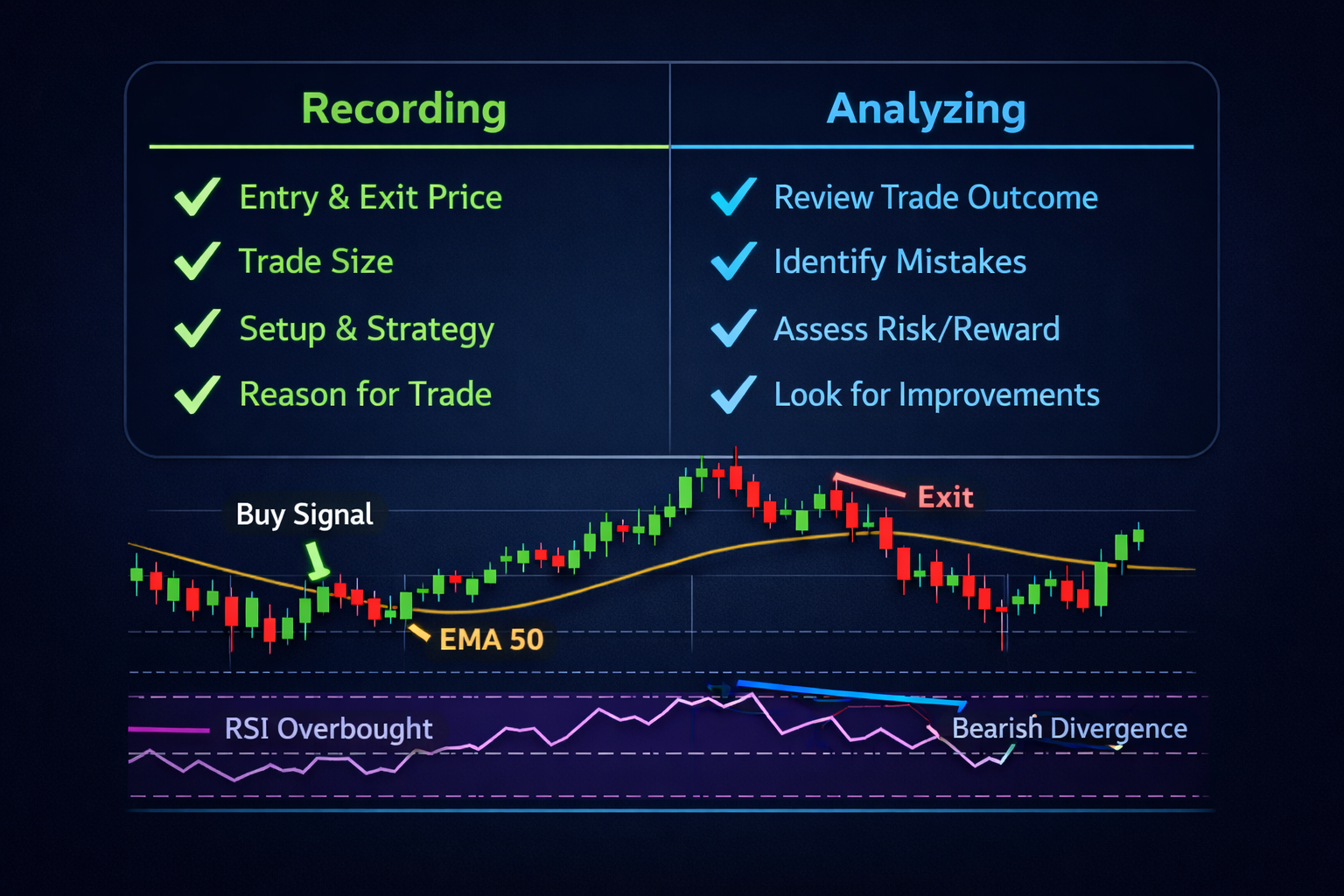
When starting a trading journal, don’t just focus on recording trade outcomes. Here’s how to make sure you’re analyzing your decisions properly:
- Write down entry and exit points.
- Include the reasons behind each decision, like setup criteria and market conditions.
- Review what worked and what didn’t after each trade.
- Track your emotions during trading sessions to see their impact.
- Summarize key learnings weekly.
A common mistake is focusing only on outcomes without digging into why things happened. By separating basic logging from deep analysis, you’ll better understand how markets work and improve your future performance.
For more on qualitative analysis, check out this guide.
Common Pitfalls in Maintaining Trading Journals
When starting a trading journal, watch out for these common mistakes:
- Relying too much on numbers: Beginners often focus only on quantitative data and technical analysis metrics while ignoring qualitative factors like market sentiment. This can give you an incomplete picture.
- Skipping self-reflection: Just recording your trades isn’t enough; analyze why you made certain decisions and what you could do differently next time.
- Irregular entries: Keeping a journal is about building a habit. Inconsistent updates make it hard to track progress and spot patterns over time.
Solutions:
- Balance quantitative data with qualitative analysis for better insights.
- Set aside regular times, like weekends or evenings, to reflect on your trades.
- Use templates to ensure consistent entries and thorough documentation
If you don’t address these issues, you might get frustrated and give up on journaling due to ineffective practices. Remember, the goal is to learn from past mistakes. Learn more about maintaining consistency to stay on track.
The Unique Value of Qualitative Analysis in Trading Journals
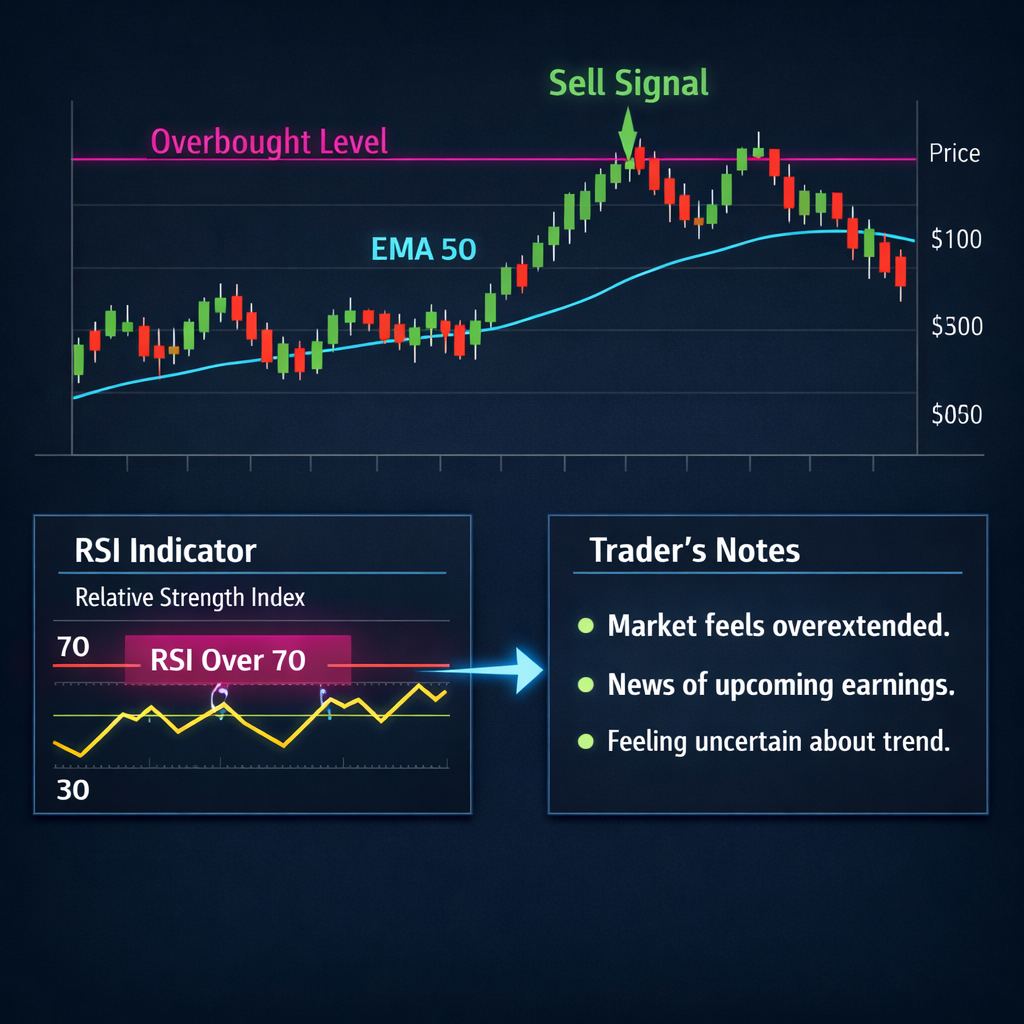
Why is qualitative analysis unique in improving trading skills? It captures your emotions and thought processes during trades, giving you insights that numbers alone can’t provide. For example, noticing that you tend to make quick decisions when anxious or excited can really help you improve.
If you skip the subjective stuff, you miss out on key self-awareness. Without qualitative analysis, traders might not see patterns like entering trades too late because of fear or exiting early due to greed. By writing down your feelings alongside technical data, you get a fuller picture of what influences your decisions and can work on fixing those issues.
To start integrating these insights into your trading journal, ask yourself: What was my mindset before and after each trade? How did I feel about the market at that moment? These reflections will help you refine your strategy by addressing emotional biases.
Empowering Autonomy Through Risk Management
Imagine you’re about to enter a trade but feel uncertain. A trading journal can help identify patterns from past trades that might indicate high risk, letting you decide whether to proceed or pause.
- Note how you feel before entering a trade: Understanding your emotions helps prevent impulsive decisions.
- Write down why you made each trade: Include your reasons for choosing specific entry and exit points. This reflection can help you spot any biases in decision-making.
- List potential risks for every trade idea: Think about market scenarios that could negatively impact your position.
- Look for risk patterns in past trades: Review entries to spot recurring high-risk behaviors or conditions.
Keeping the journal updated regularly is key, so you can track progress over time and avoid common pitfalls.
Using a trading journal to analyze risks helps you make informed decisions and enhances your trading autonomy.
How do you keep your trading journal up-to-date with meaningful insights?
Strategies for Enhancing Decision-Making Skills
Alice has been trading forex for three months but hasn’t seen consistent profits despite keeping detailed records of her trades with technical analysis tools. She decides to start a trading journal to analyze her decision-making process more closely.
On Monday, Alice opens a long position on EUR/USD at 1.2045 after spotting what she thinks is a bullish pattern. The market moves in her favor initially but then retraces sharply overnight, causing her stress. In her journal, she logs not just the trade details and technical indicators but also her emotional state and reasons for entering or exiting trades.
When Alice reviews her entries, she notices that anxiety during these retracement periods affects her judgment. She realizes she often holds onto losing positions too long because she’s afraid of missing out on potential gains.
If Alice only focused on numerical outcomes, she might miss the signs of overconfidence or stress impacting her decisions, leading to more mistakes and inconsistent results.
By integrating qualitative analysis into her trading journal, Alice can better understand her emotional triggers. This holistic approach helps refine her strategies based on both data and personal insights, ultimately improving her performance.
How are you using your trading journal? Are you tracking just numbers or digging deeper into the reasons behind each trade?
Avoiding Overreliance on Quantitative Data
When you’re balancing quantitative and qualitative data in your trading journal, don’t rely solely on numbers like win rates or drawdowns. Include emotional states, situational context, and market conditions to get a more complete picture.
For quantitative data:
- Track metrics such as profit/loss ratios and trade durations.
For qualitative insights:
- Write down how you felt before and after trades to understand their psychological impact.
- Note any economic news or technical analysis that influenced your decisions.
- Reflect on unique circumstances that affected your trading mindset.
Ignoring emotional context can lead to flawed performance evaluation. For instance, if consistent losses are due to a fear of taking risks, this won’t show up in just numerical data.
To improve decision-making, add a section for personal reflections after each trade. This helps you identify behavioral patterns and refine future strategies.
For more on balancing quantitative vs. qualitative data in trading journals: Quantitative vs. Qualitative Data
Practical Next Steps for Implementing Trading Journals
If you’ve just started your trading journal but aren’t sure how to make it work, here’s a practical checklist:
- Choose a platform: Use an app or spreadsheet to log trades.
- Set up templates: Create templates for pre-trade and post-trade entries.
- Log all trades: Document every trade, no matter the outcome.
- Include qualitative insights: Write down your thought process before each trade.
- Review weekly: Spend at least 30 minutes reviewing your journal each week.
- Identify patterns: Look for trends in your trading behavior that affect profitability.
- Adjust strategies: Use what you learn to refine your approach.
Don’t just treat the journal as a log. Regularly review it to improve your decision-making over time. Start using these steps today to boost your trading performance.
Introduction to Trading Journals
A trading journal is an essential tool for any trader, from beginners to professionals. It serves as a record of your trades, helping you track performance and identify patterns in market behavior [1]. By maintaining a detailed account of each trade, including entry and exit points, profit or loss, and the rationale behind decisions, traders can gain valuable insights into their trading strategies and improve over time.
- * Helps beginners understand best practices
- * Aids professionals in process improvement
Related Articles on Trading Journals
To further enhance your understanding of trading journals, consider exploring these related articles from Flows Trading Academy and beyond. These resources provide comprehensive guides and tips for both beginners and experienced traders.
- * How to Start a Trading Journal
- * Improving Your Professional Process with a Trading Journal
Applying Trading Journals with Flows
Flows Trading offers a robust platform for tracking and analyzing trades. By integrating your trading journal with Flows, you can leverage advanced tools to monitor performance metrics, receive trading signals, and conduct in-depth trade analysis. This integration not only simplifies the process but also enhances accuracy and efficiency.
- * Streamlined tracking of trades
- * Enhanced performance monitoring
Further Reading on Trading Journals
For a deeper dive into the benefits and best practices of trading journals, check out these additional resources. These articles cover various aspects such as technical analysis [2], forex trade tracking [5], and detailed trade analysis [7]. Each provides unique insights that can help you refine your approach to market behavior.
- * Technical Analysis Insights
- * Forex Trade Tracking Tips