


What Every Beginner Should Know About Trading Journals
Table of Contents
Why Beginners Overlook the Importance of Trading Journals
You’ve been trading for a few months now, and your profits are all over the place. You want to get better but feel overwhelmed by all the advice out there – technical analysis, risk management strategies, and more. One key thing you might be missing is keeping a trading journal.
Beginners often skip this because they think experience alone will make them better traders. For instance, if you lose on a trade and don’t write it down, you miss the chance to figure out what went wrong. Without documenting your trades, you rely solely on your memory, which can be faulty and incomplete.
By not keeping a journal, beginners end up repeating avoidable mistakes because they have no clear record of their performance or lessons from past trades. They might think that just gaining more experience will fix everything, but this can lead to stagnation and missed opportunities for improvement. Start documenting your trades now so you’re actually learning from each trade instead of guessing what went wrong.
Common Misconceptions About Trading Journals
Beginners often undervalue the importance of trading journals, thinking they’re unnecessary or too time-consuming. Here are some common misconceptions and why they’re incorrect:
- Misconception: A trading journal isn’t worth the effort.
Why it’s wrong: Keeping a detailed record helps you spot patterns and refine your strategy.
- Misconception: You only need a trading journal when losing money.
Why it’s wrong: Consistent documentation lets you analyze both winning and losing trades to see what works and what doesn’t.
- Misconception: Trading journals are just for professionals or experienced traders.
Why it’s wrong: Beginners benefit more from journals because they help establish good trading habits early on, setting a solid foundation for future success.
- Misconception: You can remember everything about your trades without writing them down.
Why it’s wrong: Human memory isn’t perfect. Writing things down ensures accuracy and helps you stay objective when reviewing past trades.
- Misconception: A trading journal will take too much time away from actual trading.
Why it’s wrong: Spending a few minutes after each trade to document your results actually saves you time in the long run by improving decision-making skills.
By understanding these misconceptions, beginners can start building better trading habits today. Consider starting your journal now with this beginner’s guide to see immediate benefits in your trading performance.
Integrating a Trading Journal into Your Workflow
How do I incorporate a trading journal into my daily routine?
Starting a trading journal without a set schedule can lead to inconsistent entries and ineffective tracking. Here’s how to integrate it seamlessly:
- Choose an app or notebook: Pick something easy to use, like one of the best trading apps, for quick trade entry and reflective notes.
- Set specific times: Dedicate 15 minutes each morning before market open and another 10 minutes at the end of your day to document key points from every trading session. This routine helps build good habits and keeps entries consistent.
- Use a standard format: Include columns for date, entry/exit prices, technical analysis notes, and emotional state during trades. Stick to this template to capture essential details without missing out on anything important.
- Review weekly: Spend 30 minutes each Sunday reviewing the week’s trading activities. This helps you spot patterns, mistakes, and areas of improvement before starting a new cycle.
- Ensure accessibility and privacy: Choose a secure platform that’s easily accessible from your devices for honest reflections without fear of judgment or leaks.
By following these steps, you’ll build a strong trading journal habit that enhances performance tracking and strategy refinement over time. How will you adapt this routine to fit your personal workflow?
Tracking Trades and Decisions
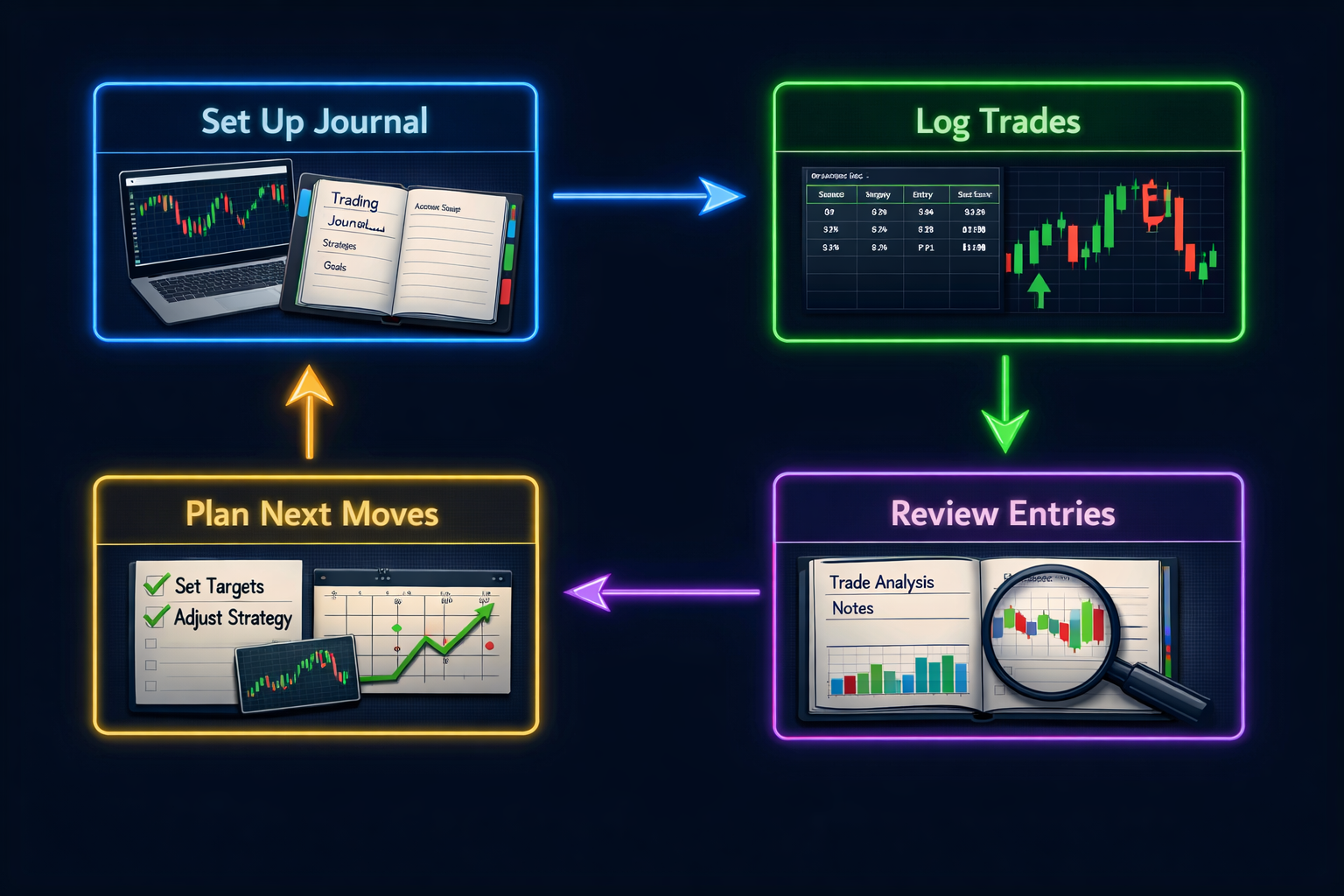
Recording trades accurately is crucial for beginner traders who want to improve their strategies. One common mistake is missing important details that can make it hard to analyze your trades later.
Here’s what you should track:
- Entry/Exit Prices: Write down the exact prices when you enter and exit a trade.
- Stop Loss Levels: Note where you set each stop loss.
- Trade Duration: Log how long each trade lasted.
| Trade Detail | Importance |
|---|---|
| Entry/Exit Prices | Essential for calculating profit or loss and testing strategies. |
| Stop Loss Levels | Key for evaluating risk management and potential losses. Helps in setting better stops. |
| Trade Duration | Important for analyzing timing issues and strategy alignment. |
If you don’t track these details, your journal entries will be incomplete and won’t provide much value.
Example Scenario: Let’s say you buy a stock at $100 with a stop loss at $95 but forget to note the exit price when selling it at $120. You can’t calculate your profit accurately or assess how well your risk management worked.
By including these details in your journal, you’ll have more actionable insights for improving your trading strategy. Next, focus on using this data to reflect on your decision outcomes.
Reflecting on Performance
Reflecting on Performance
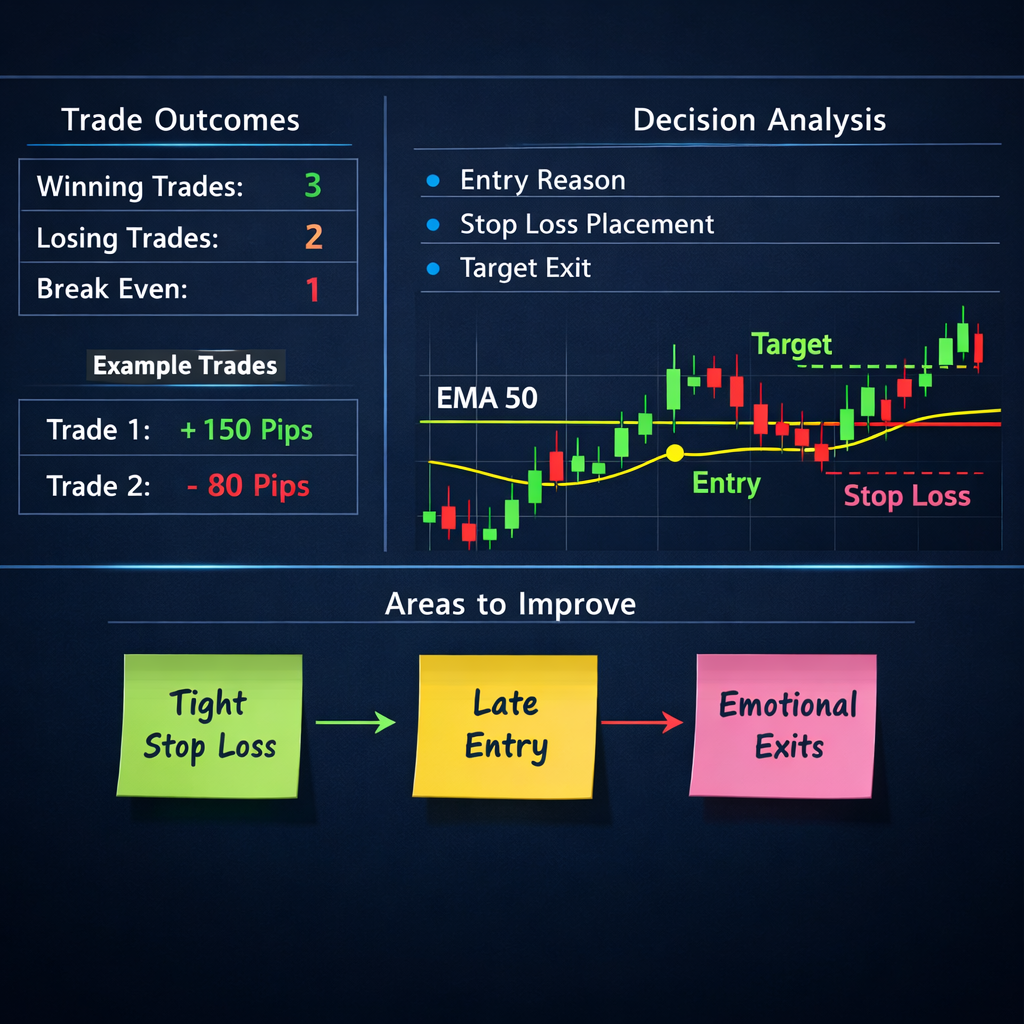
When looking back at your trades:
- Review your trading journal: Think about why you entered and exited each trade. Did your analysis match what actually happened? Were you sticking to your plan?
- Identify patterns of success and failure: Notice which strategies work well in different market conditions, and why some don’t.
- Use metrics to measure performance: Compare actual results with planned targets using charts from technical analysis for a clearer picture.
- Consider emotional influences: Reflect on how fear or greed might have affected your decisions. Look into techniques like those in our article on emotional control to improve your decision-making.
- Update your strategy based on what you learn: Incorporate new insights and refine your approach for future trades.
Don’t rely solely on instincts without reviewing the data. Take 15 minutes today to review your recent trades in your journal. What did you notice?
Enhancing Risk Management Through Journal Usage
How does a journal improve risk management? A trading journal helps you track and analyze past trades to spot risky patterns. For example, if you often hold losing positions too long or make quick decisions without thinking them through, your journal can highlight these issues.
Let’s say you tend to enter trades right after big market moves rather than following your strategy signals. By recording each trade’s context – like entry and exit points – in your journal, you can see this pattern clearly. Once you identify it, you can set rules for yourself to avoid trading impulsively and stick to your predefined criteria to prevent similar mistakes.
To stay vigilant, use triggers in your journal that alert you when you deviate from your risk management plan. For more detailed guidance on creating an effective trading journal, check out this professional guide.
Identifying Risk Patterns
Imagine you’ve been trading for a few months and notice that your losses tend to spike on days when you feel anxious or stressed. To understand these patterns better, start keeping a detailed journal of each trade.
For example, on March 10th, after an argument with a colleague, you short stock XYZ at $53 per share even though you’re feeling uneasy about it. You set your stop-loss at $48 but ignore it because you’re irritated. By the end of the day, XYZ rises to $56 before falling back down to $52.
When reviewing this entry later, you notice similar patterns on other stressful days: higher risk-taking and ignoring stop-losses. These emotional triggers can lead to significant financial losses if not addressed.
What happens if you ignore these emotional triggers? You might continue engaging in risky behaviors without realizing their impact, leading to consistent underperformance and increased stress.
By recognizing these patterns through your journal entries, you can take proactive steps to manage them. For instance, setting a rule that you won’t trade when feeling emotionally charged could significantly reduce unnecessary risks.
Your journals can reveal hidden risk behaviors. What adjustments would you make in your trading routine based on this insight?
Mitigating Future Risks
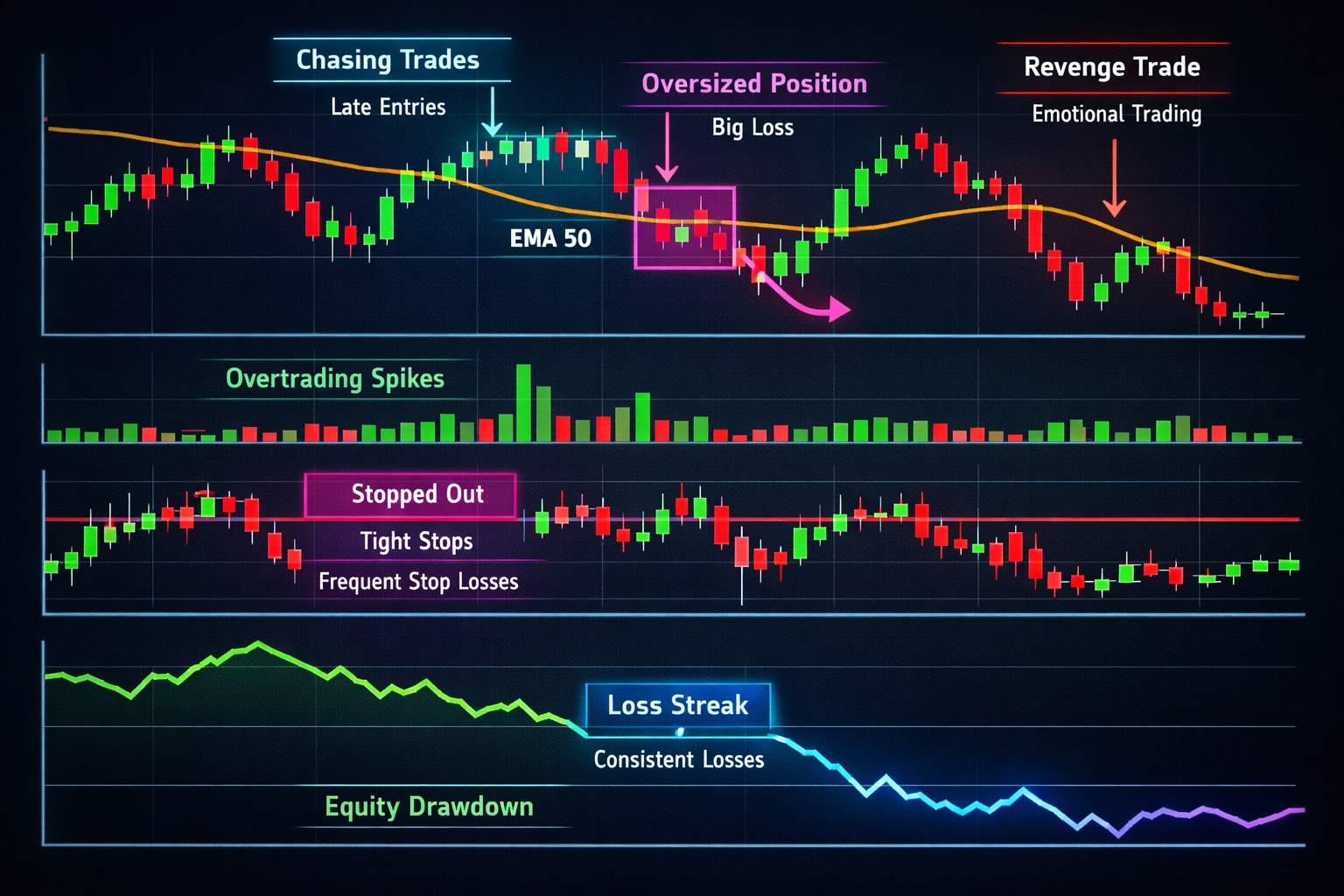
To lower your risk when trading, start by looking back at past trades and identifying common mistakes and risky behaviors:
- Review Mistakes: Pinpoint the errors you’ve made.
- Set Rules: Don’t trade if you’re not alert or feeling stressed out.
- Adjust Position Sizes: Reduce position sizes in high-risk situations.
- Use Stop-Losses: Tailor your stop-loss orders to match your risk tolerance.
- Update Journal Regularly: Add new strategies as you learn.
Don’t just note risks; take action. If you tend to trade impulsively, create a checklist to help you pause and think before placing an order.
Using your trading journal to implement these changes will help reduce future risks and improve performance. Reach out to more experienced traders for additional advice.
Continuous Improvement with Trading Journals
If you’ve been trading for a few months but aren’t seeing consistent profits, how do you improve? Here’s what you can do:
- Write down every trade immediately after each session. Include the entry and exit points, why you made those decisions, and any external factors that influenced your choices.
- Review your notes weekly to spot trends or repeated mistakes. Also, look for patterns in your winning strategies.
- Tweak your strategy based on what you’ve learned. For example, if you notice you’re entering trades late due to indecision, set clearer rules about when to enter.
- Spend some time each month reviewing your trading behavior more thoroughly. Look at trends over longer periods and see if there are bigger patterns emerging – like making irrational decisions during certain economic events – and adjust accordingly.
By regularly refining your strategies through journal analysis, you’ll adapt better to changing markets than by relying solely on gut feelings. Without this process, your performance might stall or even decline.
Setting Performance Goals
Setting performance goals using your trading journal can help transform frustration into steady progress. For example, after reviewing recent trades, you might decide to set a clear target for the next quarter.
Key Difference: Realistic vs Unrealistic Goals Incorrect approach: Setting vague or unrealistic targets without considering historical performance. Correct approach: Using your trading journal data to set specific goals based on past results and current market conditions.
| Goal Type | Example Target | Measurement Criteria | Journal Data Influence |
|---|---|---|---|
| Profit | $10,000 per month | Monthly profit | Previous monthly profits; recent trends |
| Win Rate | 65% daily win rate | Daily win rate | Historical win rates in similar conditions |
| Drawdown | -2% max drawdown | Maximum drawdown | Largest loss periods; risk management |
By looking at your trading journal, you can set realistic profit targets based on historical data rather than arbitrary numbers. This ensures that your goals are achievable and align with your current performance.
To measure progress effectively, review your trading journal weekly to update win rates and profits against these benchmarks. Adjust your goals as needed if market conditions change or new insights emerge from your analysis.
How do you ensure your goals remain challenging yet attainable?
Adjusting Strategies Based on Journal Insights
When you look at your trading journal, it’s a great chance to tweak your strategies:
- Spot Weaknesses: Find trades that aren’t working and figure out why.
Example: If you’re losing money in morning sessions, try changing when you enter trades.
- Tighten Risk Management: Use the insights from your journal to make stop-loss orders stricter or reduce position sizes for riskier setups.
Incorrect approach: Ignoring these patterns means sticking with ineffective risk management and increasing the chance of big losses.
- Improve Entry and Exit Points: Adjust your trading rules based on what works.
Example: If a specific indicator signals good entry points consistently, use it more often in your strategy.
- Expand Successful Patterns: Analyze winning strategies and apply them to other similar market conditions or scale them up.
Incorrect approach: Not leveraging these patterns means missing out on growth opportunities.
By refining your strategies based on what you see in your journal, you keep getting better. Start by reviewing trades from the past month and making adjustments right away to see improvements in performance.
Avoiding Common Pitfalls in Trading Journals
What mistakes should I avoid when keeping a trading journal? Beginners often make these common errors:
- Skipping Entries: Always write down each trade right after you execute it to keep things accurate.
- Not Being Detailed Enough: Include specifics like the entry and exit prices, stop-loss levels, and exact times for each transaction.
- Letting Emotions Affect Judgment: Try to stay objective in your entries to avoid letting emotions skew the information.
- Not Analyzing Trades Consistently: Regularly review your journal to spot patterns and areas where you can improve.
- Inconsistent Data Entry: Stick to a consistent format so that analyzing past trades over time is easier.
- Ignoring Market Conditions: Make sure to note the market conditions at the time of each trade.
Failing to address these mistakes can lead to inaccurate journal entries, which in turn can hurt your ability to develop effective trading strategies and manage risks properly. Consistent and accurate data entry is crucial for getting reliable insights and making better decisions.
To stay organized, consider using a dedicated software like this one: Trading Journal Template
Introduction to Trading Journals
A trading journal is an essential tool for any trader, whether you’re just starting out or are a seasoned professional. It serves as a comprehensive record of your trades and insights into market behavior. By maintaining a detailed trading journal, you can track your performance, identify patterns in your trading strategies, and refine your approach over time. In the context of understanding market behavior through technical analysis, a trading journal becomes even more valuable, allowing you to document key indicators and trends that influence your decisions.
- Helps monitor trading activities
- Assists in identifying profitable patterns
- Enhances emotional stability
Related Articles on Trading Journals
To deepen your understanding of the benefits and practical applications of a trading journal, consider exploring these related articles from our academy:
- How a Trading Journal Improves Your Professional Process – Discusses how maintaining a journal can enhance your overall trading process.
- Start a Trading Journal Today – A guide for beginners on setting up and using a trading journal effectively.
Apply with Flows: Enhance Your Trading Process
At Flows, we offer a robust trading journal solution designed to help traders of all levels. Our platform provides detailed tracking and analysis tools that can significantly improve your professional process. By leveraging our trading journal, you gain access to advanced features such as automated data entry, performance metrics, and customizable reports. Read about the specific ways our trading journal can help you optimize your trading strategy.
- Automated Data Entry
- Performance Metrics
- Customizable Reports
Further Reading on Trading Journals
For additional insights and tips, explore the following resources that delve deeper into the benefits of keeping a trading journal:
- Benefits of Keeping a Trading Journal – Discover seven key ways a journal can enhance your trading success.
- What is a Trading Journal? – Learn more about the essential aspects of using a trading journal to monitor and improve your trading results.
- Trading Psychology and Journals – Managing emotions is crucial for success. Discover how a trading journal can help you maintain emotional stability and boost profits.