


Understanding Trades and Executions in a Trading Journal
Table of Contents
Why Beginners Overlook Key Elements in Their Trading Journal
As a new trader, you might focus only on tracking profits and losses while neglecting other important elements in your trading journal. This can hold back your progress because it prevents you from learning from past mistakes and improving your strategy. For example, if you make trades based on technical analysis but don’t document why you entered or exited each trade, valuable insights get lost.
Beginners often overlook details like notes on how trades were executed, the market conditions at the time of transactions, and psychological factors influencing decisions. These omissions stop you from spotting patterns in your behavior that affect profitability. If you don’t record why a losing trade happened, you miss understanding your risk management practices or emotional triggers.
Capturing these nuances is crucial for refining your trading strategy and avoiding costly mistakes. Knowing the full context of each trade helps develop a robust approach to trading.
Learn more about setting up a comprehensive trading journal to improve your performance by documenting all necessary details.
The Risks of Single Trade Entries
Recording only single trade entries in your trading journal can be risky because it gives an incomplete picture of your performance and decision-making. Here’s why:
- Incomplete Risk Assessment: If you focus just on entry prices, you miss the bigger picture of potential losses since you don’t account for exit strategies or multiple trades.
- Misleading Performance Metrics: Single entries can make it look like you’re doing better than you actually are by ignoring adjustments and stop-loss orders. This skewed view can mess with your judgment about how well you’re really doing.
- Poor Decision-Making: Without tracking all entry and exit points, you don’t have the data needed to refine your trading strategy using technical analysis and risk management techniques.
- Neglect of Multi-Entry Strategies: Even if you plan on scaling into a position later, recording only initial entry prices doesn’t show the full complexity of your trades.
To avoid these issues, make sure your journal includes all relevant trade details from start to finish. For example, documenting each adjustment and exit helps with accurate performance evaluation using metrics like win rate or risk-adjusted returns. Don’t just log the best-case scenario as this can cause you to miss important lessons about market volatility.
How to Accurately Record Exit Prices
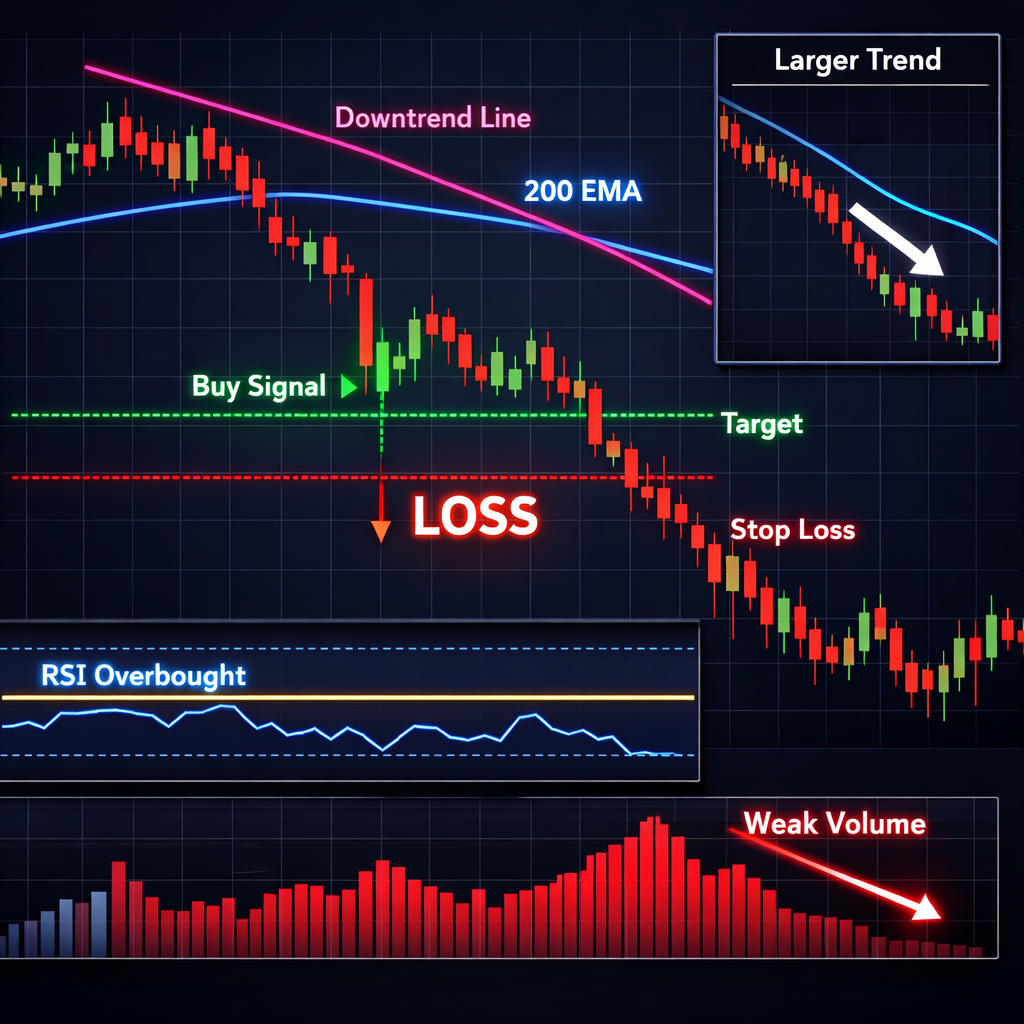
When closing a trade in your journal, locate the initial entry for that specific trade and write down the exact exit price from your trading platform. Rounding this number can lead to significant errors in profit or loss calculations, which impacts how well you manage risk.
Next, double-check the recorded exit price by comparing it with your trading account summary or charting tool to catch any slippage due to market volatility. This level of detail is crucial for accurate P&L calculations and improving your strategies over time.
By keeping these details precise, your journal will give you reliable insights into your trading performance and help you make better decisions in the future. What tools are you using to track your trades?
Managing Multi-Entry Positions Effectively
Managing multiple entries per trade can be tricky, but here’s a straightforward way to handle it:
- Track each entry: Write down the price, date, and time of every entry in your trading journal.
- Adjust position size accordingly: Change your position sizes as needed based on market conditions and technical analysis to keep risk balanced.
- Update stop losses frequently: Move your stop-loss levels as you go to protect any gains you’ve made.
- Review entries regularly: Check your multi-entry strategy often to spot patterns or issues that might affect performance.
- Note exit prices precisely: Record the exact exit price for each entry to ensure accurate profit and loss calculations.
Incorrect approach: Ignoring position scaling can lead to uneven risk distribution and inconsistent results. Not adjusting position sizes with each entry exposes you to unnecessary risks or missed opportunities.
Stay on top of your multi-entry positions by keeping an eye on both strategy adjustments and documentation practices. How will you manage this in your next trade?
Common Mistakes with Single Trade Entries
What mistakes do beginners commonly make when recording single trade entries?
- Incomplete Entry Details: Beginners often only record the initial entry price but forget about subsequent adjustments or partial fills, which can give them an inaccurate view of their trade’s performance.
- Failure to Note Adjustments: Failing to log changes in position size mid-trade leaves gaps in your trading journal. For example, if you enter a trade at $50 and later add shares at $48 and $52 but only note the initial entry price, you miss out on crucial information about how your trade evolved.
- Ignoring Exit Prices: Not recording exact exit prices can lead to incorrect profit or loss calculations. Each trade should have both an entry price and a precise exit price for accurate tracking.
By contrast, documenting all entries, exits, and adjustments accurately gives you clarity on your trading decisions over time. Using technical analysis can help you make informed adjustments and track them effectively.
Avoid these common errors to keep your trading journal as a reliable tool for evaluating strategies and improving future trades. How will you start refining your entry records today?
Why Tracking Multiple Entries is Crucial
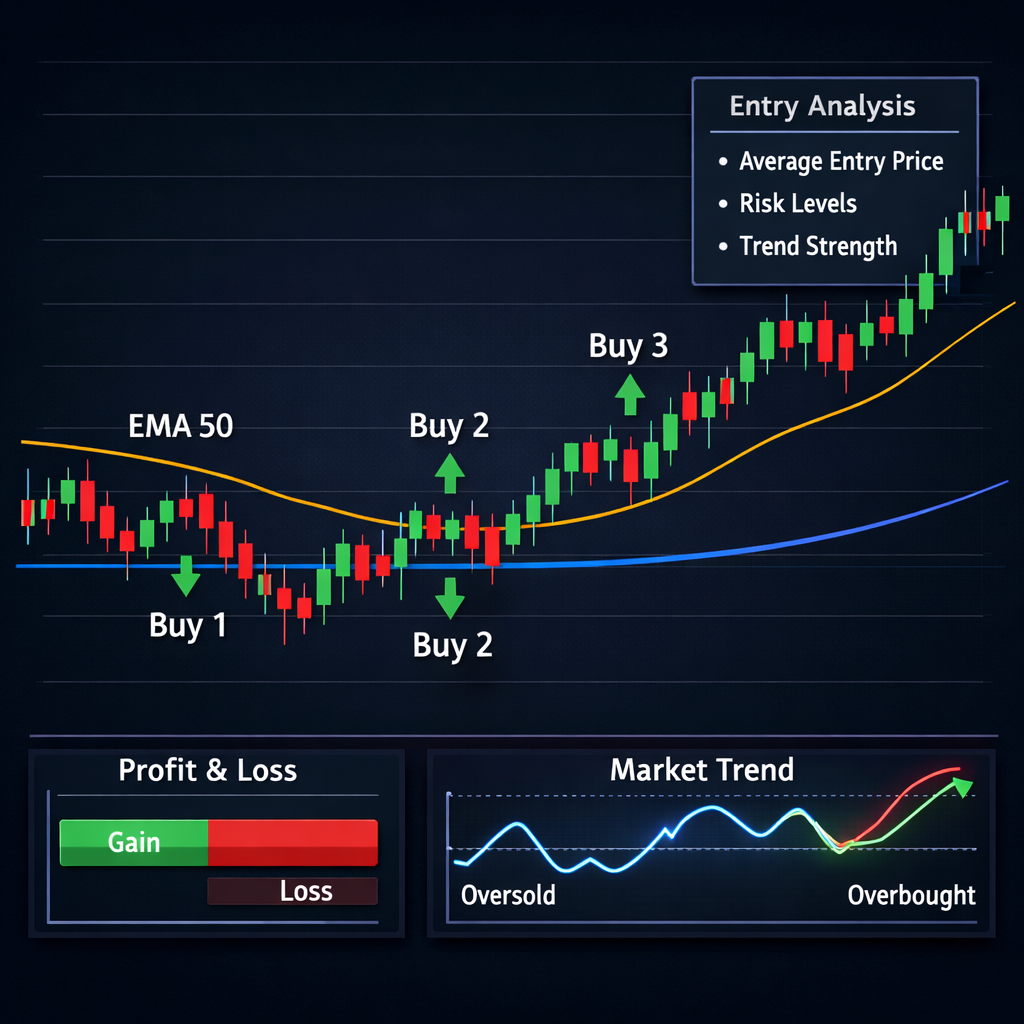
Tracking multiple entries in your trading journal is crucial for accurately representing complex positions and understanding how trades develop over time.
- Capture all entry points: Write down each price at which you enter a position.
- Keep an overall performance view: Tracking multiple entries gives you the full picture of how the trade evolves, helping with accurate performance analysis.
- Help with risk management: Accurate tracking helps in assessing and adjusting risks throughout the trade.
- Evaluate entry impact on exit: Compare your initial entry prices with exit points to see how well your strategy works.
Avoid treating each entry as a separate trade; doing so can mess up your performance metrics and lead to poor decisions based on incomplete data. Properly tracking multiple entries gives you a complete picture, enhancing risk management and helping you refine your strategies.
Learn more about improving your trading process to optimize your journaling practices further.
Steps to Document Partial Fills and Scaling Strategies
To start documenting partial fills in your trading journal or an app like journal app comparison, note the initial position size and entry price. For example, write down that you bought 10 shares at $50 each.
When you sell part of your position – say half of it – document exactly how many shares were sold, their sale price, and any fees (e.g., “Sold 5 shares @ $48 with a $0.20 fee”). Update your journal entry to show the new number of shares and adjust the average cost basis accordingly.
Repeat this process for each partial fill to keep track of your risk exposure accurately. For instance, selling another 2 shares at $52 would leave you with 8 shares and update your average cost basis again.
Warning: Treating each partial fill as a separate trade can skew your profit calculations and risk assessment.
To use scaling strategies effectively:
- Set target prices for partial fills before entering the market.
- Execute sales based on these targets, recording all details carefully.
- Review your journal periodically to improve your trading approach.
Takeaway: Accurate documentation of partial fills is crucial for precise risk management and optimizing profits in your trading journal.
Comparing Correct vs Incorrect Journal Entries for Partial Fills
When documenting partial fills in your trading journal, beginners often make mistakes by not capturing all the necessary details correctly. Here’s how you can avoid those errors:
Correct Journal Entry:
- Record Each Partial Fill: Write down every partial fill separately, including its price and volume.
- Track Cumulative Impact: Update your total position size and average entry price after each partial fill.
Incorrect Journal Entry:
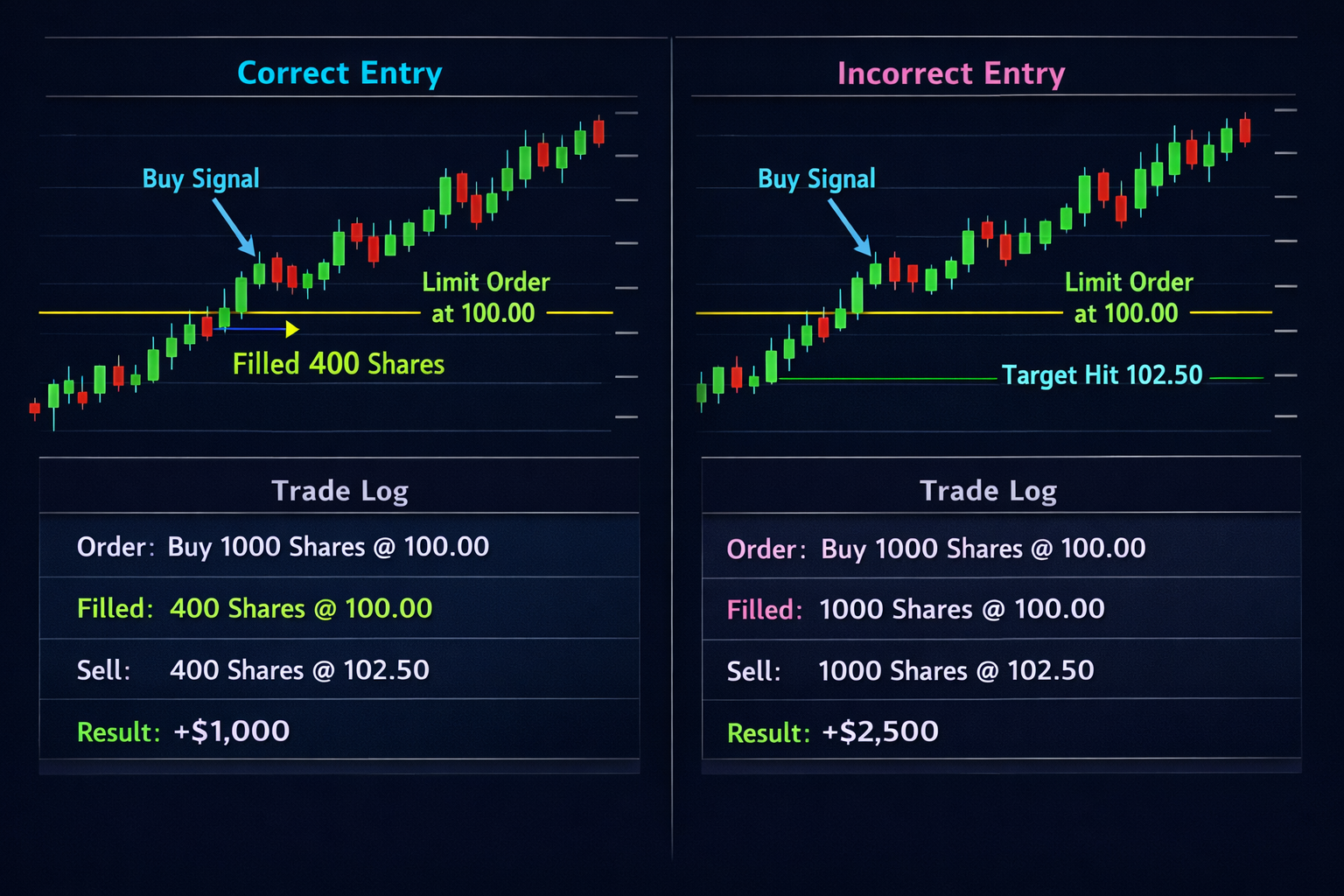
- Ignore Partial Fills: Only record full entry or exit prices while ignoring partial fills. This can lead to false trade analysis.
Why does the incorrect approach fail? It leads to wrong profit or loss calculations and complicates proper risk management by providing misleading position sizing data.
Scenario Example: Suppose you buy 100 shares at $50, then purchase another 50 shares later at $48 due to price movements. The correct entry would document both transactions separately. In contrast, the incorrect approach might only note a single purchase of 75 shares at an average price that doesn’t reflect your actual trades.
Takeaway: Always log every partial fill accurately in your journal to ensure precise trade analysis and effective risk management. For more guidance on starting a trading journal, check out this beginner guide.
When to Apply Scaling Strategies in Journaling
When you’re just starting out in trading, figuring out when to scale can be tricky. Scaling isn’t just about adjusting your position size; it’s crucial for managing risk and optimizing profits as market conditions change.
For example, if you buy 10 shares of a stock at $50 per share expecting the price to rise, selling off 2 shares if the price drops to $48 can help limit your loss while keeping room for recovery if the stock bounces back.
Not scaling and not documenting these adjustments in your trading journal is risky. Without tracking position changes, you miss out on valuable insights into your risk management practices, which could lead to missed opportunities or increased losses.
To start applying scaling strategies effectively, review each trade daily. Note any price movements that suggest a need to adjust your position size or exit partially. For instance, if the stock drops 5% below your buy-in point, consider selling some shares to reduce exposure.
By integrating scaling into your journaling routine, you’ll gain clearer insights into how well your risk management strategies are working and be better equipped to make informed decisions in the future.
Ensuring Consistency Across Journal Entries
| Dimension | Structured Format | Unstructured Notes |
|---|---|---|
| Format Consistency | Entries follow a set template with consistent sections (e.g., trade setup, execution details). | Random notes without clear organization or recurring structure. |
| Data Completeness | Includes all necessary information for each trade: entry price, exit price, profit/loss, etc. | Often lacks crucial details like stop-loss placement or exact exit conditions. |
| Analysis Reliability | Reliable data enables accurate performance analysis and informed decision-making based on trends. | Unreliable due to missing data points and inconsistency in recording critical information. |
Avoiding Common Pitfalls in Journal Entries
What pitfalls should I avoid when maintaining my trading journal entries? Here are some common mistakes beginners make:
- Missing key details: Include the entry price, exit price, and position size for each trade to ensure accurate analysis.
- Inconsistent notes: Keep the same level of detail in your journal for every trade.
- Overlooking partial fills and scaling: Document all partial fills and adjustments so you don’t end up with skewed performance metrics.
- Failing to track multiple entries: Record each entry point if you enter a position at different prices throughout the day.
- Ignoring execution details: Note order types, slippage, and fees for a complete picture of trade performance.
- Not updating changes: Reflect mid-trade modifications like adding or reducing positions in your journal entries.
Avoid these pitfalls to build a reliable trading journal that improves decision-making and risk management.
Rules for Effective Risk Management in Journaling
When starting a trading journal, follow these rules for effective risk management:
- Set stop-loss orders before entering any trade and write them down with the entry price.
- Keep track of position sizes to avoid over-leveraging and maintain consistent risk levels per trade.
- If you enter trades multiple times, document each entry separately.
- After every trade, review your execution details to improve future performance.
Skipping these steps can lead to risky behavior and potential losses. For example, not setting stop-loss orders or tracking position sizes could cause significant financial harm.
By following these guidelines, you’ll make better decisions and keep your trading safer. To learn more about the benefits of keeping a journal, check out this article or dive into scaling strategies with Investopedia’s guide.
How do you manage risk in your trading journal? Share your thoughts.
Implementing a Decision Framework for Journaling
How do you create a decision framework for your trading journal entries and exits? Here’s how to set it up:
- Pinpoint critical moments: Note when entry and exit decisions are made.
- Review past trades: Use your trading journal to look at previous performances before making new decisions.
- Set clear rules: Define specific conditions for entering or exiting based on historical patterns.
- Document every trade: Record all details, including price, time, volume, and the reason behind each entry and exit.
- Analyze outcomes: Regularly review your journal to find successful strategies and areas needing improvement.
Avoid making decisions without looking at past performance data in your trading journal. This can lead to inconsistent results and potential losses. Why? Without a structured framework, you miss out on valuable insights from previous trades that could help make better choices.
By establishing a clear decision framework, you ensure informed choices and improve overall trading performance. Start with today’s trade and document every detail meticulously.
Introduction to Trading Journals
A trading journal is an essential tool for traders of all levels, serving as a comprehensive record of your trading activities and insights. It helps you track market behavior and patterns, which are crucial for understanding the dynamics of the financial markets as discussed in this technical analysis guide. By maintaining a detailed journal, traders can improve their decision-making strategies and refine their performance metrics over time.
Related Articles
To further enhance your understanding of trading journals and their benefits, consider exploring the following articles from Flows Trading Academy:
- How a Trading Journal Improves Your Professional Process – This article delves into how maintaining a journal can significantly enhance your trading skills and professional development.
- Start a Trading Journal: A Beginner’s Guide – For new traders, this guide provides practical steps to begin documenting their trades effectively.
- Improve Trading Decisions with Journaling – Learn how consistent journaling can lead to better trading decisions and improved performance.
Apply with Flows
Flows Trading offers a range of tools and resources designed to help traders document their activities, monitor trade performance, and stay informed about market behavior. By integrating these features into your trading process, you can gain valuable insights that will improve your overall strategy as highlighted in this article on metrics and signals.
- Documentation: Use the Trading Journal feature to keep a detailed record of all trades, including entry and exit points.
- Performance Tracking: Monitor your trade performance with real-time metrics and signals to identify areas for improvement.
Further Reading
For additional insights into the benefits of maintaining a trading journal, consider these resources from Flows Trading Academy:
- Benefits of Keeping a Trading Journal – This article summarizes the key advantages of keeping a detailed trading journal.
- Explore more articles on higher-level concepts and learning journeys to deepen your understanding of market behavior and decision-making strategies.