


Understanding Journal-Driven Performance Reviews (Weekly/Monthly/Qtrly)
Table of Contents
The Problem Weekly/Monthly/Qtrly Journal-Driven Reviews Solve
Traditional review methods, like quarterly evaluations, often leave traders feeling disconnected from their day-to-day improvements. These periodic reviews miss out on important details about real-time trading decisions and market analysis that happen between formal check-ins.
Journal-driven reviews offer continuous feedback through daily or weekly entries, capturing detailed observations and decision-making processes in the moment. Unlike traditional methods, journaling ensures that crucial data isn’t lost between formal review periods, giving you a more complete view of your trading performance over time.
For example, monthly reviews might miss identifying trends in your trading behavior that contribute to losses or wins. With a journal-driven approach, you can spot these patterns early and adjust your strategies accordingly, turning every trade into an opportunity for learning and improvement.
Professional trading tips highlight the benefits of structured data collection in enhancing trader performance over time.
Challenges of Casual Review Methods
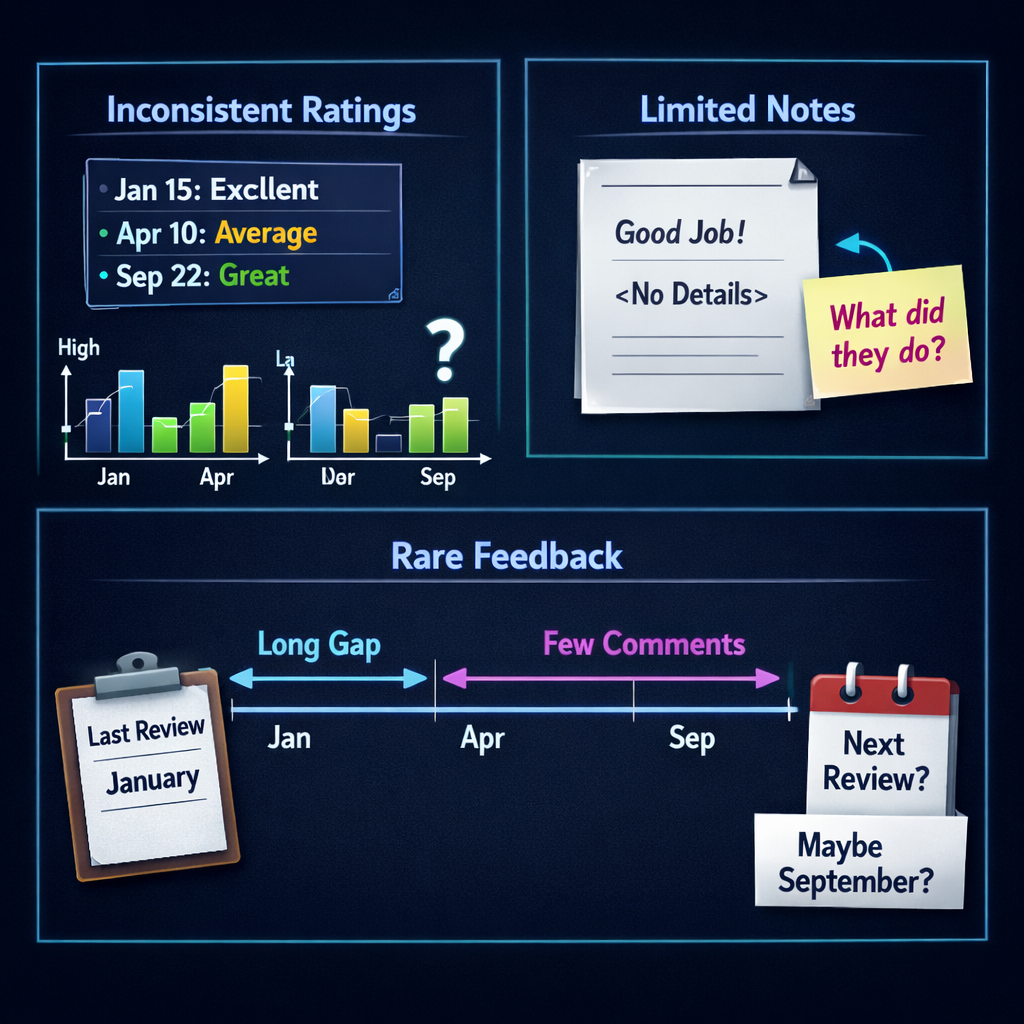
When conducting performance reviews based solely on memory without documented evidence, traders often encounter several pitfalls:
- Missing details: You might forget important nuances that matter.
- Biased evaluations: Personal biases can skew how you see past performance, making it hard to be objective.
- Inconsistent data: Without a structured approach, your metrics will vary over time, making comparisons tricky.
- Lack of context: Quick recollections often lack the full picture needed for accurate self-assessment.
- Forgotten lessons: Important insights can slip away without a formal review process.
These issues highlight why casual reviews aren’t effective for meaningful improvement. Trading journals help by providing clear and unbiased data over time. How will you start using more structured methods in your reviews tomorrow?
Benefits of Structured Data Collection
Structured data collection through journals improves performance reviews by relying on concrete evidence instead of just memory. This reduces bias and inaccuracies compared to casual review methods. Journal Benefits Overview
Weekly journal entries also enhance efficiency, saving time during monthly and quarterly reviews by aggregating insights in real-time rather than trying to recall past events. Aggregating Journal Insights
This approach helps identify patterns quickly and supports data-driven decisions with performance metrics tracking. Performance Metrics It also encourages accountability by holding traders responsible for their actions, fostering transparency.
Implementing journal-driven reviews keeps detailed trade memories fresh and accessible during evaluations, unlike traditional methods that lack structured data collection. This way, you can make better decisions based on accurate information rather than fuzzy recollections.
Core Mechanics: How to Aggregate Journal Insights
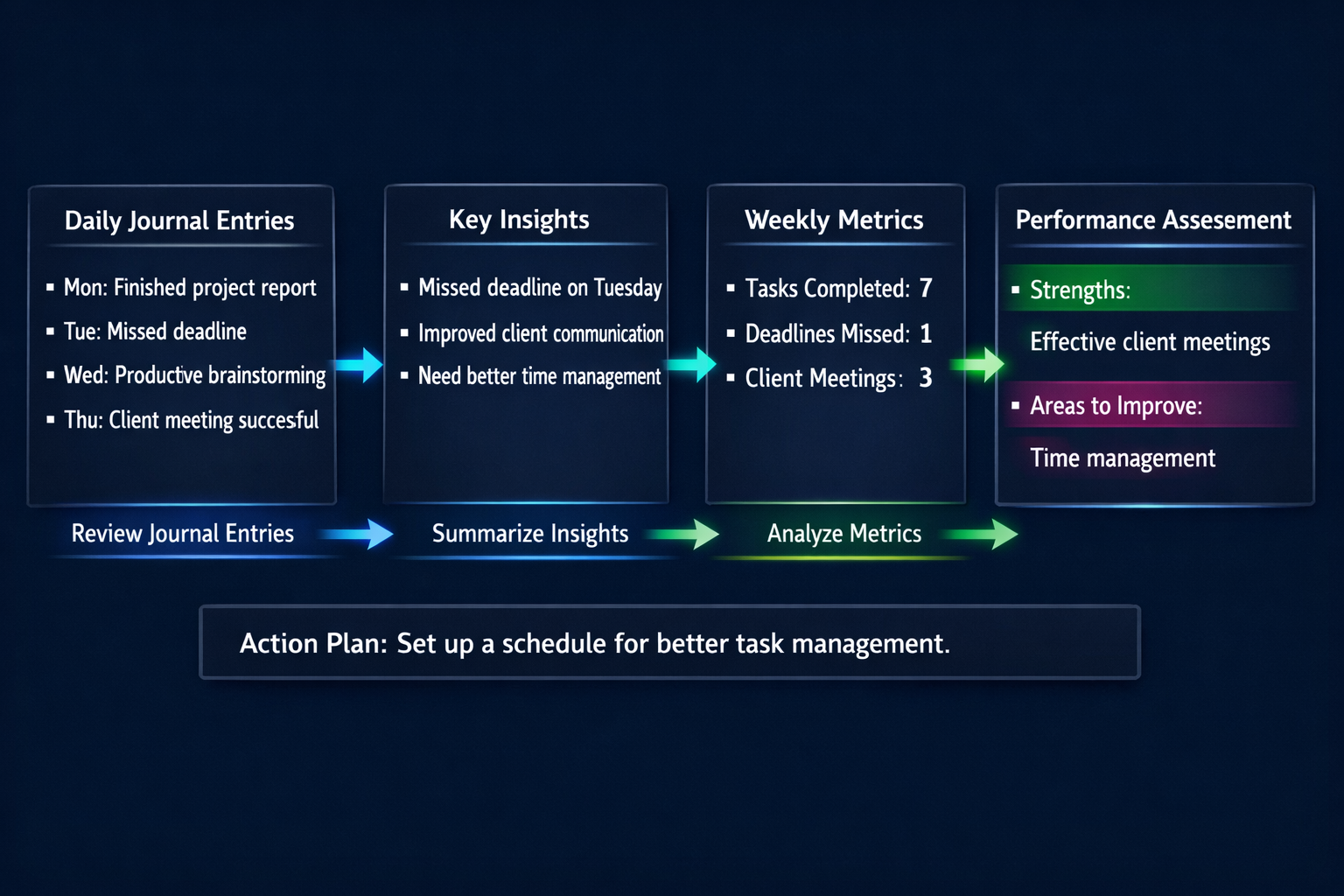
To effectively aggregate your journal entries for weekly, monthly, or quarterly reviews, start by going through them chronologically. Make sure you capture all data points and look for trends over time.
Extract key metrics like win rate, trade frequency, and average profit per trade, then compile them into a summary table. Note any significant events that might have impacted your trades, such as unusual market conditions or personal circumstances, to provide context.
Use color-coded annotations to highlight profitable periods versus unprofitable ones, making it easier to read during review sessions. Create visual aids like charts and graphs based on the aggregated data for better understanding and analysis.
Compare current performance metrics against previous periods to see if you’re improving and identify areas that need work. Summarize your findings into actionable points, focusing on both strengths and weaknesses.
By methodically aggregating journal insights, traders can spot specific areas for improvement and recognize achievements. Without proper aggregation methods, spotting meaningful patterns becomes difficult. Ignoring context-specific details during the process can lead to misinterpreting results.
Weekly Review Process
Jane had been trading stocks for six months and decided to start a weekly review process to track her progress. On Monday mornings, she went through the journal entries from the previous week. Each entry included details on each trade: where she bought or sold, why she made those decisions, and how she felt during the trades.
For example, Jane’s first trade of the week was buying Apple stock at $150 per share. She noted that a positive technical analysis report technical analysis had prompted her to buy. Her initial plan was to sell if the price dropped 3%, but fear kicked in, and she sold at $147 after a slight dip.
Next, she shorted Tesla stocks at $800 per share based on news predicting lower earnings beginner’s guide. She set a stop-loss order at $825 but held onto the position, leading to significant losses when Tesla’s stock price surged.
By reviewing her journal entries each week, Jane noticed patterns in her decision-making and emotional responses. For instance, she often abandoned well-thought-out strategies under pressure. Without this structured review process, these insights might have remained hidden.
What could go wrong if Jane skipped the weekly review? Relying solely on memory to assess performance Casual Review Pitfalls would likely result in biased and incomplete conclusions about her trading strategies.
Monthly and Quarterly Reviews
When evaluating trading performance through journal-driven reviews, it’s important to know the difference between monthly and quarterly assessments.
Monthly reviews happen every month and focus on immediate issues. They help traders like Jane spot daily problems such as overtrading and make quick adjustments based on recent entries in their journals.
Quarterly reviews take place four times a year and look at the bigger picture. These reviews use aggregated data from months to analyze long-term trends and refine strategies.
Mixing up these types of reviews can lead to misaligned goals and ineffective trend analysis. By doing both monthly and quarterly reviews, traders strike a balance between being responsive to daily issues and planning strategically for the future.
For more practical guidance tailored to your needs, check out best trading journals.
Common Misconceptions About Journal-Driven Reviews
What are common misconceptions about journal-driven reviews?
One frequent myth is that digital analytics tools make journals unnecessary. While these tools track quantitative data like trades and profits, they often miss the qualitative insights such as emotions during trading or decision-making processes.
For example, Sarah relies solely on her trading platform’s analytics to evaluate performance but ignores the emotional context documented in her journal. This oversight means valuable subjective information is missing from her review process, potentially leading to a less comprehensive understanding of her trading habits and areas for improvement.
Understanding this misconception is key because it highlights the unique value journals offer. By recognizing that digital tools complement rather than replace structured data collection, traders can leverage both quantitative and qualitative insights more effectively. This holistic approach enhances performance reviews by providing a fuller picture of trading behavior and outcomes.
How can you apply this knowledge? Start integrating your journal entries alongside digital analytics for a comprehensive review process.
Overlooking Subjective Feedback
Relying solely on personal feelings or opinions in your trading journal reviews can make your performance assessments unreliable. Here’s how to avoid common pitfalls:
- Don’t trust just your memory; documented evidence from journals provides a clearer picture.
- Use quantitative data instead of qualitative assessments to minimize bias.
- Be aware and address any biases that come from personal opinions.
- Consider multiple perspectives, including feedback from others.
- Balance subjective insights with objective metrics for a more complete review.
Jane found her weekly trading assessments more accurate when she combined emotional reflections with actual trading data. Relying too much on subjective feedback can lead to biased evaluations. For guidance on integrating both subjective and objective insights, check out Performance Improvement Strategies.
Ignoring Trend Analysis
Trend analysis is crucial because it helps you spot long-term patterns in trading performance that short-term data might hide. For example, if you notice consistent drops every third month, trend analysis can highlight this pattern and help you plan better.
If you ignore historical trends and focus only on recent data, you’ll make poor decisions. You won’t be able to take advantage of consistently high performance during summer months or prepare for recurring market conditions that happen year after year.
Without looking at past patterns, you’re setting yourself up for bad decisions and missed opportunities. Use structured data collection methods to base your decisions on historical trends.
Incorrect Approach: Relying solely on recent metrics without considering past patterns can lead to significant oversights.
Linking Related Concepts: Structured data collection improves trend identification. Learn more about the benefits of structured data.
Incorporate trend analysis into your reviews for better strategic planning and deeper insights.
Note: The next section will discuss the importance of not overlooking subjective feedback.
Applying Knowledge: Implementing Journal-Driven Reviews in Your Organization
To set up a journal-driven review system, start by defining clear goals and KPIs. Use a centralized journal management tool like Implementing Journal Systems to make logging daily activities and reflections easy. Provide training with templates that cover tasks, challenges, and action items.
Schedule weekly check-ins based on the journal entries. Focus these meetings on progress toward your KPIs and problem-solving strategies. Do monthly reviews to analyze trends and adjust approaches as needed. For quarterly assessments, include feedback from all previous evaluations.
Avoid a rigid process without proper training or support. This can lead to low adoption rates and ineffective performance evaluations. Keep employees engaged by highlighting the benefits over traditional methods, as discussed in Traditional Review Methods Limitations.
Setting Up a Journal System
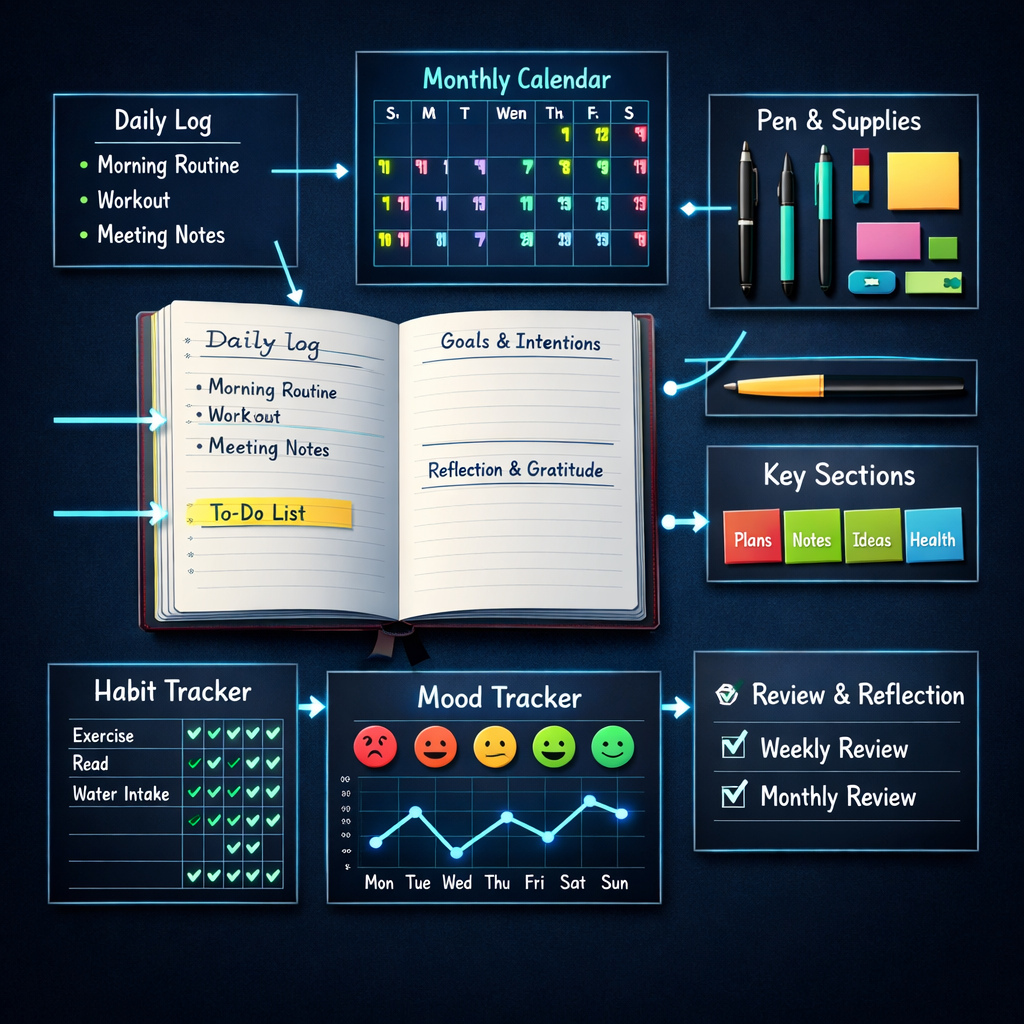
Jane had been trading stocks for six months when she decided to set up a journal system. She chose a digital platform like Evernote or Trello, where she could easily add entries and keep things organized.
Every day, Jane logged key details such as trades made, the reasoning behind each trade, market conditions, and insights from research. For example, on Monday, her entry read: “Bought 100 shares of XYZ Corp at $50 per share due to a bullish trend.” She also recorded the closing price later in the week.
By month’s end, Jane realized she had a lot of data to sift through. To keep things organized, she created categories like “Daily Trades,” “Market Analysis,” and “Learning Insights.” This made it easier for her to find specific entries when doing monthly performance reviews.
Jane found that overly complex systems with too many categories slowed down the logging process. Instead, she simplified by focusing on three core areas: Trades, Market Conditions, and Personal Learning Notes.
If there were no clear categories, finding specific information would be tough, making performance analysis less effective.
Her streamlined system allowed her to maintain consistency in logging data without feeling overwhelmed. This setup ensured that her weekly and monthly reviews were based on precise, actionable insights rather than vague recollections.
Next week, Jane will start preparing for her first quarterly review by aggregating all relevant entries from each month into a summary report. This process helps her see the bigger picture of her trading performance over time.
How do you ensure your journal system remains user-friendly and efficient?
Training and Encouraging Use
To train traders effectively on using journals for performance reviews:
- Create a clear plan: Outline specific steps and goals for the training.
- Use real examples: Show best practices with actual journal entries.
- Stress structured review: Explain why writing things down is better than relying on memory.
- Offer hands-on practice: Let traders write their own entries and discuss them in groups.
- (P.S.) Give regular feedback: Encourage thorough documentation by providing consistent support.
- Remind them to update regularly: Emphasize the importance of ongoing reflection.
- Make journal reviews part of formal evaluations: Integrate journal use into performance assessments.
Avoid giving vague advice, as it can lead to misuse or underutilization without proper guidance.
Introduction to Journal-Driven Performance Reviews
In the dynamic world of trading, understanding and improving your performance is crucial. A journal-driven approach can provide deep insights into your trading habits and strategies. By meticulously documenting every trade, you gain a clearer picture of what works and what doesn’t, allowing for continuous improvement. This method not only helps in analyzing past decisions but also aids in making informed choices moving forward.
- Journal-driven performance reviews are essential for traders looking to refine their strategies
- They help identify patterns and areas for improvement
Related Articles on Trading Journals
To further enhance your understanding of the benefits and importance of trading journals, consider these related articles from Flows Trading Academy. Each piece delves into different aspects of journaling to improve your professional process.
- How a Trading Journal Improves Your Professional Process
- Benefits of Keeping a Trading Journal
- Start a Trading Journal: A Step-by-Step Guide for Beginners
Improving Professional Process
Learn how maintaining a trading journal can significantly enhance your professional growth and decision-making process. This article provides practical tips on integrating journaling into your daily routine.
- Mentioning the importance of consistency in journal entries
Benefits Overview
Explore a comprehensive summary of the key advantages of keeping a trading journal. From tracking performance to identifying mistakes, this article covers all the essential benefits.
- Summarizing the main benefits of maintaining a trading journal
Beginner's Guide
For those new to trading journals, this step-by-step guide offers practical advice on starting your first journal. It covers everything from choosing the right format to structuring entries effectively.
- Linking to a detailed beginner’s guide
Apply with Flows Trading Journal
Applying journal-driven performance reviews can be streamlined using the Flows Trading Journal. This tool offers an intuitive interface for recording trades, analyzing data, and setting up alerts based on your trading metrics.
- Discussing how the Flows Trading Journal enhances the review process
- Highlighting features like tracking performance and generating signals
Further Reading Links
For those interested in delving deeper into technical analysis, trading journals, or professional trading tips, Flows Trading Academy offers a wealth of resources. Here are some additional links to explore:
- Technical Analysis Guide
- Comprehensive Guide on Trading Journals