


Trade Analysis: A Beginner's Guide to Review Techniques
Table of Contents
Understanding Trade Reviews from a Beginner's Perspective
You’ve been trading for weeks but haven’t seen the profits you expected because you’re making decisions based on gut feelings and market noise, leading to inconsistent results. Understanding how to frame trade reviews effectively can help you identify what went wrong and improve your strategy.
How do I frame trade reviews effectively?
- Define the trade context: Note the market conditions, time of day, and any relevant economic news.
- Outline your decision-making process: Describe why you entered the trade, including technical analysis and chart patterns used.
- Document entry details: Record the exact price at which you bought or sold.
- Track exit criteria: Plan ahead for when to take profits or cut losses.
- Evaluate performance against goals: Assess if the trade met your initial objectives.
- Reflect on emotional state: Consider how emotions influenced decision-making during the trade.
By following these steps, beginners can create a clear and objective analysis of their trades. Skipping them and jumping directly into complex methods could lead to ineffective trading strategies without proper understanding.
Integrating these steps helps you build a solid foundation for reviewing your trades objectively, setting up more advanced techniques later on.
Common Misconceptions About Trade Reviewing
Beginners often overlook important aspects when reviewing trades, which can lead to poor decision-making.
- Overemphasis on Profitability: Focusing only on whether a trade was profitable or not.
Example: Believing any profitable trade is successful without considering if you followed your trading rules and executed the trade well.
- Ignoring Rule Adherence: Not paying attention to how closely you stuck to your trading plan.
Example: Thinking that breaking trading rules occasionally won’t hurt long-term performance as long as profits are still coming in.
- Disregarding Execution Efficiency: Overlooking whether trades were executed according to the plan.
Example: Considering a trade successful even if it wasn’t entered at the optimal price due to market conditions.
Relying solely on profitability can lead to flawed decisions. Ignoring rule adherence weakens discipline, and overlooking execution efficiency undermines consistency. To improve your review process, focus on multiple factors like following trading rules and executing trades efficiently. How can you start doing this today?
Key Components for Effective Trade Analysis
When analyzing trades as a beginner, focus on three key areas: decision quality, execution performance, and sticking to your rules.
First, look at whether you made decisions based on your predefined criteria or if emotions like fear or greed got in the way. Understanding this helps you refine your approach moving forward.
Next, assess how well you executed the trade. Did you enter and exit at the points specified in your plan? For example, if a stop-loss was hit too early because of market volatility, you might need to adjust your risk management settings.
Lastly, track whether you followed your trading rules consistently. Keeping a detailed journal is crucial here because emotional biases can easily derail even the best strategies if not kept in check.
By focusing on decision quality, execution performance, and rule adherence, you can do an objective review that will help improve your trading outcomes. Start logging these details today to see better results.
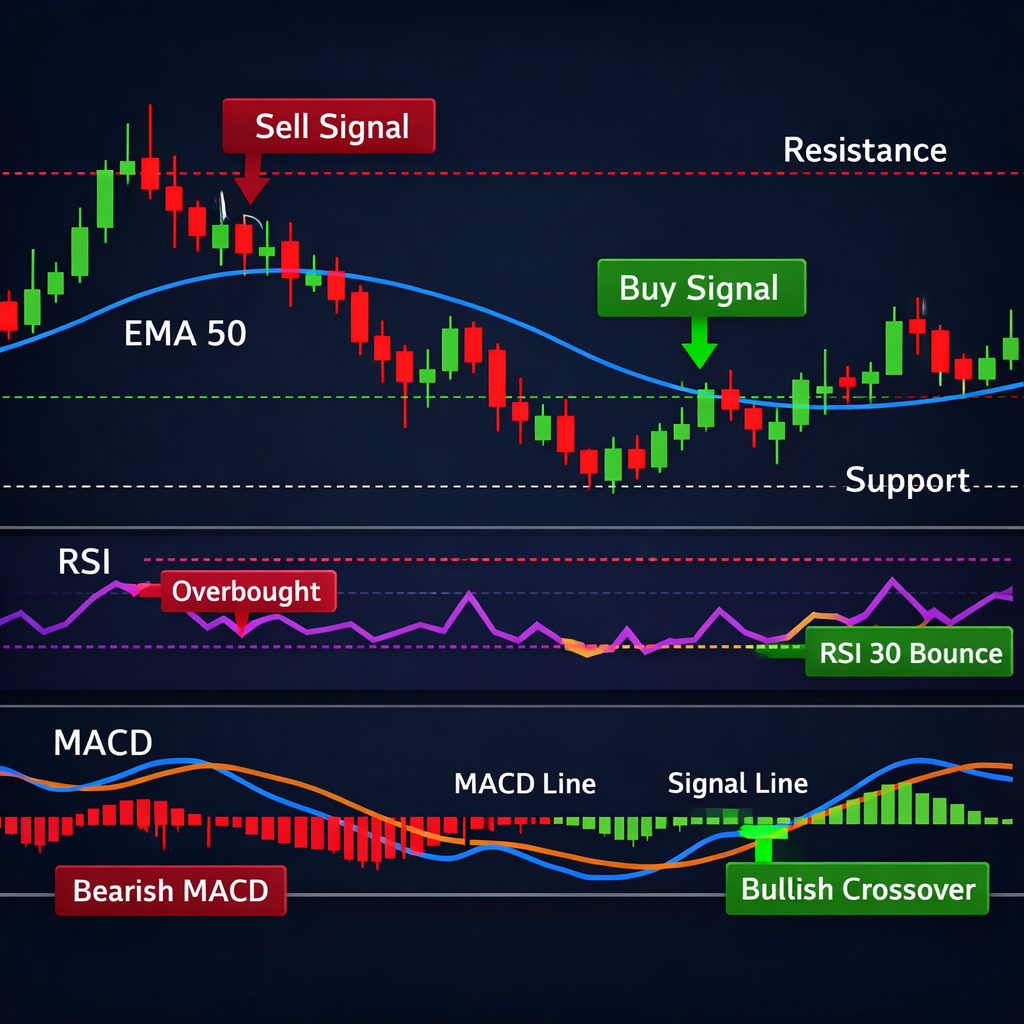
Evaluating Decision Quality: Beyond the Outcome
- Open your trading journal and find today’s entry. Your journal should include every decision you made, such as buy/sell orders, stop-loss placements, and take-profit levels.
- Go through each decision with a quality checklist. Did you manage risks properly? Stick to your rules? Use technical tools like chart patterns or indicators effectively? For example, did you use trend lines before entering a trade?
- Separate the reasoning behind each decision from how things turned out. Focus on whether your logic was sound at the time, even if it didn’t work out as planned.
- Reflect on how much technical analysis influenced your choices. Did you rely too heavily on gut feelings instead of chart patterns and indicators?
- Identify any emotions that might have affected your decisions. Were fear, greed, or overconfidence involved?
- Write down what you learned from each trade, focusing on areas where you can improve.
- Use these insights to adjust your trading plan. If you notice a pattern of entering trades too late due to indecision, set stricter entry criteria or use alerts more effectively.
By following these steps, you’ll evaluate the quality of your decisions through multiple angles beyond just financial outcomes. This helps refine your skills and mental discipline over time.
Next step: Compare today’s entries with those from last week to spot trends and areas needing attention. Regular reviews will help improve your strategy consistently.
Identifying and Analyzing Decision Errors
Let’s say you’re trading EUR/USD and notice the price breaking above 1.2050, a key resistance level. Your first instinct might be to go long right away. But if you hadn’t checked your technical indicators or market news, you could end up losing $30 by the end of the day.
This scenario shows how acting on gut feelings without proper analysis can lead to mistakes. If you had double-checked with tools like technical analysis and reviewed recent market news, you would likely have seen conflicting signals indicating a false breakout.
Impulsive trading will only result in more losses over time. To prevent such errors, start keeping a trading journal. Document the context and rationale behind each decision to help you spot poor patterns and reinforce the importance of thorough analysis before entering any trades.
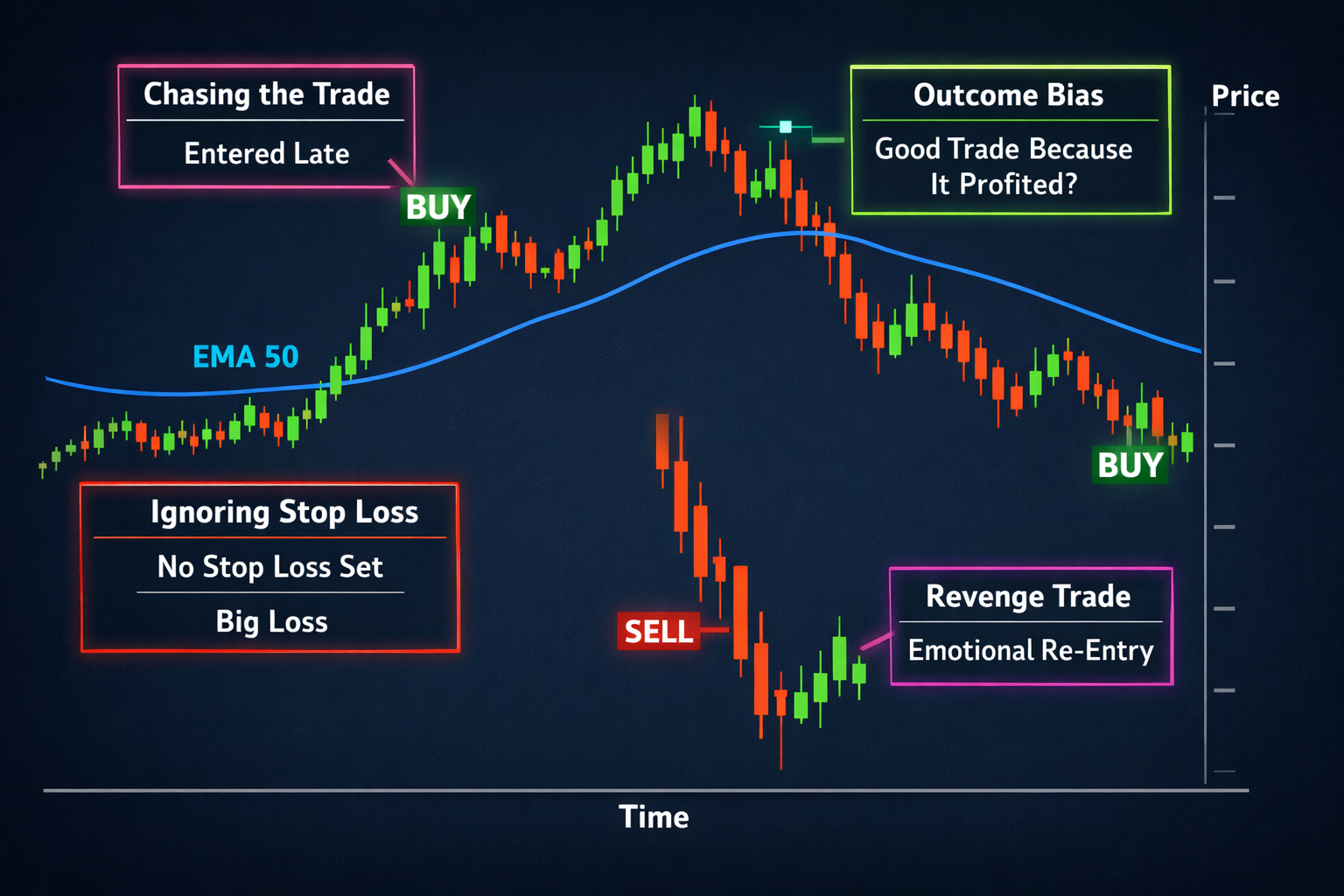
Improving Future Decisions Through Review
As you get into trading, figuring out how to improve decision quality is key to success. Here’s how three different methods – journaling, trade data analysis, and model-based evaluation – can help:
- Journaling: This involves keeping detailed notes on your thoughts, feelings, and market conditions when making decisions. You review these entries later to see if you followed the strategies and rules you set for yourself.
- Trade Data Analysis: With this method, you use quantitative data like win rates and risk/reward ratios to objectively assess decision quality. It helps evaluate how well trades were executed based on predefined criteria and market conditions.
- Model-Based Evaluation: This approach uses a structured framework to review the logic behind your decisions before you act on them. It ensures that your actions are consistent with your predetermined models during actual trades.
Each method has its own strengths: journaling is great for introspection, trade data analysis provides concrete evidence, and model-based evaluation reduces emotional bias. Pick the one that fits your trading style best.
Understanding these methods will help you make informed choices about which technique to use, ultimately improving your trading outcomes. Start by setting up a simple journal or data analysis framework for your next trades today.
Assessing Execution Quality: The Gap Between Plan and Reality
When evaluating how well your trades align with your initial plans, focus on adherence rather than just profit or loss. Here’s a simple checklist for beginners:
- Review Trade Details: Compare each executed trade to the original journal entry.
- Example: If you planned to enter EUR/USD at 1.2050 but entered at 1.2030, note this deviation.
- Check Plan Adherence:
- Did you follow your stop-loss and take-profit levels as intended?
- Don’t just look at whether the trade was profitable.
- Why It Fails: Profitability doesn’t tell you if you stuck to your plan. A poorly executed but profitable trade can hurt future performance.
- Spot Execution Gaps:
- Were there unexpected slippage or latency issues?
- Did market conditions change significantly before you could act?
- Analyze Data Objectively: Use trade data analysis to look at metrics like fill rate and order size.
- Document Insights:
- Note why your trades deviated from the plan.
- This helps you spot patterns and recurring issues.
By focusing on sticking to your trading plan, you can improve how well you execute future trades. What adjustments will you make based on today’s review?
Analyzing Trade Performance Against Initial Plans
To assess how well your trades align with initial plans:
- Review your trading journal entries and compare each trade against your original plan.
- Identify any discrepancies between what you planned to do and what actually happened, like entering at different levels or exiting early due to fear.
- Check if you followed the rules, such as entry criteria and stop-loss/take-profit settings.
- Analyze whether trades were based on valid signals from chart patterns. Learn about chart patterns
- Use performance metrics tools to quantify key indicators like win rate and risk-to-reward ratio. Explore performance metrics
- Document what you learned from your analysis.
- Adjust future plans based on these insights.
Incorrect approach: Focusing only on the outcomes can be misleading. A profitable trade might have been executed poorly if it didn’t follow the plan.
By reviewing adherence to trading rules, you gain deeper insights into why trades succeed or fail. This helps improve performance and avoid repeated mistakes.
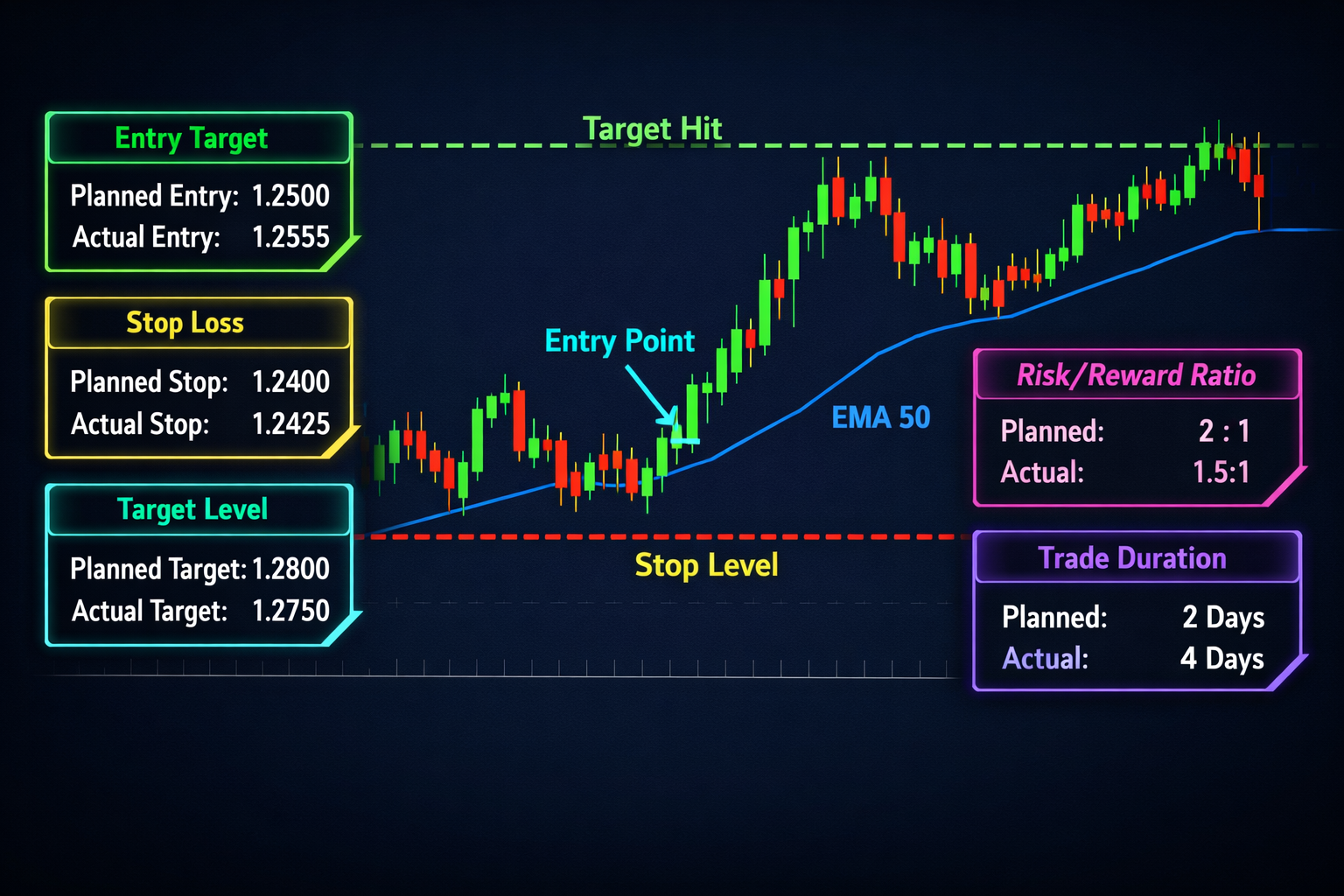
Common Pitfalls in Execution Review
When you’re reviewing a trade, it’s easy to focus only on whether you made money or lost it. But that overlooks the importance of sticking to your trading plan. For example, jumping into a trade based on breaking news without waiting for trend confirmation might seem smart if you end up making a profit, but it’s actually risky.
A proper review should consider both profitability and adherence to your rules. A process-focused approach looks at whether you followed your entry points and exit strategies correctly, regardless of the outcome. Ignoring stop-loss orders because the market seems favorable in the moment might feel okay now, but it can lead to bigger losses later on.
To do a thorough review, track how closely your trades match your trading plan alongside their financial results. Keep a journal detailing each step and compare it against your initial strategy to identify procedural mistakes.
Check out this guide for structuring an effective review process.
Reviewing Rule Adherence: Ensuring Consistency and Discipline
If you’re trading the EUR/USD pair and notice that your trades aren’t aligning with your predetermined strategy, it means you might be veering off course from your rules. To address this, review your adherence to trading rules systematically.
Here’s how beginners can compare their actual trade decisions against their trading plan:
| Criterion | Rule Adherence (Journal Entry) | Actual Trading Behavior |
|---|---|---|
| Stop Loss Placement | Placed at 1.2085 | Executed at 1.2100 |
| Take Profit Levels | Set at 1.2135 | Achieved at 1.2140 |
| Risk Management | Max risk per trade: 2% of account | Actually took a 3% loss |
In this example, the trader’s actions don’t match their rules, highlighting where there are gaps in adherence. Keeping a detailed journal (like this one) can help you spot these discrepancies.
By comparing your trades against these criteria, you can see where and why you deviate from your rules. It’s not just about the outcome; it’s about sticking to your plan. Without this discipline, even good initial decisions might lead you astray over time.
How would you adjust your trading plan based on these gaps?
Checking Compliance with Trading Rules
To help beginners verify adherence to trading rules during trade reviews, follow these straightforward steps:
- Open your trading journal and find the trade you want to review.
- Make sure your notes cover entry conditions, exit rules, and any deviations from your plan.
Next, check each step against your predefined rules:
- Verify that you entered based on a valid signal according to your trading model Trade Decision Models.
- Ensure the entry was made at the specified price level or within an acceptable range.
- Confirm exit criteria were strictly followed, including stop-loss orders and profit targets.
Identify any deviations during trade execution by documenting them in your journal’s executive summary section. Compare actual trades against the intended plan using this documentation Trade Analysis Components.
Use a quality evaluation procedure to rate how well you followed the rules Quality Evaluation Procedure. Note any discrepancies and categorize them based on violated rules, such as entry criteria or exit conditions.
Skipping specific verification steps can lead to overlooking critical rule breaches, causing inconsistent trading practices. Conducting a review without clear criteria results in unstructured analysis.
By following these procedures, you ensure disciplined and consistent trading practices. How might these steps change for different types of market analysis?
Corrective Actions for Non-Compliance
Imagine reviewing your trade journal on May 15th and finding that you didn’t execute the predetermined stop-loss order for EUR/USD at 1.2040; instead, you manually exited at 1.2010.
First, document this deviation: “Stop-loss not triggered at 1.2040 but executed at 1.2010.” Next, figure out why you deviated from the plan – was it because of fear? Understanding the reason is crucial for sticking to your rules in the future. For example, if fear was the cause, note: “Stopped out later due to fear.”
Consider the impact: Sticking to your stop-loss would have limited losses and potentially prevented further decline. This shows why following your trading plan is so important.
Finally, take steps to fix this issue, like tightening your stop-loss levels or automating exit orders for future trades.
What if you ignore non-compliance? You’ll likely repeat the same mistakes without recognizing patterns that lead to poor outcomes.
Addressing rule violations helps beginners build a disciplined trading approach. Review your recent trades and identify any adherence issues today.
Synthesizing Insights: From Review to Actionable Change
How do I turn trade review insights into better outcomes?
Here’s how:
- Identify Specific Issues: Focus on concrete problems like poor decision-making, execution errors, or rule breaches.
- Set Clear Goals: Write down specific actions for each issue and set measurable goals with deadlines.
- Track Your Progress: Keep a journal of your efforts and adjust as needed.
- Assess Results: Evaluate the impact after a certain period.
Instead of vague advice like “try harder,” give yourself concrete steps to follow. For example, if you struggled with entry timing, decide to wait for trend confirmation before entering trades, and aim to apply this rule in your next three trades.
By following these guidelines, you’ll turn insights from trade reviews into real improvements in your trading performance.
Introduction to Trade Analysis and Review
Trade analysis and review are crucial components of successful trading. Understanding market behavior through technical analysis can provide valuable insights into future trends. To enhance your trading skills, it’s essential to keep a detailed record of all trades, which helps in identifying patterns and improving decision-making processes.
- * Learn the basics of trade analysis
- * Understand the importance of reviewing past trades
The Importance of Technical Analysis
Technical analysis is a method used to evaluate securities and predict future price movements based on historical market data. This includes trading volume, open interest, and price levels. For beginners, understanding how technical indicators work can be challenging but rewarding. The technical analysis guide from Flows Trading provides a comprehensive introduction to the topic.
- Use charts and patterns for market prediction
- Explore chart patterns here
Maintaining a Trading Journal
A trading journal is an essential tool for traders of all levels. It helps in tracking performance, identifying mistakes, and refining strategies over time. The trading journal guide on Flows Trading offers detailed advice on how to maintain a journal effectively.
- Keep track of every trade
- Read more about trading journals here
Related Articles and Resources
To deepen your understanding of trade analysis and review, consider exploring these related articles from Flows Trading. They cover a range of topics that can help you improve your trading skills.
Apply with Flows
Flows Trading offers a suite of tools designed to enhance your trading experience. From technical analysis to journaling, these resources can help you stay informed and make better decisions.
- Use technical tools for real-time market data
- Access detailed guides and articles on trading strategies
Further Reading Links
For those looking to expand their knowledge beyond the basics, these additional resources provide in-depth insights into trade analysis and review techniques.