


How to Effectively Start a Trading Journal
Table of Contents
Why Start Simple for Consistency
You’ve started tracking your trades in a journal to improve your habits, but find yourself skipping entries or losing motivation. This happens because overcomplicating things right from the start can derail even the best intentions.
Starting simple is key for maintaining consistency and building sustainable trading practices. If you’re new to trading and decide to track every single detail of each trade – like technical analysis indicators and complex charts – it might seem thorough, but it quickly becomes overwhelming and impractical to keep up over time. Instead, start with a minimal setup: just note the entry price, exit price, and basic emotions felt during the trade. This way, you can establish a consistent habit that’s easy to stick to.
Why should you start simple in trading journals? Well, complexity at the beginning often leads to inconsistency and eventually abandonment of journaling practices. Simplifying your initial approach ensures you stay engaged and committed.
Common Mistakes to Avoid
When starting a trading journal, beginners often run into these common mistakes that can slow down their progress:
- Making Entries Too Complicated: New traders tend to include every single detail, which makes entries overly complex. Keep it simple by noting the entry and exit prices, trade duration, and your decision-making process. As you gain more experience, refine your approach to make your journal more effective.
- Ignoring Emotions: Failing to record how you feel before and after trades is a mistake because emotions greatly impact decision-making. Noting whether you felt anxious, confident, or uncertain can help manage the psychological aspects of trading.
- Skipping Entries: Consistency is key; skipping entries defeats the purpose of keeping a journal. Don’t think sporadic entries are okay since important details will be lost over time. Make sure to log every trade.
- Focusing Solely on Wins: Beginners often neglect recording losing trades, thinking only wins matter. This approach misses out on valuable learning opportunities from losses. Treat both winning and losing trades equally by analyzing each thoroughly.
How do you keep your journal useful without making it a burden?
Key Components for a Beginner's Journal
When starting a trading journal, beginners often wonder what to include for consistency and learning. Here’s a checklist of essential components:
- Date and Time: Note when each trade was opened and closed.
- Entry Price: Record the price at which you entered the market.
- Exit Price: Document your exit point – whether it’s hitting a profit target or stop loss.
- Trade Size: Indicate how much capital is allocated for this trade.
- Profit/Loss: Calculate the exact gain or loss from each transaction.
- Reasons for Entry and Exit: Briefly explain why you initiated and exited the trade.
- Technical Analysis Used: Mention any indicators or patterns that influenced your decision, but keep it simple.
- Risk Management Rules: Include basic risk management guidelines like setting stop losses.
Avoid getting bogged down in detailed technical analysis metrics at this stage. They can be overwhelming for beginners. Focus on tracking simple performance and risk indicators to stay consistent and motivated by keeping the journal manageable.
For more guidance, check out this beginner’s guide or explore how to make your journal user-friendly in design terms.

Usability Over Completeness for Beginners
Why prioritize usability over completeness when starting a trading journal? Beginners often feel overwhelmed by complex systems that are hard to maintain consistently. Instead of getting bogged down in every possible metric, it’s better to start with something simple and easy to stick with.
For example, tracking trades with multiple columns for technical indicators like RSI (Relative Strength Index) and MACD (Moving Average Convergence Divergence) can be overwhelming at first. While these add depth, they might make you skip entries when you’re not sure about which metrics to include or how to interpret them correctly. Starting off by just noting the trade details, entry price, exit price, and your initial thoughts is much easier and helps maintain consistency.
Stakes: Without focusing on usability first, beginners will likely give up their journals due to perceived complexity and frustration, hindering long-term progress in trading. Emphasize ease of use initially; you can always add more depth later as your confidence grows.
Importance of Consistency in Trading explains why sticking to a simple system is crucial. How will you simplify your trading journal setup for easier use?
Steps to Maintain a Simple Journal
Choose a journal format that works for you, like an app or a simple notebook with dated entries.
Start each entry by noting the date, market conditions, and any relevant technical analysis insights from technical analysis. This helps track your thought process without getting too detailed.
Record the trades you make, including entry and exit points, trade size, and initial risk/reward ratio. Stick to these basics to avoid collecting excessive data.
Reflect on why each trade was made and what influenced your decisions. This promotes self-awareness without requiring complex analysis at this stage.
Keep entries brief but thorough. Focus on key elements: entry/exit points, market conditions, and rationale. Avoid lengthy descriptions that can lead to burnout.
Review your journal weekly for patterns in decision-making. Look for common mistakes or areas of strength. Regular review keeps your efforts relevant and engaging.
Adjust your format as needed, but keep it simple. Adding metrics like win rate or average trade size performance metrics can provide insights without complicating the process.
How often do you find yourself overwhelmed by too much information in your trading activities? Simplifying your journal can significantly reduce this frustration and help maintain consistent logging habits.
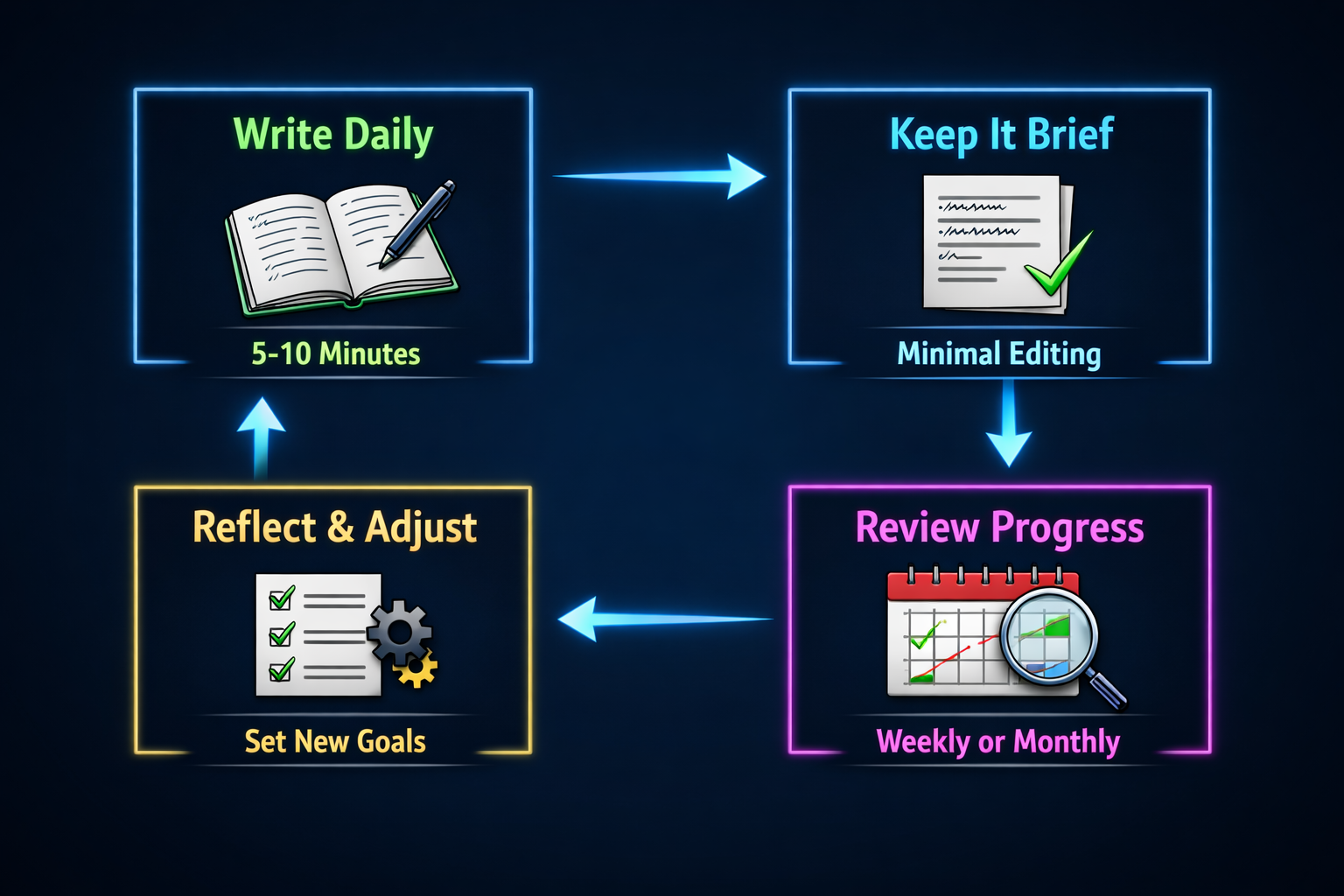
Roadmap for Journal Enhancement
How do I enhance my journal over time? Here’s a structured plan for gradually improving your trading journal practices as you gain experience:
- Start simple: Record basic trade details such as entry and exit prices, dates, and reasons for entering or exiting trades. This helps establish consistency.
- Track emotions and thought processes: After each trade, jot down what you were thinking and feeling to spot emotional biases that might have influenced your decisions.
- Regular review: Set aside time weekly to go over past entries and tweak strategies based on patterns in your trading behavior.
- Add metrics: Introduce performance metrics like win rate, profit factor, and drawdown percentage. Use tools or journal apps for easier tracking.
- Set goals: Define specific, measurable goals related to your trading habits and performance. Update these goals regularly as you improve.
Avoid starting with overly complex strategies that can overwhelm beginners. Instead, start simple to ensure consistent recording without causing frustration.
To learn more about journal usability and design, check out this resource. Begin enhancing your journal today to refine your analytical skills and improve decision-making.
What specific area of your trading journal would you like to enhance first?
Early-Stage Mistakes to Avoid
What mistakes should I avoid when starting my trading journal?
- Ignore risk management: Set stop-loss orders and define your maximum acceptable loss per trade. Effective Risk Management
- Overanalyze market data: Stick to a few key indicators instead of getting overwhelmed by too much information.
- Fail to track emotions: Note how you feel before each trade; it can help spot biases and triggers.
- Neglect journal consistency: Use reminders or integrate journaling into your routine to stay on top of entries.
- Skip performance analysis: Review trades weekly to see what works and what doesn’t, helping you improve.
Why is ignoring risk management risky? Without proper controls in place, big losses can happen. Make sure you understand and implement good risk management early on.
Avoid Starting with Too Many Metrics
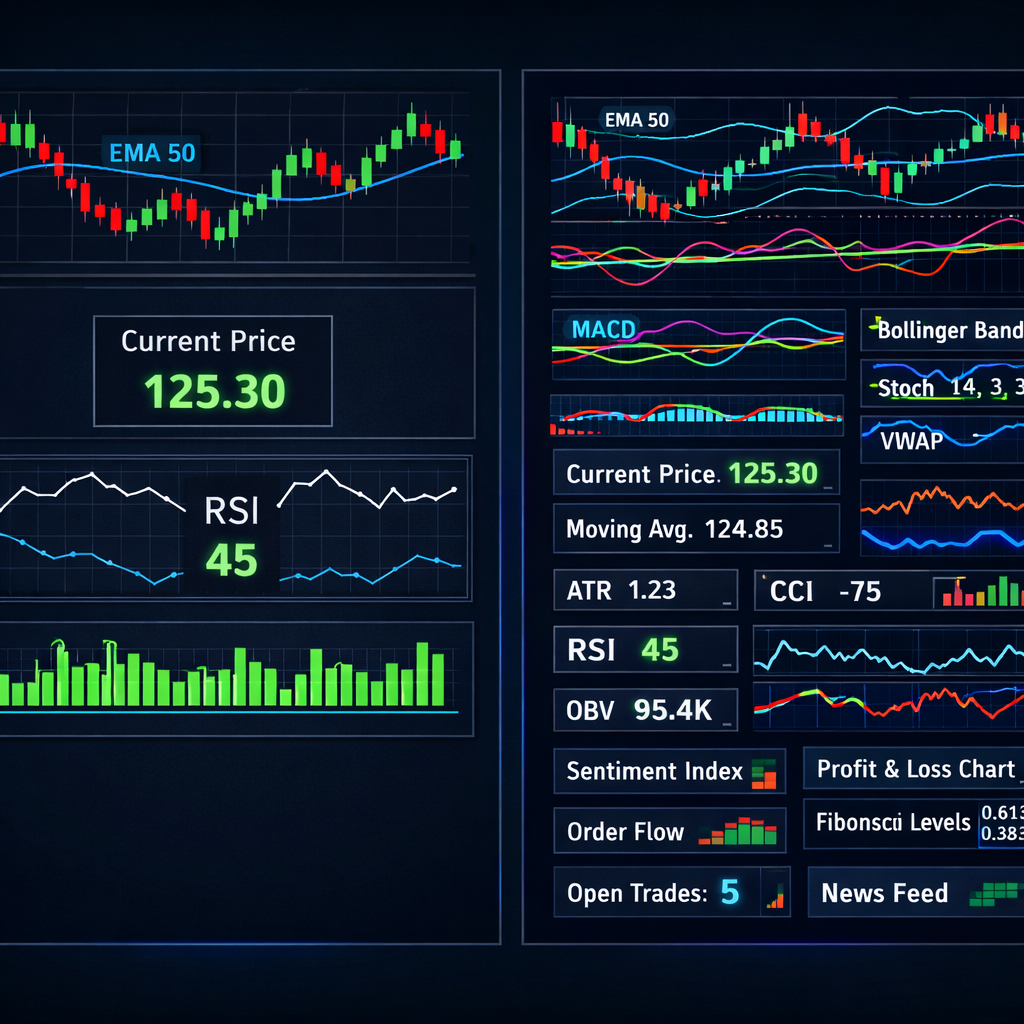
Why should beginners avoid starting their trading journals with too many metrics? It’s easy to get overwhelmed by trying to track every possible variable right from the start. Instead of filling your journal with dozens of indicators and chart patterns, focus on the essentials.
Key metrics like entry price, exit price, position size, win rate, average profit per trade, and maximum drawdown are crucial. These help you understand how well you’re managing risk and performing overall. Starting simple keeps you consistent in keeping your journal up-to-date over time.
If you start with just three to five important metrics instead of a dozen or more, you’ll be more likely to stick with the practice long-term. For guidance on setting up an effective trading journal, check out trading journal setup.
Steps for Effective Risk Management Documentation
To document your risk management practices effectively, follow these steps:
- Choose a journal format that suits you and is easy to use every day. This could be an app or a notebook.
- Log risk-related decisions during each trading session. For example, if you buy 10 shares at $50 with a stop loss set at $48, write down both the entry price and the stop loss.
- Track position size and total risk exposure per trade to monitor how much of your capital you’re using for that trade. If you’re allocating 2% of your trading account, make sure to note it clearly.
- Review past entries weekly to see how well your risk management is working over time. This helps you spot patterns and refine your strategies.
- Set specific goals for improving your risk management, like reducing trades that exceed a certain percentage of your portfolio. Keep track of these alongside daily journal entries to stay accountable.
By documenting properly, you make informed trading decisions rather than relying on guesswork or intuition. Start with the basics – usability and essential metrics – and build from there. For more help, check out journal app comparisons to find the right tool for your needs.
What specific risk management metric will you focus on in your journal this week?
Introduction to Trading Journals
A trading journal is an essential tool for any trader, from beginners to professionals. It serves as a personal record of your trades, allowing you to track performance and identify patterns in market behavior. By maintaining a detailed trading journal, traders can gain valuable insights into their strategies and improve their overall approach to the markets.
- * Helps understand market behavior through technical analysis (technical analysis guide)
- * Facilitates continuous improvement of your trading process (professional process improvement article)
Steps to Start a Trading Journal
Starting a trading journal is straightforward but crucial. Begin by setting up a dedicated space, either digital or physical, where you can record all your trades and observations. The beginner’s guide provides detailed instructions on how to get started.
- * Choose the right tools: Compare different trading journal apps (journal app comparison)
- * Track your forex trades effectively (forex trade tracking guide)
Benefits of Keeping a Trading Journal
Maintaining a trading journal offers numerous benefits, such as improving your understanding of market dynamics and enhancing your decision-making skills. As detailed in the benefits article, these journals help you analyze performance metrics (performance analysis signals) and refine your trading strategy over time.
- * Enhance self-awareness of trading habits
- * Identify profitable patterns in market behavior
Related Articles for Further Learning
To deepen your understanding and improve your trading skills, consider exploring these related articles from the Flows Trading Academy. Each article offers valuable insights into different aspects of trading journaling.