


Post-Trade Validation vs. Hindsight Bias Explained
Table of Contents
The Pitfall of Post-Trade Validation
Evaluating trades after they’ve closed can be misleading. It’s easy to rationalize poor decisions if a trade ends up being profitable. For example, imagine selling a stock because the Relative Strength Index (RSI) showed it was overbought, only to see the stock rally further and become even more overvalued.
This post-trade validation can cloud your judgment by focusing on outcomes instead of the process that led to them. You might convince yourself you made the right call based solely on profitability, ignoring the initial technical indicators or signals that prompted the trade. This approach reinforces biases like hindsight bias and confirmation bias, where you remember favorable outcomes while overlooking unfavorable ones.
Relying only on profit or loss skews your understanding of what truly drives successful trades. Instead of evaluating each decision at the time it’s made based on objective criteria, you judge every trade by its final result. This can lead to repeating flawed strategies because you think they worked before.
To improve, focus on the logic behind each trading decision rather than just profitability or loss. Assessing trades based on initial signals and process helps you understand what works and what doesn’t, leading to better future performance.
Outcome-Based Evaluation: A Common Trap
Relying solely on whether a trade was profitable can lead to poor habits because it makes traders focus more on results than on following their rules and strategy correctly. This approach often leads to repeating mistakes due to hindsight bias, where past outcomes unfairly influence future decisions.
To avoid this:
- Use tools like the RSI indicator or chart patterns objectively before making any moves.
- Keep a detailed trading journal that tracks your adherence to your strategy, regardless of whether you made money or lost it. Trading Journal – Flows Trading
Understanding and evaluating how well you follow your process is crucial for making informed decisions without letting factors like hindsight bias cloud your judgment. How do you ensure your strategies are assessed fairly beyond just their outcomes?
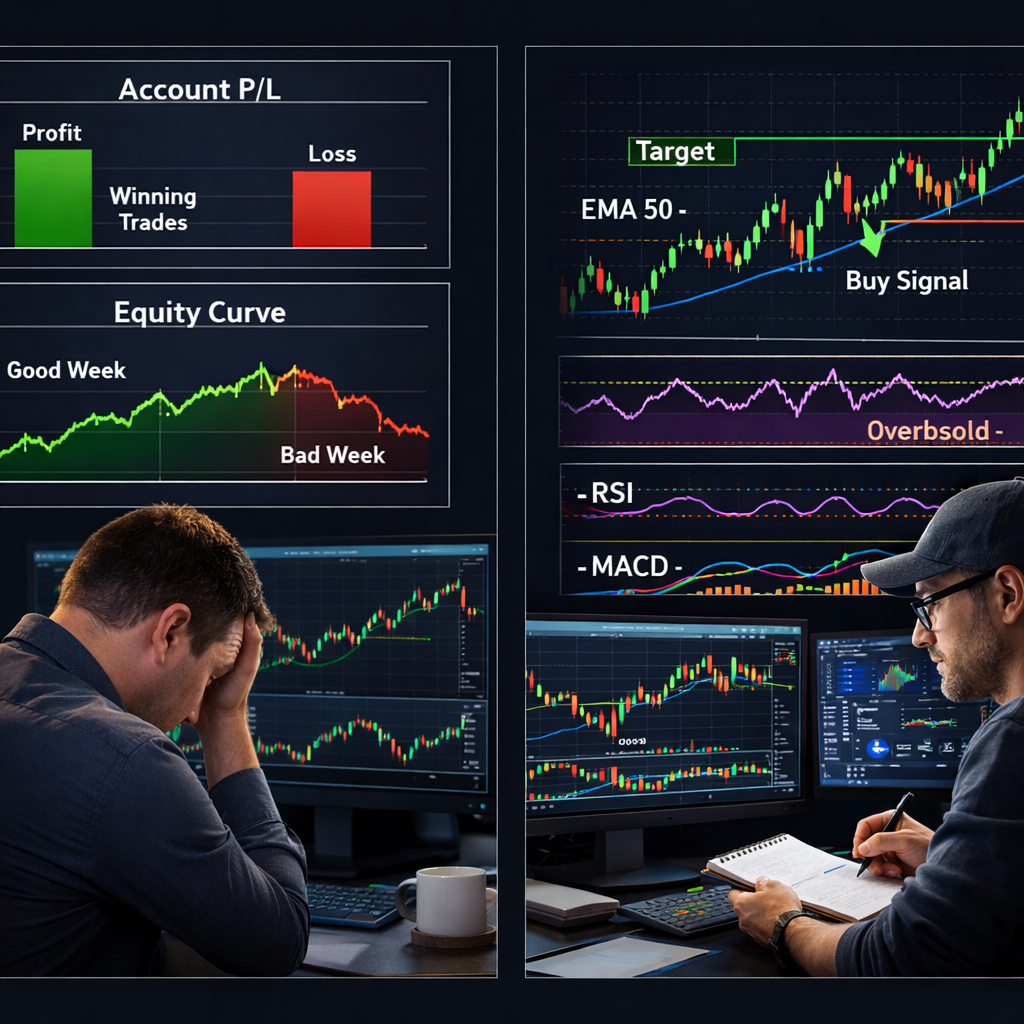
Process vs Outcome Focus in Trading
How do you tell the difference between process and outcome in trading? Focusing on process means sticking to your rules, while focusing on outcome is all about profit or loss.
- Define clear trading rules.
- Judge each trade based on whether you followed those rules, not just if it was profitable.
- Keep track of how well you adhere to your strategy using a journal.
- Avoid looking back at trades after the fact; this introduces bias and selective memory.
- Identify when you deviate from your plan and figure out why.
Incorrect approach: If an RSI indicator shows overbought conditions but fear causes you to exit early, focusing on process means analyzing that decision rather than just looking at whether it was profitable or not.
Without separating process from outcome, you might end up basing decisions on unreliable metrics like profitability.
By focusing on your trading process, each decision is rooted in strategic validity, not just financial results. Over time, this leads to consistent improvement. Learn more about improving trading decisions to avoid common pitfalls.
Identifying Hindsight Bias in Your Trades
How do you recognize hindsight bias? It happens when traders look back at their past trades and think they could have seen the outcome clearly, even though it wasn’t obvious at the time. For example, if you bought a stock because an RSI indicator showed it was oversold but later noticed other technical signals that retrospectively justified your decision, you might overestimate how clear those indicators were when you made the trade.
To avoid this, review your trading journal entries both before and after making trades. If you notice changes in how you perceive past decisions based on current market conditions, hindsight bias is probably at play. By keeping detailed records and comparing them with actual trading decisions, traders can spot when they’re distorting the clarity of past events to fit their present views.
This helps maintain a realistic understanding of trade outcomes and prevents overconfidence in future predictions based on skewed historical data. Being objective about your trades is key to improving decision-making skills without falling into hindsight bias.
Learn more about post-trade validation for refining how you analyze past trades accurately.
The Impact of Selective Memory
Alice recently sold her Tesla stock for a profit. She bought it at $750 and sold two weeks later when the price was $820. She felt excited but also relieved, so she looked back at her trading journal and noticed that the RSI indicator had shown overbought conditions when she made the purchase – something she usually avoids.
The next day, Alice saw another stock with similar RSI readings and felt compelled to buy it again. Unfortunately, this time the stock dropped sharply within a few hours, leading to significant losses.
Selective memory caused Alice to remember only the profitable part of her Tesla trade while ignoring the overbought RSI reading and other factors that didn’t fit her strategy. This skewed recollection made her overly confident about buying another risky stock. If she continues relying solely on selective memories, she could miss important warning signs and end up with more losses.
To avoid this trap, traders should review both profitable and unprofitable trades objectively using all the relevant data without letting emotions cloud their judgment.

Confirmation Bias and Its Role
When reviewing past trades, don’t just look for information that confirms what you already think. Instead, try to find evidence that challenges your initial ideas.
- Avoid confirmation bias: If you only focus on data that supports your trade decisions, it can reinforce hindsight and prevent you from learning from mistakes.
- Challenge yourself: When evaluating a losing trade, look for reasons why it didn’t work out instead of justifying your decision after the fact.
- Use a trading journal: Write down both winning and losing trades with detailed analysis to avoid selective memory. A trading journal can help you track patterns objectively.
Ignoring contradictory evidence can make you overly confident in flawed strategies, leading to repeated mistakes.
By actively seeking out contrary information, you’ll reduce the likelihood of confirmation bias and improve your trading decisions going forward. How will you start implementing this today?
Developing Decision Validation Criteria
To validate trades effectively, start by clearly defining your trading process. Outline specific steps like entry criteria, exit rules, risk management parameters, and the use of technical indicators such as RSI or chart patterns. This clarity helps you evaluate each trade based on how well it follows these predefined steps rather than just its outcome.
Next, set up objective evaluation metrics focused on measurable actions. For example, check if stop-loss orders were used correctly and if position sizing was accurate according to your plan. Regularly review each trade to see if the rules were followed without exception, documenting any deviations objectively.
Avoid judging trades solely based on profitability. This approach can lead to flawed decisions due to hindsight bias and selective memory. Instead, evaluate whether you followed your trading process correctly. Stick to the initial entry and exit conditions defined at the start of each trade using technical analysis rigorously.
By focusing on process validation rather than outcomes, you reduce the risk of confirmation bias influencing future decisions. This method ensures that trades are evaluated based on adherence to a well-defined strategy, not just profitability.
How might you apply these criteria in your next trade setup?
Setting Up Pre-Defined Evaluation Metrics
To avoid evaluating trades solely based on outcomes, beginner traders should focus on metrics that measure how well they stick to their trading process. This approach ensures decisions align with predefined strategies rather than being influenced by post-trade biases.
Key criteria include consistent use of technical analysis techniques and strict adherence to stop-loss orders. These metrics help assess whether you followed your rules, regardless of the outcome.
| Metric | Evaluation Criteria | Winner |
|---|---|---|
| Technical Analysis | Consistency in using indicators like RSI and MACD | Strategy A |
| Stop-Loss Adherence | Percentage of trades hitting predefined stop-loss levels | Strategy B |
| Trade Execution Time | Speed and efficiency of entering/exiting positions according to the plan | Strategy C |
For example, if you use RSI but sometimes deviate due to market volatility, tracking how often you stick to your stop-loss orders can help you identify whether emotional decisions are impacting your process.
Focusing on the trading process rather than outcomes helps beginner traders develop a more objective and consistent approach. Evaluating trades based on adherence to strategy – not past results – can improve future decision-making.
Next step: Implement these metrics in your trading journal to track consistency and process fidelity over time.
Implementing Process-Based Trade Reviews
To review trades effectively, focus on the process rather than outcomes:
- Set up evaluation criteria based on your trading strategy beforehand.
- Review each trade for adherence to predefined rules, not just profit or loss.
- Analyze whether you used technical indicators like RSI correctly according to your plan. Technical analysis
- Check if you identified and acted upon valid trading signals consistently with your strategy. Trading signals
- Evaluate chart patterns objectively without the influence of hindsight bias, focusing on what was known at the time. Chart patterns
- Assess whether you maintained discipline and avoided common pitfalls like confirmation bias during decision-making. Confirmation Bias Explained
Avoid evaluating trades solely based on profitability, as this can distort your understanding of effective trading processes.
By focusing on how well you followed your plan, you’ll be able to objectively assess your performance and identify areas for improvement.
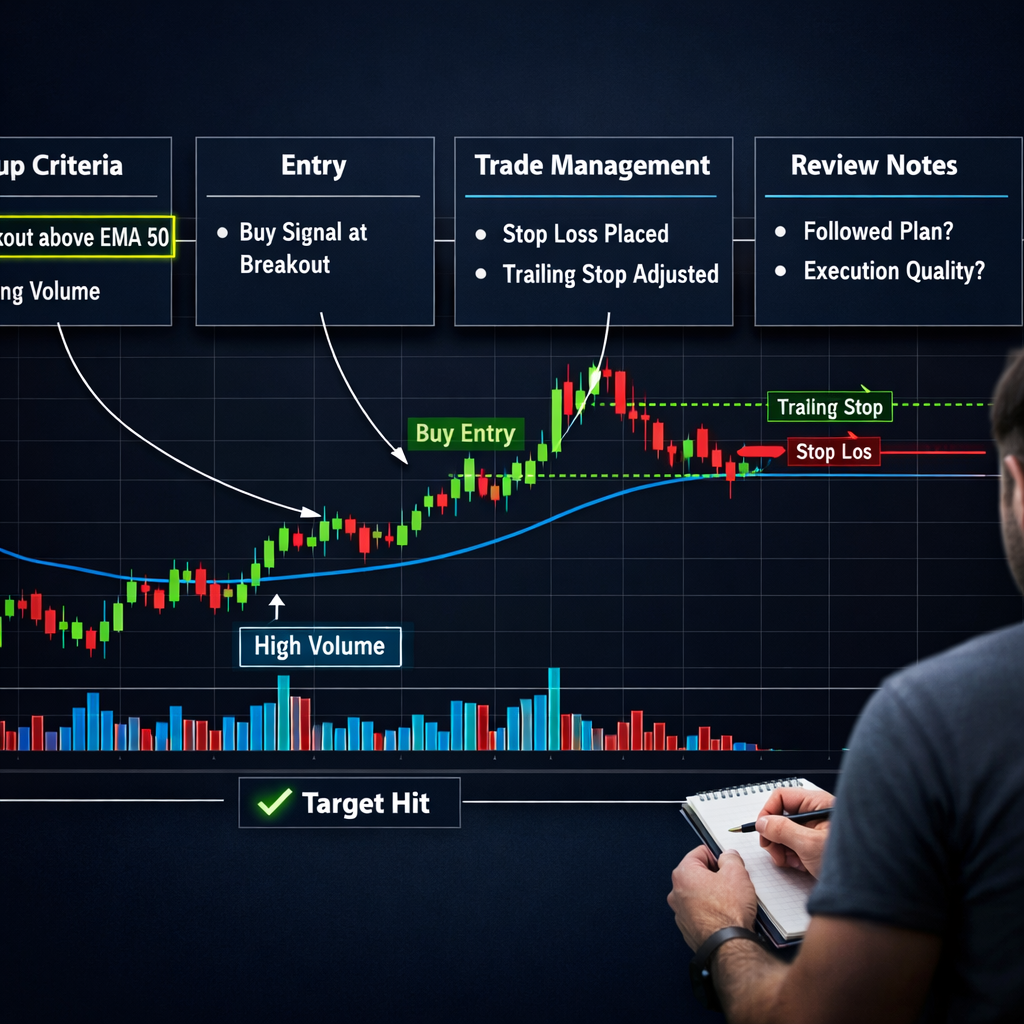
Introduction to Post-trade Validation
Post-trade validation is a critical process in trading that involves analyzing the outcomes of executed trades. This step helps traders understand what went right or wrong, and it’s essential for refining future strategies. By reviewing trade data objectively, traders can identify patterns and trends that might not be immediately apparent during active trading sessions.
- * Post-trade validation is crucial for improving trading performance
- * It involves analyzing executed trades to understand their outcomes
- * Helps in identifying both successful and unsuccessful strategies
Related Articles on Trading Concepts
To enhance your understanding of post-trade validation, it’s beneficial to explore related concepts such as technical analysis, trading signals, and journaling. These tools and practices can provide a comprehensive framework for evaluating trades and making informed decisions.
- Technical Analysis: Understanding market behavior through indicators
- Trading Signals: Tracking performance metrics effectively
- Journaling: Improving decision-making by documenting trade insights
Technical Analysis
Technical analysis involves studying historical market data to predict future trends. Key indicators like the Relative Strength Index (RSI) and various chart patterns are crucial for identifying potential trading opportunities.
Journaling for Better Decision-Making
Maintaining a trading journal is an effective way to track your progress and identify areas for improvement. It helps in recognizing patterns, understanding mistakes, and refining strategies over time.
- Benefits of using a trading journal: Read more
- Strategies for better decision-making through journaling: Learn here
Applying Post-trade Validation with Flows
Flows Trading offers a range of tools and resources to help traders implement post-trade validation effectively. By leveraging these platforms, you can gain deeper insights into your trading performance and make more informed decisions.
- Track performance metrics with Flows’ advanced analytics
- Use journaling features to document trade outcomes
- Access comprehensive guides on technical analysis
Further Reading Links
For a deeper dive into post-trade validation and related trading concepts, consider exploring the following resources. These articles provide valuable insights and strategies to enhance your trading skills.