


How to Use Journaling for Rule-Based Trading
Table of Contents
Journaling for Rule-Based Trading Compliance Tracking
Tracking your trades in a journal is essential, but it’s easy to slip up and start deviating from your rules. For example, you might find yourself making trades based on gut feelings rather than sticking to technical indicators like RSI or MACD.
To stay compliant with your trading rules through journaling, document every time you follow – or break – your own guidelines. Note when a signal triggers an action according to your plan and when it doesn’t. By keeping detailed records of these instances, you can spot patterns that might be leading you astray.
For instance, if you notice you frequently ignore sell signals when the RSI is at 70+, logging this will help you identify areas where you need to improve. Without a structured approach to tracking compliance, it’s hard to stay on track and avoid costly mistakes.
So, make sure your journal has clear rules for recording compliance. This way, you can stick to your trading plan and minimize the risk of financial losses.
Setting Up a Compliance Log
Creating a solid compliance log is essential for sticking to trading rules and spotting non-compliance issues. Without it, traders can easily miss rule violations and inconsistent performance.
Here’s how to set up an effective compliance log:
- Date and Time: Record the exact date and time of each trade.
- Trade Details: Include the symbol, entry price, exit price, and stop loss or take profit levels.
- Rule Compliance: Note whether all rules were followed and explain any non-compliance.
For example:
| Date/Time | Symbol | Entry Price | Exit Price | Compliance? | Signals Used | Explanation |
|---|---|---|---|---|---|---|
| 10/05/23, 9:00 AM | AAPL | $164.80 | $167.95 | Yes | RSI, MACD | All rules followed |
| 11/05/23, 2:30 PM | MSFT | $275.20 | $279.85 | No | RSI | Violated stop loss rule |
A vague log can miss crucial details and lead to inaccurate records. Ensure each entry is thorough.
This format keeps you transparent and accountable when following trading rules, allowing for an objective review and improvement process.
How will you set up your compliance log?
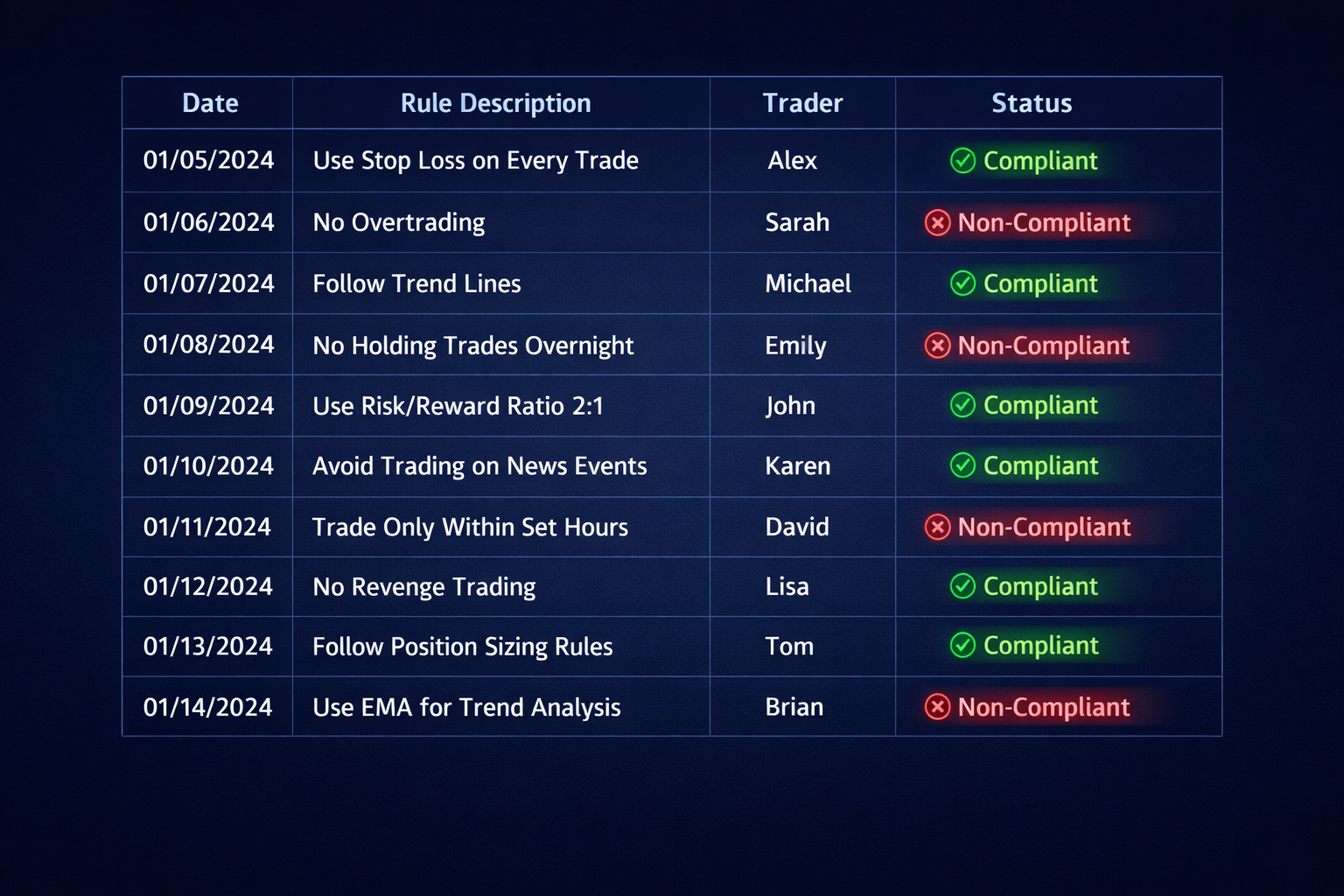
Identifying Non-Compliance Incidents
To effectively document rule violations in your trading journal:
- Notice when there’s a difference between what you planned and what actually happened.
- Write down the date, time, and details of each violation.
- Include instances where entry or exit rules were not followed.
- Note any reasons why you didn’t follow the rules if you know them.
- Highlight patterns or triggers that led to rule breaches.
Common Mistake: Ignoring specific violations can stop you from learning and improving.
To keep your journal useful:
- Use a template for consistent entries.
- Regularly review your notes to spot recurring issues.
- Analyze why your plans didn’t work out as expected.
- Adjust your strategy based on the insights gained from documenting non-compliance.
Regular reviews of your compliance log help you avoid future mistakes. Keeping a Trading Journal is essential for better decision-making.
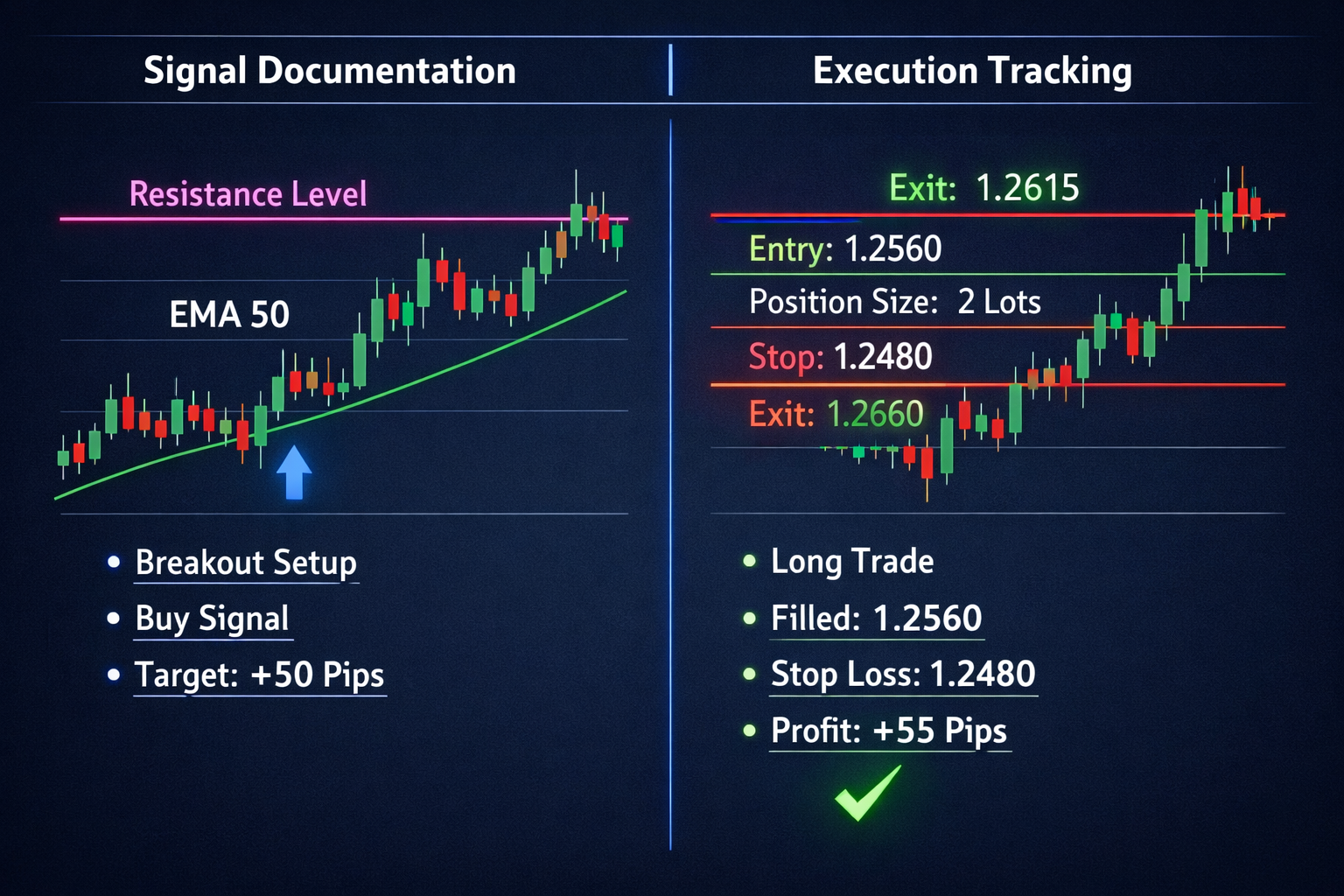
Signal vs Execution Logging Distinction
What’s the difference between logging trade signals and documenting actual trades? Logging a signal means noting when market conditions meet your criteria – like an RSI hitting 30 as a buy trigger. Execution logs only record when you actually place the trade after seeing that signal.
For example, if your strategy uses MACD crossovers to generate sell signals, log those signals even if you don’t act right away. Actual trades go into a separate execution log once they’re placed.
Mixing these logs can make tracking and performance analysis inaccurate, which can hurt compliance monitoring. Keeping them separate lets you backtest and refine your strategy based on real market conditions rather than hypothetical scenarios.
To keep things clear in your journal, differentiate between signal and execution logs. This helps you accurately assess rule adherence and improve decision-making processes. It’s crucial for consistent and reliable strategy implementation.
Best Practices for Signal Documentation
How do you log trade signals effectively? Start by identifying your key signal indicators, like RSI and MACD, or create custom ones that fit your strategy.
- Create a “Signal Log” section in your trading journal.
- Write down the exact time each signal happens.
- Note the specific indicator values (e.g., RSI crossed 70).
- Include any relevant context, like market conditions.
For example, document every MACD crossover and divergence clearly to help with backtesting later on.
Don’t just log outcomes without recording initial signals. This makes it hard to analyze performance and spot patterns that can reveal successful trades or rule violations.
Each entry should have a timestamp to track signal frequency over time. This helps identify trends and seasonal patterns, which are crucial for refining your trading strategy.
By carefully documenting your signals with timestamps and indicator values, you set the stage for thorough analysis and continuous improvement of your strategies. Technical Analysis offers deeper insights into optimizing these indicators.
Next, track how you respond to these signals during real-time execution.
Guidelines for Trade Execution Tracking
Guidelines for Trade Execution Tracking
To document trades and track any deviations from your trading plan, follow these steps:
- Log Each Trade: Write down every trade as soon as it happens. Include the time stamp, entry price, exit price, volume, and why you made that decision. Keep this in a compliance log to stay organized.
- Review Regularly: Check your logs often to spot any discrepancies between what you planned to do and what actually happened. This helps catch any non-compliance early on.
Remember to avoid common pitfalls like confusing trade signals with actual executions. Doing so can lead to poor tracking and ineffective performance analysis.
Start using these practices today to boost your rule-based trading discipline. How will you begin logging your trades?
For more insights, check out this article on the importance of keeping effective trade logs.
Deviations and Exceptions Analysis
Analyzing when you deviate from trading rules can help you spot patterns and understand their impact on your strategy. For example, if you frequently buy stocks when the RSI shows overbought conditions, this could hurt your returns.
To do a structured analysis, start by keeping track of each rule deviation in your trading journal. Include details like the date, why you deviated, and any emotions or outside factors that played a role. This helps turn isolated incidents into useful data points that show broader patterns.
For instance, if you often deviate because you’re scared during market volatility, this insight can help you develop better risk management strategies. Ignoring these deviations means missing out on refining your trading plan.
By systematically analyzing exceptions, you uncover the reasons behind non-compliance and create targeted solutions to address them. Otherwise, you’ll keep making the same mistakes over and over again.
Next step: Look at recent trades for any rule deviations and document them in your journal.
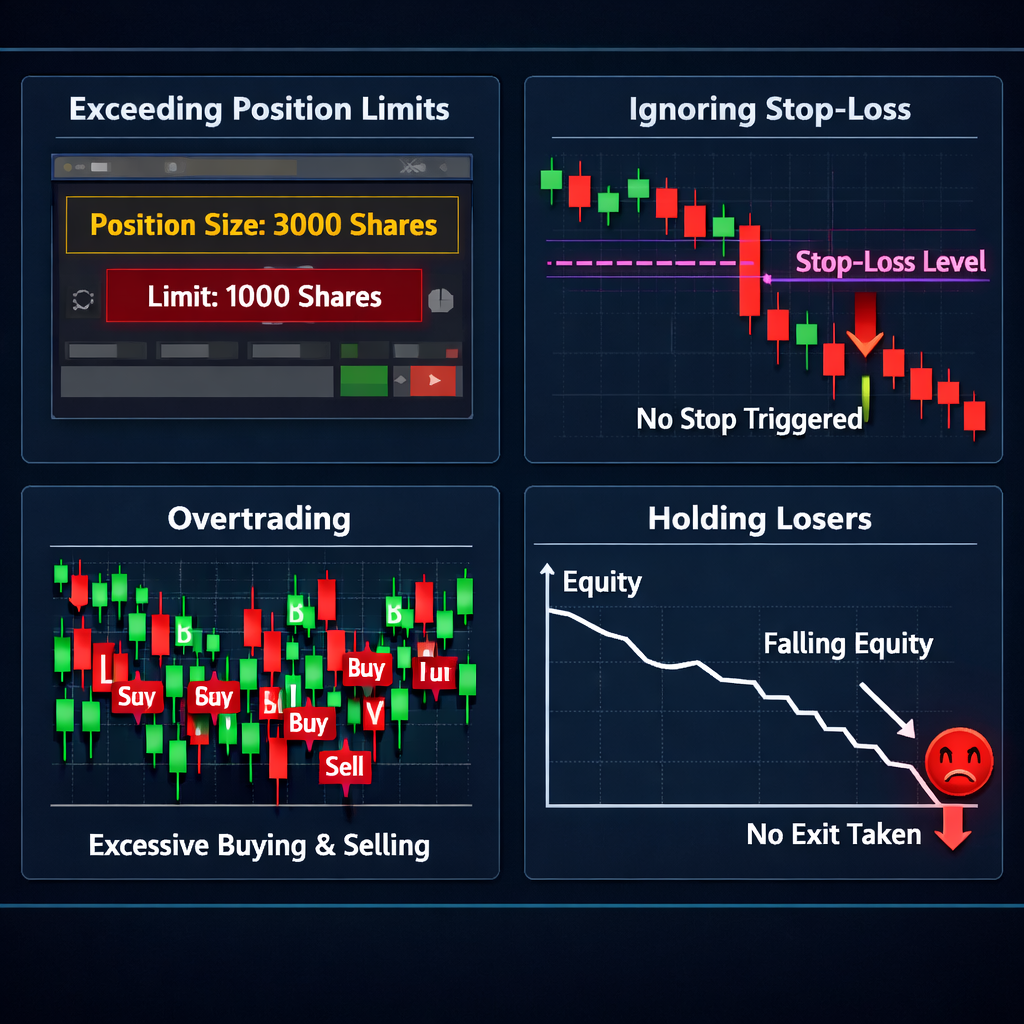
Common Types of Trading Rule Violations
Trader Alex uses a strict RSI and MACD strategy but occasionally acts on strong RSI signals alone without checking the MACD. This deviation from the plan can lead to inconsistent results because relying solely on one indicator increases risk.
If Alex continues this practice, performance might decline due to missed confirmations and unnecessary risks. To keep trading reliable and minimize losses, it’s important to stick strictly to the initial strategy of using both indicators.
How can you make sure your trading rules are always followed?
Refining Strategies Through Journaling
How do you refine your trading strategy using journal analysis? Here’s a simple checklist:
- Track compliance: Note any deviations from your rules.
- Identify patterns: Look for recurring issues or successes.
- Analyze signals: Review when RSI and MACD strategies diverged.
- Evaluate outcomes: Assess the profitability of different approaches.
- Adjust strategy: Incorporate insights into new trading plans.
Skipping journal reviews means missing out on opportunities to improve. For example, not reviewing deviations from your RSI and MACD rules might cause you to miss patterns that could boost profitability.
Next step: Use trading signals analysis to spot trends and adjust your plan accordingly.
By systematically analyzing journal data, traders can find weaknesses and make improvements.
Introduction to Journaling and Rule-based Trading
Journaling is a powerful tool for traders looking to improve their decision-making process. By systematically recording every trade, including the rationale behind each decision, you can gain valuable insights into your trading behavior and performance. This practice not only helps in identifying patterns but also aids in tracking progress over time. Additionally, incorporating rule-based trading strategies can further enhance your approach by providing a structured framework to follow during market analysis.
- Journaling helps improve trading decisions
- Rule-based trading offers a systematic approach
Related Articles for Enhancing Your Trading Skills
To deepen your understanding of technical analysis and custom indicators, consider exploring the following articles from Flows Trading Academy:
- Improve Trading Decisions with Journaling – Read More
- RSI Indicator Explained – Learn Here
- MACD Indicator Mastery – Explore Now
Apply with Flows Trading
Flows Trading offers a comprehensive platform to integrate technical analysis and trading signals into your strategy. By leveraging the metrics and trading signals provided, you can refine your approach and make more informed decisions. Additionally, maintaining a detailed trading journal on Flows Trading helps in tracking your progress and analyzing performance over time.
Further Reading and Resources
For beginners interested in technical analysis, Flows Trading Academy provides several articles that cover essential indicators and strategies. These resources are invaluable for understanding the basics of market analysis and building custom indicators tailored to your trading style.
- 5 Technical Indicators for Beginners – Get Started
- Build Your Own Trading Indicators – Learn How