


Detect Overtrading and Undertrading Through Journaling: A Guide
Table of Contents
The Illusion of Control: Overtrading and Undertrading Misconceptions
Trading beginners often think that more frequent trades automatically lead to higher profits, which can result in either overtrading or undertrading.
For example, an inexperienced trader might see what they believe is a strong market signal and make multiple quick trades, thinking that more activity equals better returns. But their account balance ends up shrinking due to transaction fees and poor timing of entries.
It’s crucial to understand the difference between overtrading and undertrading. Overtraders ignore market conditions and trade impulsively, while undertraders miss out on profitable setups by being overly cautious. Both behaviors come from a lack of understanding about how trading works.
Recognizing these misconceptions is key for long-term success. Instead of assuming more frequent trades mean higher profits, focus on quality over quantity. Make sure each trade aligns with your strategy and the current market conditions. Keeping a trading journal can help you track your trades effectively and validate them after the fact to avoid these pitfalls.
Trade Frequency Fallacies
Trade Frequency Fallacies
Don’t fall into the trap of thinking that more trades equal higher profits. This is a common mistake beginners make, often leading to either overtrading or undertrading.
Overtraders might ignore risk management and act on signals without proper validation. Undertraders, meanwhile, miss out on good opportunities because they’re too hesitant to trade.
Keeping a trading journal is crucial for new traders. It helps you see your trading frequency objectively and spot emotional triggers that can affect your decisions. Emotional tracking can be particularly useful here.
When reviewing past trades, ask yourself if they were based on solid analysis or just impulsive choices. Journaling helps you evaluate your approach and avoid repeating the same mistakes. Track Trades Effectively to improve your performance.
What’s next?
- Evaluate if you’re overtrading or undertrading.
- Start journaling: Write down each trade for better analysis.
- Review emotional triggers and manage impulsive decisions.
Opportunity Selectivity Myths
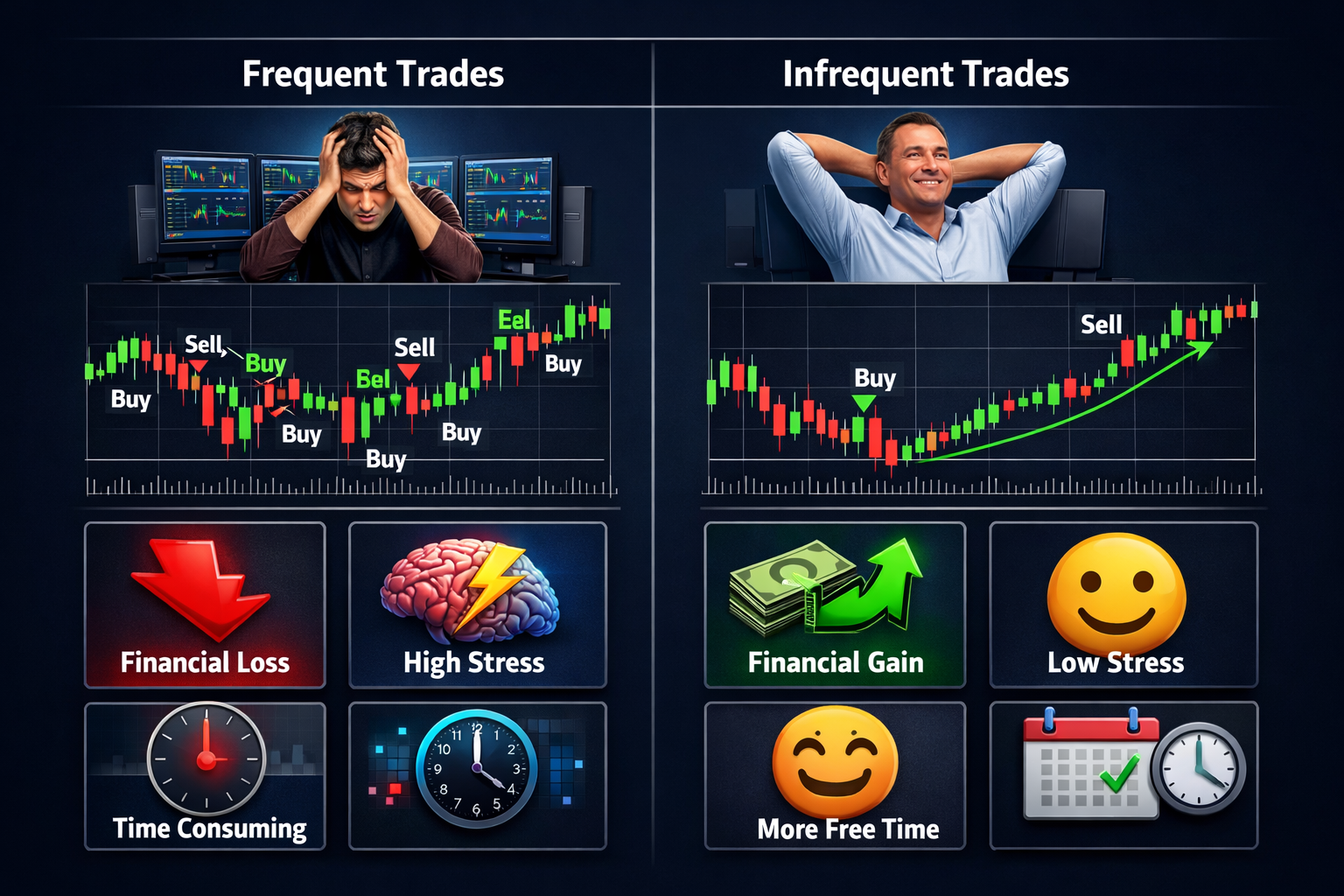
Myth: More frequent trades always lead to better profits. Reality: Trading often doesn’t mean you’ll make more money; it’s the quality of your picks that counts. If you don’t pick opportunities wisely, you could end up with losses.
Myth: Every trading signal is a valid trade opportunity. Reality: Not all signals are good ones. You need to look at each one based on market conditions and your plan.
Myth: Selecting fewer trades means less risk. Reality: Trading too little can mean you miss out on profitable opportunities, which reduces potential gains.
Example Reality Check: A trader who follows every signal without checking if it’s a good pick might end up with frequent losses. On the other hand, a trader who waits for strong signals and sticks to their plan may miss out on profits by being too selective.
Myth: Emotional reactions guide optimal trade selection. Reality: Emotions often mess with your judgment. Use journaling to spot emotional trading patterns and correct them. Relying on emotions can lead to impulsive decisions that hurt long-term performance.
Journaling for Traders: Keep a regular record of your trades to find patterns and improve how you assess opportunities. Journaling for Traders helps avoid common mistakes like overtrading or undertrading.
Myth: Rule-based trading eliminates the need for selective opportunity analysis. Reality: Rules give structure, but each trade still needs to be evaluated for quality and fit with your plan. Relying solely on rules without considering individual market conditions can lead to poor trades.
Practical Application: Review recent trades through journal entries. Identify where you missed profitable opportunities or entered bad trades too often. Adjust your strategy based on these insights to improve future performance.
Start evaluating each trade opportunity more carefully today by combining objective criteria with subjective judgment, ensuring both quality and frequency are balanced for optimal results.
Analyzing Trade Patterns Through Journaling: A Practical Approach
Journaling helps traders track their trading frequency and spot patterns of overtrading or undertrading. By recording each trade along with market conditions and emotional states, you can identify trends that might otherwise go unnoticed. For example, frequent trades during high volatility could indicate overtrading due to heightened emotions, while long periods of inactivity despite good signals may suggest undertrading from fear.
Ignoring these patterns through journaling leads to persistent overtrading or undertrading, resulting in suboptimal performance and potential financial loss. Journaling lets you see when you’re trading too much or too little, helping you make adjustments based on real data rather than gut feelings. If your journals show a pattern of overtrading, setting stricter trade frequency rules can help mitigate the risk.
Regularly reviewing these patterns improves your trading plan by ensuring you neither miss opportunities nor take unnecessary risks. Rule-based trading is a powerful tool for achieving better discipline and profitability, compared to relying solely on intuition.
How will you use journaling to assess your own trade patterns?
Tracking Trade Frequency for Overtrading Detection
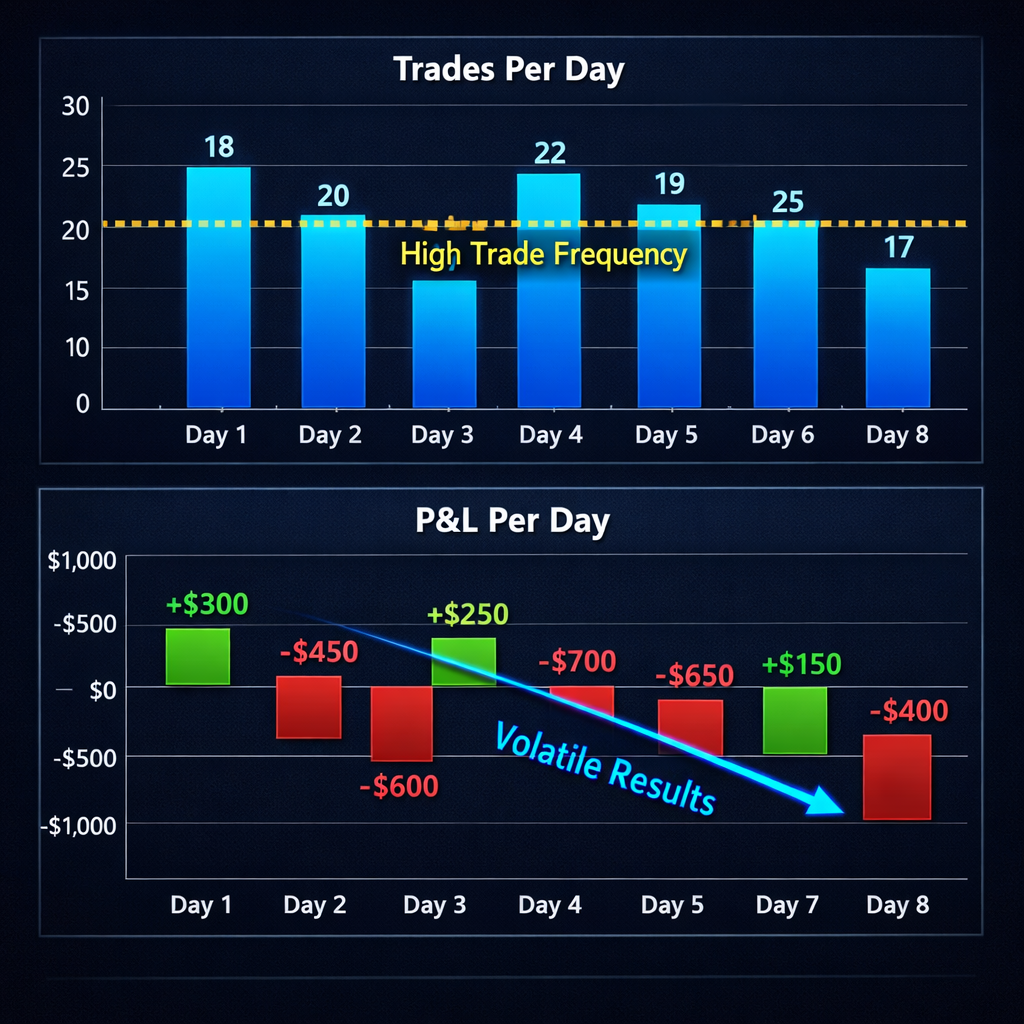
Let’s look at trader Alex as an example. Over the past month, Alex has made 50 trades and wants to know if this level of activity is too much. To find out, Alex starts tracking every trade in detail: date, time, profit or loss, and the reason behind each one.
After a week of detailed records, Alex notices that most trades are triggered by small market movements rather than significant price changes or clear technical signals. The average trade interval is just two days, which is much higher compared to more experienced traders who typically take fewer but more profitable trades.
Ignoring these patterns can lead to increased transaction costs and lower profits because emotional decisions based on market noise often don’t pay off as well as those driven by solid analysis. To avoid overtrading, Alex uses the objective data from their trading journal to assess if they’re making too many trades.
To manage trade frequency and reduce risks of overtrading, incorporating post-trade validation practices is crucial. Post-trade validation helps ensure each transaction aligns with the original trading plan, improving overall strategy effectiveness. Learn more about post-trade validation to see how it can help you stick to your plan and avoid overtrading.
Evaluating Opportunity Selectivity for Undertrading Insights
Jane realized she missed several potential trades last week when the market was favorable. On Monday, for example, she saw a strong uptrend signal but didn’t act because of recent losses. By keeping a journal of her decisions, Jane can see if this was an instance of undertrading.
Here’s what Jane recorded:
- Monday: The market showed clear buy signals, but she didn’t enter the trade due to fear.
- Tuesday: Another buy signal appeared, and again, she skipped it for the same reason.
- Wednesday: Despite some volatility, the trend was still positive, yet she held back.
When Jane reviewed her journal entries, she noticed a pattern: every time she felt uncertain about recent performance, she avoided trading. This hesitation caused her to miss out on opportunities that could have been profitable if she had acted.
To assess undertrading, Jane compared market conditions with the trading signals:
- Market Conditions: Multiple indicators confirmed an uptrend.
- Trading Signals: Clear buy signals based on technical analysis and volume trends.
Jane realized her missed opportunities were due to being overly cautious. By ignoring these patterns, she risks missing out on profitable trades while focusing too much on avoiding losses instead of taking advantage of gains.
To address this issue, Jane can adjust her trading plan:
- Enhance Plan: Act on clear signals regardless of recent performance.
- Behavioral Patterns: Recognize fear-driven decisions and counter them with pre-trade planning.
So, how will you use journaling to spot similar patterns in your own trading?
Effective Journaling Techniques: Maximizing Data-Driven Insights
When keeping your trading journal, follow these steps to avoid common mistakes like overtrading or undertrading:
- Log every trade: Write down when you enter and exit positions, how much you traded, and why.
- Analyze market conditions: Use market conditions to understand the context of your trades.
- Track trading signals: Note all triggered signals, whether or not you acted on them.
Identify emotional and behavioral insights:
- Write down how you feel before and after each trade: Acknowledge any emotions that might affect your decisions.
- Review journal weekly: Look for patterns in your behavior linked to specific market conditions.
- Refine your plan based on findings: Use enhance trading plan insights to improve strategies.
Avoid focusing only on trade data without considering emotional context, as this can miss important behavioral patterns and increase the risk of overtrading or undertrading. By including detailed analysis beyond just trades, you prevent these pitfalls and gain valuable insights for better trading discipline.
Recording Trades with Objectivity and Detail
When recording trades in your journal, start by noting the exact time and date for both entry and exit points along with the transaction prices. This is key for tracking performance over time.
Next, write down why you entered the trade and what trading signals influenced your decision. For example: “Entered at 10:30 AM based on a breakout signal from trading signals.”
Then, document why you exited the position, whether it was hitting a profit target or stopping out, and be specific about what criteria triggered your exit.
Include any external factors that might have affected the trade, like economic news or market volatility. For instance: “Exited early because of unexpected company earnings.”
If charts help explain the context of the trade, attach them to your journal entry. This can prevent misunderstandings later on when you review your notes.
Reflect on whether you stuck to a predetermined plan or made any deviations and why. Be clear about these changes so they’re easy to analyze in the future.
Finally, summarize what you learned from this particular trade, regardless of its outcome. Stick to factual observations and avoid emotional language.
Not documenting these details can lead to inaccurate performance data, which might cause flawed decision-making down the line. By keeping a detailed journal, traders can spot patterns indicating excessive trading or insufficient market engagement. How could your trading improve if you started analyzing it through the lens of a well-documented journal?
Analyzing Patterns of Overtrading and Undertrading
When looking at your trading journal as a beginner, it’s easy to miss the signs of overtrading and undertrading. Both can lead to ineffective strategies and financial losses.
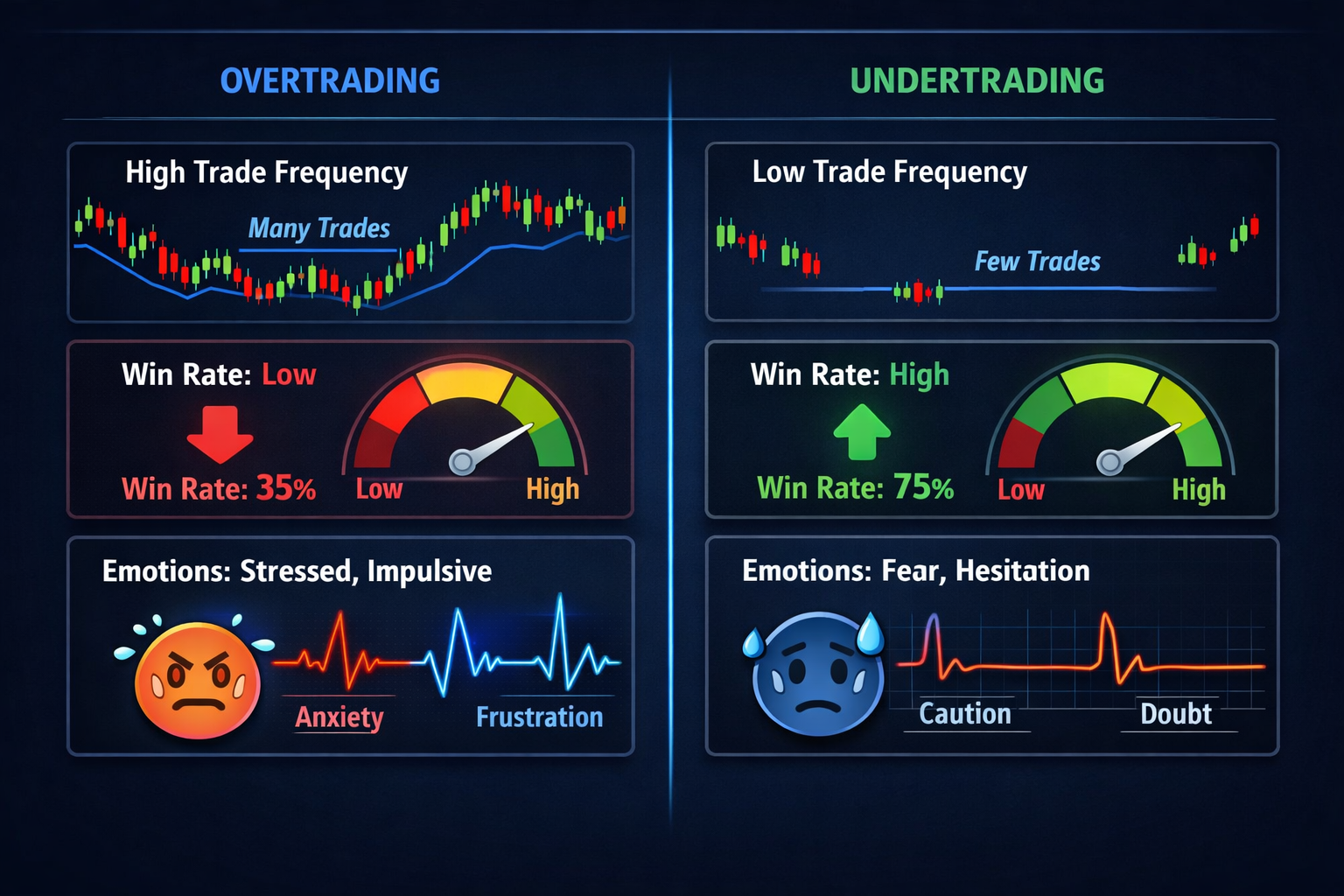
Overtrading is when you make too many trades without a solid reason, while undertrading happens when you don’t take profitable opportunities due to fear or indecision.
Here’s how you can spot these issues:
| Indicator | Overtrading | Undertrading |
|---|---|---|
| Trade Frequency | You make numerous trades daily, often more than 10 per day. | You trade rarely and only when forced by market conditions, typically less than once a week. |
| Profitability | Low overall profitability despite high trade frequency; small losses outweigh occasional wins. | Misses many profitable opportunities due to inaction, leading to significant missed gains. |
| Emotional State | Often anxious or stressed about not keeping up with market activity and seeking validation through trades. | Feels hesitant and uncertain, avoiding risks even when clear signals exist, resulting in low confidence. |
Recognizing these patterns is key because ignoring them can lead to persistent financial losses and emotional stress.
Overtraders think they are maximizing potential by staying active, while undertraders fear mistakes and miss out on profits due to inaction.
To avoid overtrading or undertrading, beginners should assess their trade frequency and opportunity selectivity. If your journal shows frequent trades with low overall profitability, it’s time to reassess your strategy and reduce unnecessary trades.
Understanding these patterns can help you adjust your trading habits for better results, moving from emotional decision-making to data-driven choices aligned with market conditions.
Are you ready to analyze your trading habits?
Avoiding Emotional Trading: A Data-Driven Approach
When you review your trading journal, watch out for emotional triggers that cause poor decisions:
- Track Emotional States: Note how you feel before and after each trade (like anxious or confident) to spot any links between your emotions and performance.
- Identify Patterns: Look for patterns where specific emotions or situations lead to negative results, like panic selling during market dips.
- Adjust Strategies: Modify your entry and exit rules when fear or greed is driving impulsive decisions to help reduce risk.
- Set Rules Against Emotional Trading: Avoid trading when you’re highly emotional by sticking to predefined stop-loss orders to prevent panic selling.
- Analyze Missed Opportunities: Review times when indecision or fear led to missed profits so you can better understand and manage these biases.
Ignoring emotions can seriously hurt your performance. Relying solely on technical analysis without considering psychological factors means missing out on opportunities due to a fear of loss (see Emotional Trading Risks). Combining journal data with an understanding of behavioral patterns (see behavioral patterns) helps build a stronger trading strategy that takes both technical and psychological factors into account.
Identifying Emotional Triggers Through Journal Analysis
How do you spot emotional trading patterns? Journal analysis can help reveal when emotions like fear or greed are impacting your decisions. For example, if you often close trades early because of sudden market drops, it’s likely that fear is playing a role.
When reviewing your journal, look for phrases such as “I need a win” or “This can’t go wrong.” These indicate heightened emotional states. Compare these entries with times when you stayed disciplined and stuck to your strategy despite market volatility.
Ignoring emotions in journals and focusing only on technical indicators won’t work because it misses important factors that lead to poor decisions and losses. By analyzing these patterns, you can see how emotions like fear or greed are affecting your trading choices.
For instance, if you notice a spike in trades after a stressful personal event, this might be an emotional trigger influencing your behavior. Identifying such triggers is essential for maintaining objectivity and sticking to your strategy. How will you start looking at your journal entries today?
Refining Strategies Based on Objective Insights
When reviewing your trading journal, look for patterns of overtrading and undertrading. Notice the times when frequent trades lead to poor returns compared to periods with fewer but higher-quality trades. Assess whether hesitation or impulsiveness affects your decisions, and identify emotional triggers like fear or greed that cause suboptimal choices.
Based on these insights, adjust your strategy. If you’re overtrading, reduce trade frequency. If undertrading due to hesitation, establish a disciplined entry protocol. Regularly revisit journal entries to refine your approach continuously.
Without objective analysis from journals, traders risk sticking with ineffective methods and failing to improve performance. Relying solely on intuition can lead to common pitfalls like overtrading or undertrading, which can hinder consistent profits. How will you apply these insights in your next trading session?
Applying Journaling Insights: Optimizing Trading Discipline
To optimize trading discipline using journaling insights:
First, review your trading frequency and spot any days when you overtrade or under-trade compared to usual patterns. Look at historical data to identify unusual trends.
Next, establish clear rules for entering and exiting trades based on market conditions, not feelings. Create a checklist of objective factors to evaluate before each trade. Track the success rate of trades during different times of day or varying levels of market volatility.
Avoid chasing signals without proper analysis; focus on selective trading rather than constant activity. Use your journal insights to refine your strategy and eliminate ineffective patterns.
The wrong approach gives vague advice that doesn’t lead to specific actions for better discipline. Follow these steps to ensure your trades align with a disciplined strategy instead of emotional impulses.
Introduction to Journaling for Traders
Journaling is a fundamental practice in trading that helps traders document their experiences, analyze market conditions, and refine their strategies. It serves as a critical tool for beginners and experienced traders alike, providing insights into emotional states, behavioral patterns, and the effectiveness of rule-based trading approaches.
- Beginner traders should first learn how to start journaling.
- Documenting market conditions accurately can provide valuable insights into trade decisions.
Related Articles
To deepen your understanding of journaling and its applications in trading, consider exploring the following articles from our academy:
- How to Use Journaling for Rule-Based Trading
- Understanding How to Record Market Conditions
- Post-Trade Validation vs. Hindsight Bias Explained
- Emotional Tracking Explained: Enhancing Your Psychological Well-being
- How Journaling Can Enhance Your Trading Plan
Rule-Based Trading and Journaling
For those using rule-based strategies, understanding how to use journaling for this approach is crucial. By tracking trades according to predefined rules, traders can ensure consistency and identify areas for improvement.
- Learn the basics of starting a trading journal
- Understand market conditions accurately
Post-Trade Analysis
After each trade, post-trade validation helps traders evaluate their performance objectively. This process is essential for identifying mistakes and learning from them to avoid similar errors in the future.
- Identify behavioral patterns through journaling
Emotional Tracking
Recording emotional states in a structured way enhances psychological well-being during trading. By understanding and managing emotions, traders can make more rational decisions based on data rather than feelings.
- Enhance your overall trading strategy
Apply with Flows
Journaling can be seamlessly integrated into your trading workflow using tools like Flows. By leveraging metrics and trading signals, you can identify patterns and opportunities more effectively.
- Identify behavioral patterns and recurring errors
Further Reading
To explore the full picture of journaling in trading and its benefits, see our comprehensive guide on trading journals. This resource provides detailed insights into how to effectively use journaling to enhance your trading plan.
- Comprehensive guide on trading journals