


How Journaling Can Enhance Your Trading Plan
Table of Contents
The Problem of Ignoring Journaling for Trading Plan Evolution
Neglecting to journal your trading activities can seriously hurt your performance and success in the market. Imagine spending hours analyzing charts for a trade opportunity but forgetting crucial details once the trade is closed because you rely on memory alone. Without documented evidence of your thought process, it’s impossible to spot patterns or areas where you need improvement.
Relying solely on intuition instead of recorded data means missing out on concrete insights that can highlight both successes and failures. For example, you might notice a tendency to enter trades based on gut feelings rather than technical indicators like the MACD strategy or RSI indicator. Without journal entries, it’s tough to tell reliable signals from those that led to losses.
Ignoring journaling leaves you vulnerable to repeating mistakes and missing out on growth opportunities. Journaling for Trading Success highlights how tracking your trades can provide valuable insights into your trading behavior, helping you evolve your strategy over time.
Identifying Emotional Biases Through Journal Entries
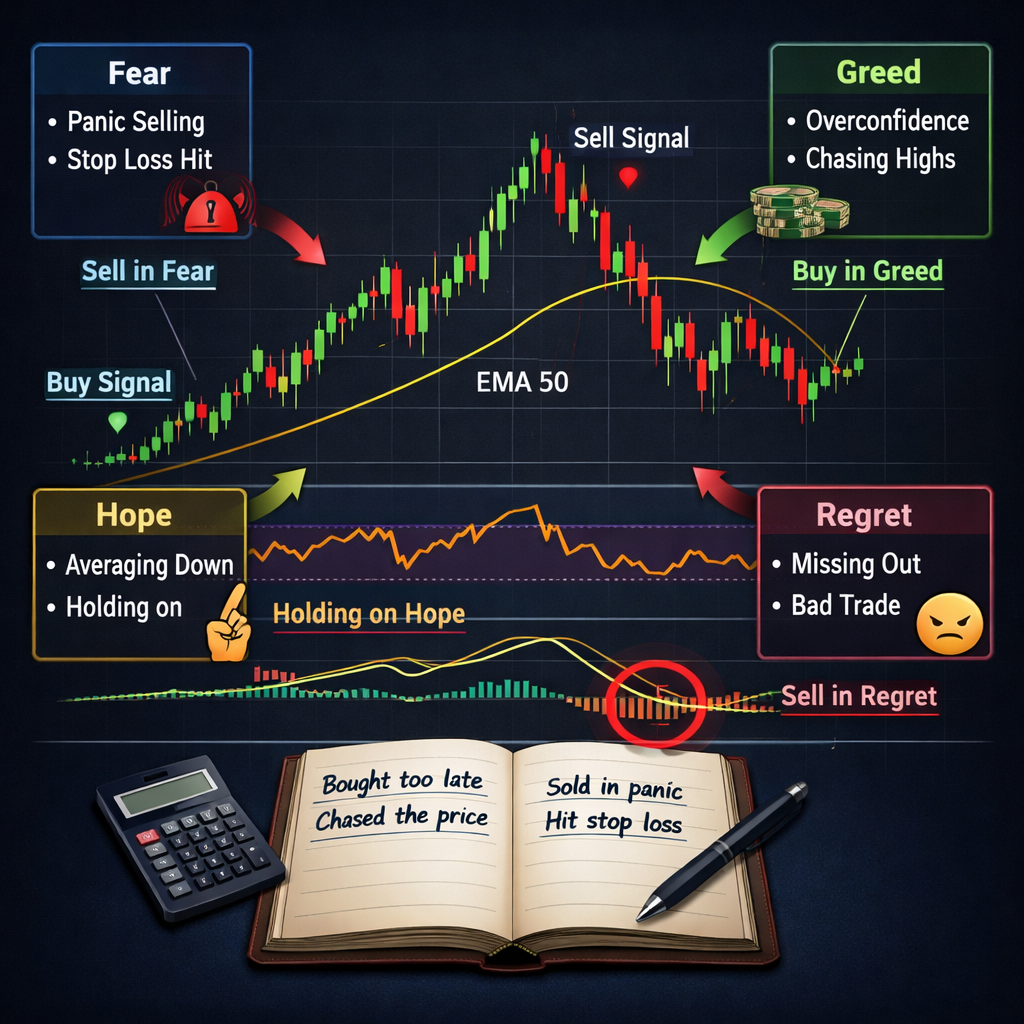
When you hesitate to close a losing trade out of fear or rush into trades at market peaks due to greed, emotional biases are messing with your decisions. Here’s how journaling can help you spot these biases:
- Write down what you’re feeling before and after each decision.
- Note what triggers impulsive actions, like breaking news or stock movements.
- Reflect on how those feelings impacted your choices and outcomes.
- Compare a fear-driven trade to one based on careful analysis.
- Update your trading rules to address any emotional pitfalls.
Ignoring emotions can lead to poor decisions because it overlooks the psychological impact on judgment. For example, Emotional Biases in Trading explains how fear and greed distort rational thinking.
Validating Assumptions Against Real-World Data
To validate trading assumptions, follow these steps:
- Identify common beginner assumptions: Note frequent beliefs like “stocks always rebound after sharp declines” or “the RSI indicator is infallible.”
- Collect real-world data: Track historical market data relevant to your assumption. For example, if you believe the RSI signals profitable trades, gather data on past buy signals and their performance.
- Backtest or live test assumptions: Use trading simulation software or actual trades to see how well your assumption holds up over time. Compare results against benchmarks like market averages.
- Analyze data critically: Look for patterns that confirm or refute your initial assumption. For example, if the RSI frequently misses key reversals, it may not be as reliable as you thought.
- Update trading rules based on findings: Adjust your strategy when evidence shows an assumption is flawed. If sharp declines often don’t rebound quickly, consider modifying stop-loss settings to minimize losses during downturns.
Avoid making changes solely based on short-term market trends without considering long-term data. Rely on robust validation through comprehensive data analysis instead.
To enhance your validation process, refer to our technical analysis guide for deeper insights into market patterns and regularly update trading rules based on journal entries.
How will you use real-world data to test your next trading assumption?
Updating Trading Rules with Real Data
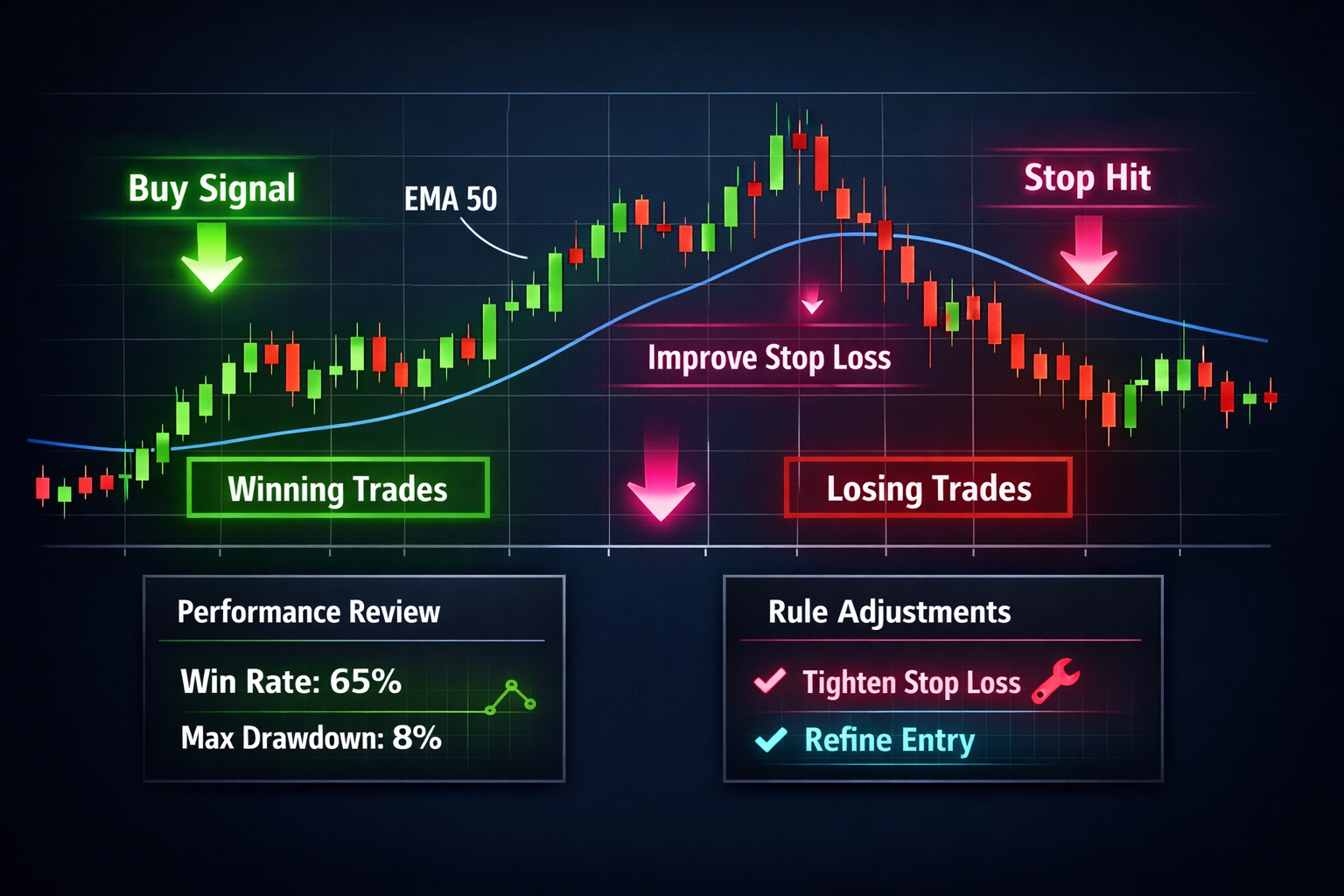
Review your trading journal entries to spot patterns and trends from recent trades. This helps you see which strategies are working and which aren’t. Look at key metrics like win rate, profit factor, and drawdown for your most recent trades, and compare them with your initial assumptions or past performance data to find any discrepancies.
Based on these insights, update your trading rules. For instance, if a certain entry condition keeps yielding poor results, tweak it or get rid of it entirely. Make sure each change is based on objective data rather than gut feelings. Test any revised rules in a simulated environment before implementing them live to avoid losing money from untested changes and refine your strategy further as real-time market conditions evolve.
Adjust position size limits according to the updated trading rules, tweaking risk parameters if needed to match the latest performance metrics from your journal entries. Regularly review and update your trading rules every month or quarter with new data to keep your strategy dynamic and responsive to changing market conditions.
Using outdated trading rules without incorporating insights from trade history can lead you to stick with ineffective strategies, resulting in poor trading outcomes. Integrating updated rules into your daily routine helps you stay ahead of the curve and adapt effectively to shifting market dynamics.
Analyzing Trade Patterns for Improvement
Imagine you’re an active trader with a portfolio of 10 stocks. Over the past month, five have underperformed compared to what you expected or overall market trends. Analyzing these trades can help you spot inefficiencies and improve your performance.
Let’s look at Stock A as an example. You bought it at $50 based on a bullish MACD crossover, but within a week, its price dropped below the 20-day moving average. Instead of figuring out why this happened, you sold it to cut losses.
To analyze your trades properly, track specific metrics like entry and exit prices, stop-loss levels, and take-profit targets for each trade. For Stock A, note that the MACD crossover was your trigger but failed to predict the price drop below the moving average. This suggests potential issues with relying solely on technical indicators.
Use a trading journal to document these details systematically. Log every decision made for Stock A and compare it against actual market movements. Was the MACD signal reliable? Were there other signals you missed or ignored?
Without analyzing trade patterns, you risk making decisions based on gut feelings rather than data-driven insights, leading to repeated mistakes and poor performance.
To improve, revisit and update your trading rules based on what you log in your journal. For Stock A, adjust criteria to incorporate additional signals like RSI divergence or volume spikes before entering trades.
By rigorously analyzing trade patterns through specific metrics and a detailed journal, you can uncover inefficiencies that emotional responses alone won’t reveal. This helps ensure better decision-making for future trades.
Improve trading decisions by reviewing your entries critically every week to stay ahead of market changes and refine your strategy constantly.
What specific metric will you start tracking today?
Refining Constraints Using Journal Insights
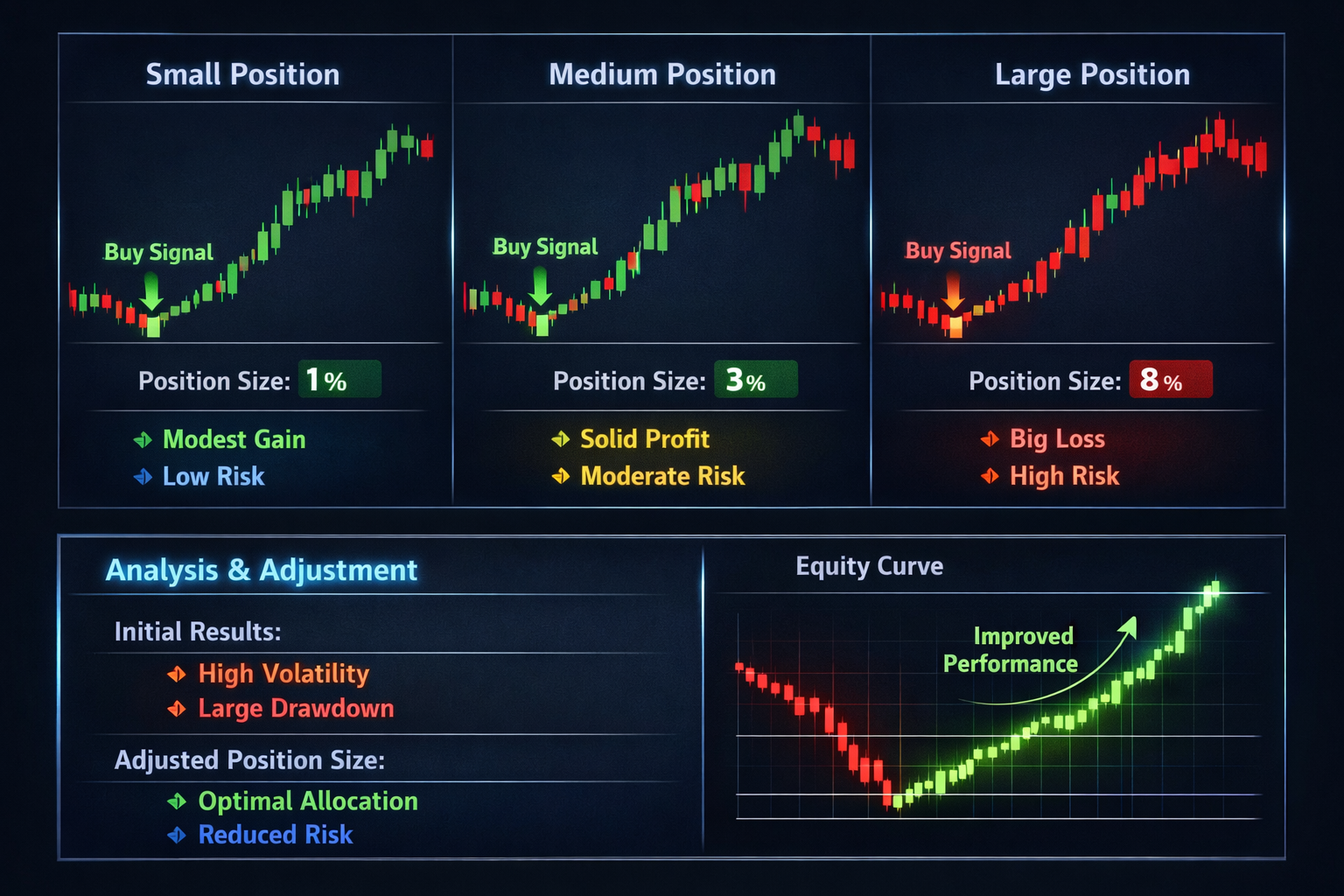
When refining trading constraints based on journal insights, traders often set overly rigid or broad position sizes that don’t adapt well to real-world performance data. This can lead to missed opportunities or excessive risk. To effectively adjust these limits, you need to analyze actual trade outcomes documented in your journal.
By comparing initial strategy designs with real-world results, you can identify patterns suggesting necessary changes. For example, if your journal shows consistent losses during specific market conditions, stricter entry rules may be needed. Adjusting position sizes based on performance data helps mitigate risks and capitalize on profitable trends.
Here are three key methods to refine constraints using journal insights:
| Method | Description | When It Wins |
|---|---|---|
| Adjust Position Size | Modify position sizes based on performance data. | When you see consistent losses or gains. |
| Tighten Stop-Loss | Narrow stop-loss levels to minimize risk after identifying unfavorable market conditions. | When journal entries indicate high drawdowns. |
| Update Entry Rules | Revise entry criteria to better align with profitable scenarios observed in the journal. | When specific patterns lead to consistent profits. |
These methods help you evolve your strategies to be more adaptive and responsive to market realities, rather than sticking to rigid constraints.
For example, if your trading journal reveals frequent losses when an indicator crosses above 70 (indicating overbought conditions), adjusting entry rules to avoid such situations can improve performance. Regularly integrating these refinement techniques into your reviews helps optimize position sizes and other constraints for evolving market conditions.
How will you use your trading journal today to fine-tune numerical constraints?
Reassessing Position Size Limits Based on Data
To manage risks effectively and allocate capital wisely:
- Review your trading journal to spot trends in both winning and losing trades.
- Calculate new position sizes based on recent performance. If losses are due to being too aggressive, reduce future positions accordingly.
- Use custom indicators like RSI or MACD signals to fine-tune entry and exit points (trading signals).
- Set stop-loss orders that match your updated position limits to protect your capital.
- Update your trading rules document to keep your strategy consistent.
Don’t skip these steps, as sticking with old position sizes can lead to poor capital management and higher risks. Always base adjustments on actual data (Update Trading Rules).
What’s next in refining your trading constraints using this information?
Debunking Common Misconceptions About Trading Journals
Misunderstandings about trading journals often lead beginners to overlook their value. One common misconception is that successful traders don’t use them because they rely solely on instinct and experience. But even the most experienced trader benefits from keeping a record of every trade.
Another myth is that perfect recall negates the need for a journal. This belief misses the emotional insights gained by reflecting on each trade’s details – insights crucial for identifying and correcting mistakes driven by fear or greed.
In reality, journals help traders refine their strategies over time. By updating rules based on real-world data and validating assumptions, they can improve decision-making significantly. Spotting patterns and trends becomes easier with this process.
So instead of dismissing trading journals as unnecessary, consider how they enhance your trading by grounding intuition with solid evidence and emotional self-awareness.
Integrating Journal Insights into Trading Routine
- Open your trading journal and review recent entries to spot patterns or trends that might have gone unnoticed during active trading.
- Identify any recurring emotional biases, such as fear of loss or impulsive decisions driven by greed, from your journal notes. Recognizing these biases helps you address them in future trades.
- Refine your trading rules based on actual data from your journal entries. For example, if you notice consistent losses due to high volatility at certain times, adjust your rules to avoid trading during those periods.
- Adjust position size limits regularly by checking performance metrics noted in your journal. This keeps your risk management aligned with current market conditions and your personal financial status.
- Implement changes right away after reviewing your journal entries to prevent slipping back into old habits and missing out on improvement opportunities.
- Monitor how these adjustments work over several trading sessions to ensure they are effective. If a new rule doesn’t improve performance, revise it based on ongoing observations in your journal.
- Consider broader implications beyond immediate trades by thinking about how journal insights can influence your overall strategy and long-term goals.
Not integrating journal insights means you’re stuck with outdated strategies that don not adapt to real-world data. In contrast, actively using journals allows for continuous improvement and better alignment with evolving market conditions.
Imagine a trader who logs every trade but never revisits these records to make adjustments. Their success rate would likely be lower compared to someone who regularly integrates journal insights.
Introduction to Journaling and Trading Plan Refinement
Journaling is a fundamental practice for traders looking to refine their trading plans and improve overall performance. By documenting every trade, including the rationale behind each decision, traders can gain valuable insights into their strategies and identify areas for improvement. As explained in this comprehensive guide, maintaining a trading journal is essential for tracking progress and learning from past mistakes.
- Journaling helps traders understand their decision-making process
- It allows for the identification of patterns in both successes and failures
- A well-maintained journal serves as a historical record for future reference
Related Articles on Trading Strategies
To enhance your trading skills, consider exploring these related articles that delve into various aspects of technical analysis and strategy refinement. These resources provide in-depth knowledge about essential indicators like the RSI and MACD, which are crucial for understanding market behavior and price patterns.
- RSI Indicator Explained – Learn how to use this momentum indicator effectively
- MACD Indicator Mastery – Master trend-following strategies and crossover signals
- Technical Analysis Academy – Comprehensive guide on market behavior and price patterns
Applying Journaling with Flows Trading Metrics
Flows Trading offers a range of metrics and trading signals that can be integrated into your journaling process to refine your strategies. By tracking these metrics, you can gain deeper insights into the effectiveness of your trades and make data-driven decisions. For more information on how to track and refine your strategies using Flows Trading’s tools, see Metrics & Trading Signals.
- Use metrics to evaluate trading performance objectively
- Incorporate signals for real-time market analysis
- Refine your trading plan based on quantitative data
Further Reading and Resources
To continue learning about journaling, trading plans, and higher-level concepts in technical analysis, explore these additional resources. These articles provide a deeper understanding of essential indicators and offer guidance on building your own custom indicators to personalize your trading approach.
- 5 Technical Indicators for Beginners – Start with these basic tools
- Build Your Own Trading Indicators – Personalize your trading strategy