


Track Missed and Invalid Trades: A Beginner's Guide
Table of Contents
Why Tracking Missed Trades is Crucial
After just a few weeks of trading, you might notice your account balance isn’t growing as fast as you hoped. You review your trades but often miss the bigger picture by not looking at the ones you didn’t make.
Tracking missed trades is crucial because it helps uncover patterns and areas for improvement that successful trades alone can’t show. If you ignore these missed opportunities, you’re missing out on vital data points that could help refine your strategy and boost your skills.
Imagine spotting a promising chart pattern but waiting for confirmation, only to see the market move as predicted – leaving money on the table. Writing down this missed trade lets you understand why you hesitated and apply those lessons in future decisions.
How does tracking missed trades help beginners? By identifying patterns in your decision-making that cause you to miss opportunities, you can fine-tune your entry points and avoid common mistakes. This insight is really helpful for building confidence and improving trading outcomes.
Technical analysis and trading journals are key tools that help traders analyze both successful and missed trades, leading to a more thorough approach to strategy improvement.
Identifying Patterns in Missed Opportunities
To spot recurring missed trading opportunities, ask yourself these questions:
- Did I ignore clear signals?
- Was fear or greed stopping me from acting?
- Was my risk management too tight, causing me to miss out on gains?
- Did impatience push me into trades too early?
: Look for common themes and note specific situations where these issues appear. This will help you identify your weak spots.
Example Scenario: You hesitate every time a strong chart pattern shows up because of fear about losing money. This suggests that psychological barriers might be impacting your decisions.
By recognizing and fixing these patterns, you can avoid similar mistakes in the future and improve your trading results.
Next Step: Keep a trading journal to track why you didn’t take potential trades each day. Best Trading Journals
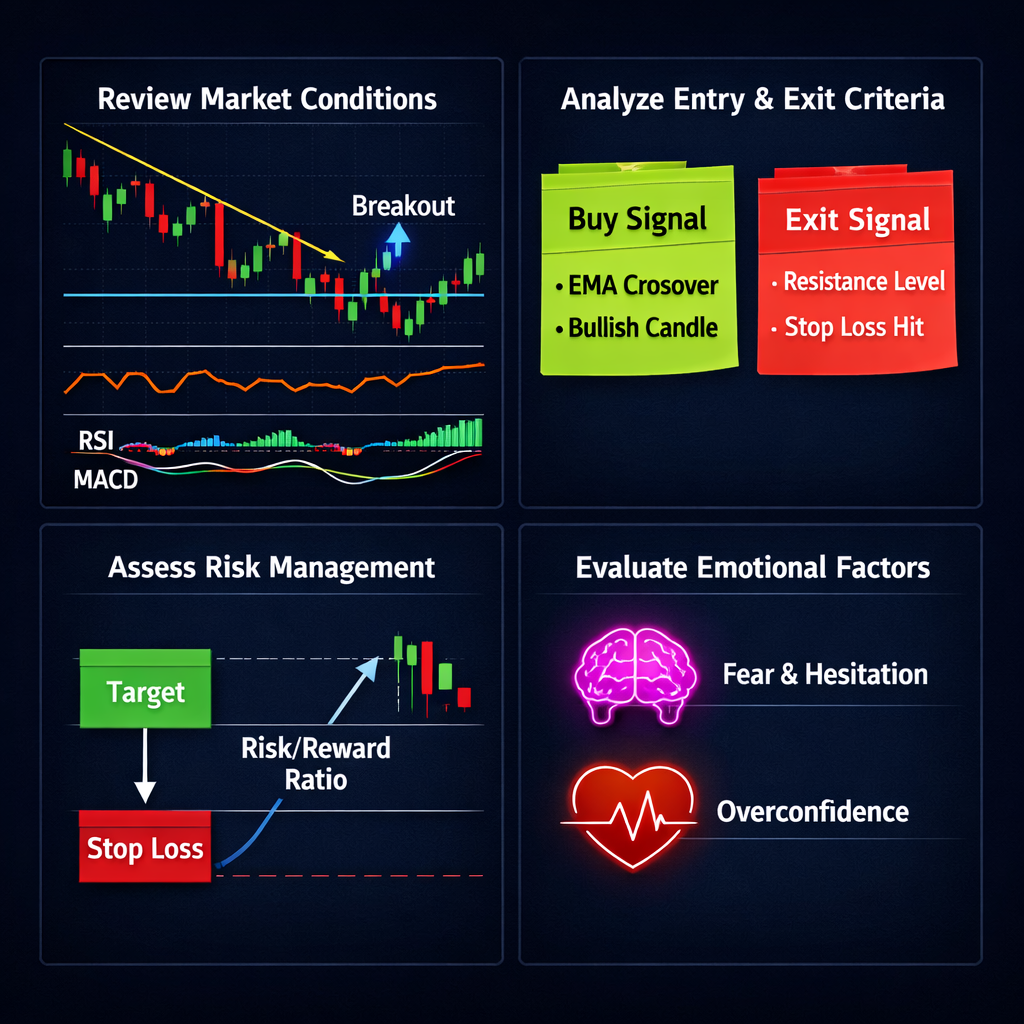
Steps to Document Invalid Trades
How do you document invalid trades? Properly recording these instances helps with accurate analysis and improving your trading strategies. Here’s how:
- Identify the Trade: Recognize when a setup was identified but not acted upon.
- Note Down Details: Write down the date, time, asset, entry price, and potential exit points as if you had executed it.
- Describe Circumstances: Explain why you didn’t take the trade. Was it fear, doubt, or missed signals?
- Analyze Missed Opportunities: Review whether a key signal was missed or if your decision-making needs improvement.
For example, document when you saw a strong chart pattern but hesitated due to market fears.
Use a forex trades tracker forex trades tracker for consistency. Beginners often record invalid trades incorrectly without proper documentation, leading to flawed analysis and poor decisions.
After documenting your invalid trades, use a missed opportunities checklist Missed Opportunities Checklist to identify patterns and improve future decision-making.
Avoiding Common Mistakes in Recording Invalid Trades
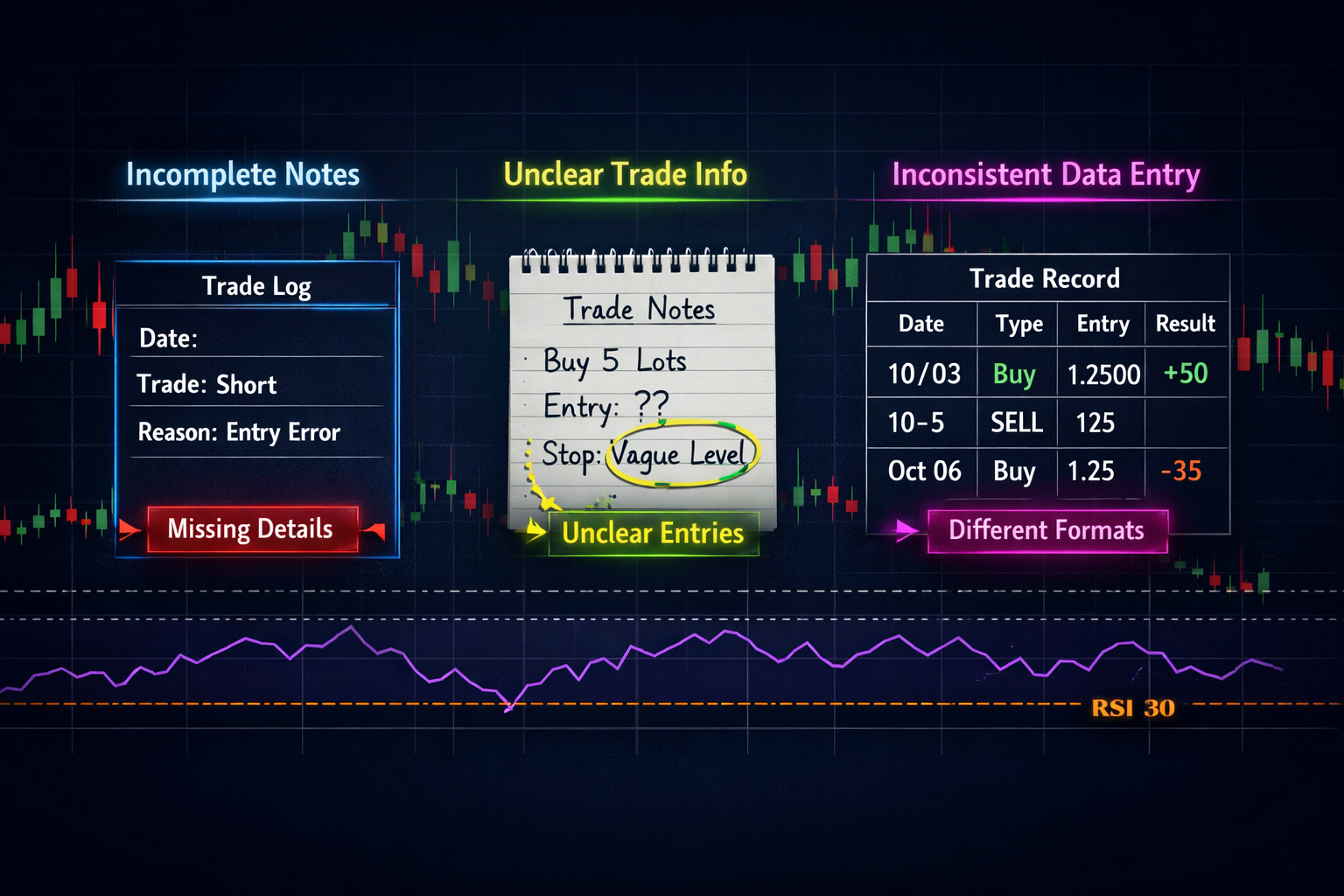
When recording invalid trades, beginners often make common mistakes that can lead to incorrect analysis and flawed learning from past decisions. Here’s how to avoid them:
- Not noting the reasons: Always document why you skipped or closed a trade early. For example, if high volatility prompted an exit, clearly state “closed due to high volatility,” not just the price and time.
- Ignoring emotional triggers: Record any emotions that influenced your decision to avoid a trade. If fear led you to miss an entry point, note it as “skipped due to fear of loss.”
- Overlooking setup quality: Invalid trades often occur because setups were poor or indicators didn’t align properly. For instance, if the trend strength was weak, write down “Invalid due to weak trend strength.”
Avoid the trap of recording only basic details and missing out on deeper insights that can improve future trading decisions.
Next step: Use this guide to reflect on your recent missed opportunities and enhance your decision-making process.
Learning from Non-Trades Through Examples
Let’s say you’re trading the S&P 500 on March 15th, and an economic report comes out suggesting a drop in inflation. The market becomes volatile, and you spot an inverse head-and-shoulders pattern forming near support levels, which is typically a buy signal according to your technical analysis.
But instead of jumping right in, you wait until after lunch when the market reopens. By then, prices have already climbed by 1%, making it too late and expensive to enter at a good price.
What if.. you hadn’t written down this missed opportunity? Without documenting why you didn’t trade, you might miss out on recognizing that hesitation often leads to lost profits. Keeping track of these instances helps you spot patterns in your decision-making, like waiting for unnecessary confirmation signals before acting.
By reviewing both trades and non-trades, you can better understand market behavior and refine your strategy. For example, looking at successful entries with similar setups shows when hesitation costs you money.
How would you record this missed trade in your journal to help with future decisions?
Comparing Benefits of Reflecting on Missed Opportunities
Looking at the trades you missed can give you valuable insights that you might otherwise overlook. For example, if you passed up buying Bitcoin when it was at $30,000 and then watched it drop significantly afterward, you’d miss out on learning from that mistake.
When comparing reflecting on missed trades to just focusing on active trading, the benefits are clear:
| Criteria | Reflecting on Missed Trades | Active Trading Only |
|---|---|---|
| Risk Identification | Helps you spot patterns leading to future losses, so you can manage risks better. | Ignores potential risks that didn’t come up during active trades. |
| Decision Improvement | Shows where your decision-making went wrong, helping you refine strategies and avoid similar mistakes in the future. | Only covers decisions made while actively trading and doesn’t offer broader lessons. |
| Emotional Learning | Helps you understand emotional triggers that led to missed opportunities, which can help you manage emotions better next time around. | Doesn’t address psychological factors affecting your decision-making. |
By reflecting on both wins and losses, you get a more complete picture of your trading behavior and can improve overall performance.
To make the most out of this approach, regularly analyze trades – both successful and missed – to inform your decisions and refine your strategies based on what you’ve learned from all experiences.
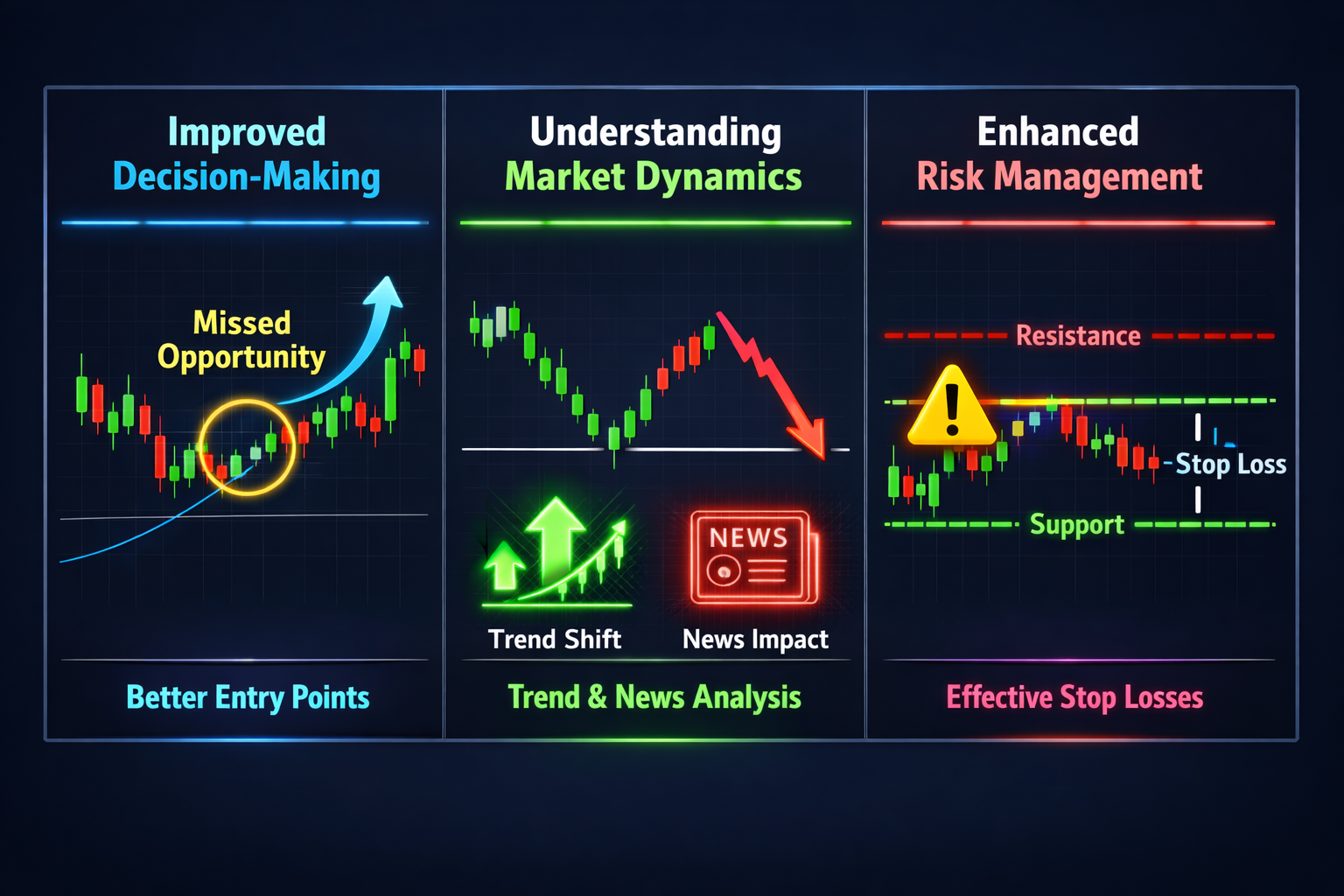
Improving Trading Decisions with Insights
To improve trading decisions by analyzing missed and invalid trades:
- Figure out why you missed an opportunity: Was it due to market volatility, unclear signals, or emotional decision-making?
- Keep an eye on your trading journal to spot patterns in these errors.
- Adjust your strategy based on what you’ve learned from past mistakes.
- Update your risk management plan with new insights.
- Learn from invalid trades by understanding the errors and how to avoid them.
Don’t just focus on successful trades; missed opportunities can teach you a lot too. By looking at both successes and failures, you’ll gain a better understanding of market behavior and your own trading habits.
Regularly reviewing your journal helps refine your strategy based on lessons from all your trades – both wins and losses.
Introduction to Tracking Missed and Invalid Trades
In the fast-paced world of trading, it’s crucial to keep a detailed record of every trade you make. This practice not only helps in identifying missed opportunities but also aids in analyzing invalid trades that could have been avoided. A trading journal is an essential tool for this purpose, as it allows traders to document their decisions and outcomes meticulously.
- Recording every trade improves your understanding of market dynamics
- Identifying mistakes helps refine trading strategies
Related Articles on Trading Journals and Analysis
To enhance your knowledge about the importance of trading journals, consider exploring these related articles from Flows Trading Academy. Each article provides valuable insights into different aspects of trade analysis and journaling.
Applying with Flows Trading Academy
Flows Trading Academy offers a comprehensive suite of tools and resources to help traders improve their skills. By using the academy’s trading journal feature, you can easily track your trades and identify patterns that may have led to missed opportunities or invalid trades. This process is vital for refining your technical analysis skills.
- Use Flows Trading Academy to record every trade
- Identify visual indicators leading to missed opportunities
Further Reading and Resources
For more detailed information on how trading journals can improve your professional process, check out the following resources. These guides provide in-depth instructions on analyzing trades and understanding technical analysis methods.