


Discretionary Trading Journal: A Beginner's Guide
Table of Contents
Why Structured Journaling is Crucial for Discretionary Traders
If you’ve been tracking trades in a loose notebook and having trouble figuring out why some strategies work while others don’t, structured journaling can help. It gives you a clear framework to capture both technical data and your reasoning behind each decision.
For example, when reviewing a recent trade, note the RSI levels at entry along with why you decided to buy or sell. This systematic approach helps identify patterns and refine your strategy over time.
On the other hand, an unstructured journal often leaves too much room for ambiguity. Important details get lost in vague notes, making it hard to draw meaningful conclusions from past trades.
Structured Journaling Importance highlights how a disciplined journal can significantly enhance your trading performance. By documenting the technical analysis and market sentiment for each trade, you ensure that every detail is recorded accurately. This helps improve future decisions and long-term success.
So instead of just writing down what happened, focus on why it happened and how you felt at the time. This structured approach can make a big difference in your trading performance.
Common Misconceptions About Journaling
Misconception: Trading journals are only useful for record-keeping and compliance.
Incorrect approach: Thinking that journaling is just about documenting trades without helping you analyze or grow as a trader.
Why it fails: If you focus only on record-keeping, you miss out on the important self-reflection needed to improve your trading. Compliance might be one small benefit, but understanding why and how you made certain decisions can give you much deeper insights.
Misconception: Journaling is too time-consuming and impractical.
Incorrect approach: Believing that writing detailed entries after each trade will slow down your decision-making process.
Why it fails: Quick notes taken right after a trade actually help speed up future analysis. Use templates or digital tools to make the process faster and easier.
Misconception: Only losing trades need documentation in a journal.
Incorrect approach: Ignoring profitable trades as unnecessary for review.
Why it fails: Analyzing winning strategies is just as important as examining losses. Both types of trades can teach you what works and why.
Avoid these misconceptions by using your trading journal as a tool to continuously improve, not just keep records. Dive deep into the details of each trade to uncover hidden patterns in your decision-making process. Learn more about improving decisions with journaling and start using your journal effectively today.
Documenting Decision Logic in Your Trading Journal
Before placing a trade, write down all the technical indicators that influenced your decision. For instance, note if it was a moving average crossover or an RSI overbought signal that made you consider entering the market. Also, clearly state what conditions had to be met for you to enter the trade, like confirming a bullish candlestick pattern or observing higher volatility.
When setting exit points, explain why you chose specific profit or loss targets. Use past performance data to support your choices and include an analysis of broader market sentiment to show how external factors affected your decisions that day.
Make it a habit to review these entries regularly so you can refine your decision-making process over time. Don’t just record the outcomes; document your thought processes too, otherwise you might repeat mistakes due to unclear reasoning behind trades.
How does your current journaling approach capture these details?
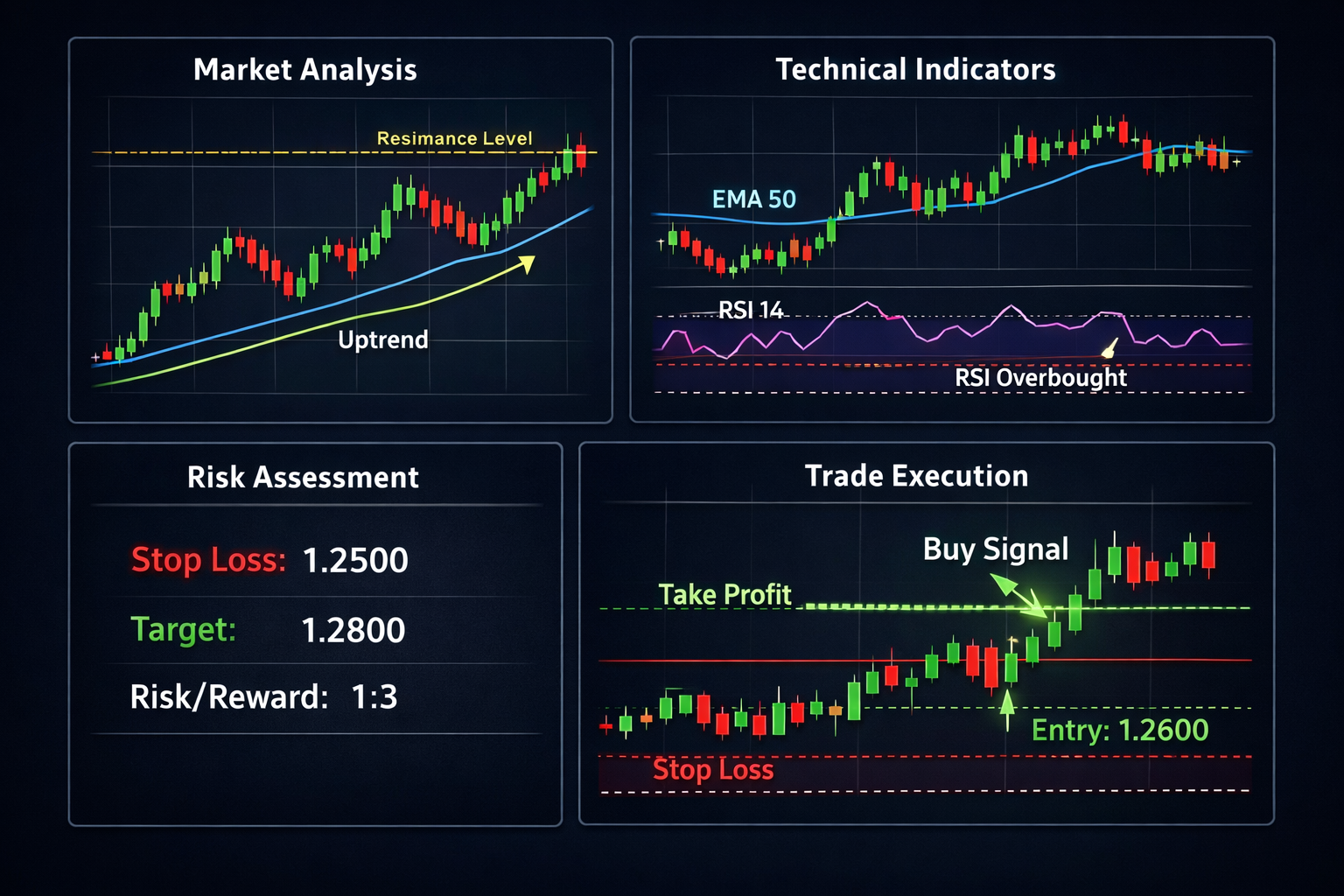
Capturing the 'Why' Behind Each Trade
What should I document for each trade? Here’s how to capture the rationale behind every transaction:
- Before entering a trade:
- List all technical indicators that influenced your decision, like RSI levels or MACD crossovers.
- Check out our guide on Technical Analysis for more details.
- Market sentiment:
- Note any news events, economic data releases, or broader market trends that affected your trade decision.
- Entry and exit points:
- Record the price at which you entered the trade.
- Set clear stop-loss and take-profit levels.
- Risk management rules:
- Document how much capital is allocated to this trade and why.
Example Entry:
Date: October 10, 2023 Symbol: AAPL Reason for Entry: RSI crossed below 50, suggesting a potential sell-off. RSI indicator Market Sentiment: Recent earnings report missed expectations, causing increased selling pressure. Entry Price: $142.35 Exit Strategy: Sell if price falls below $138 (stop-loss) or rises above $146 (take-profit).
By detailing your reasoning, you can review these entries later to identify patterns and improve future decision-making.
Action: Start documenting the rationale behind each trade today to gain deeper insights into your trading strategies.
Recording Contextual Judgment and Factors
To effectively document your trading decisions, it’s crucial to include more than just technical indicators. External factors like market sentiment and economic conditions also play a significant role. Ignoring these can leave gaps in understanding why trades performed the way they did.
For example, a sudden stock market drop might be due to unexpected economic news or shifts in investor mood. Documenting such details helps you understand your trade outcomes better and informs future strategies.
Here’s how you can categorize these factors:
| Factor Type | Example Scenarios | Importance |
|---|---|---|
| Market Sentiment | Bullish trends, bearish trends, news affecting market mood, social media buzz | High |
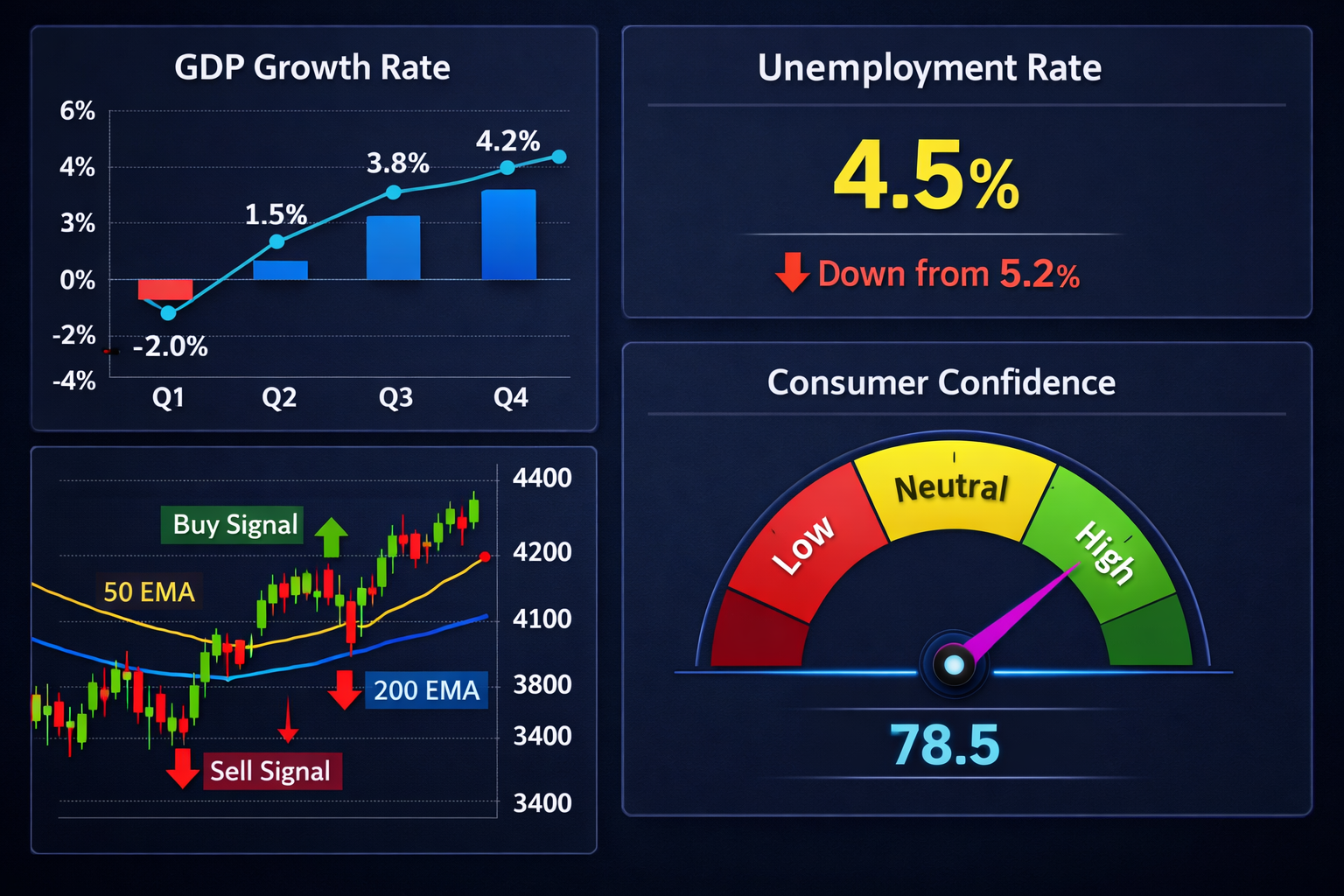
| Economic Indicators | GDP growth rates, unemployment figures, inflation levels | Medium-High |
| News Events | Interest rate changes, geopolitical developments | High |
Not recording an interest rate hike can mean missing key insights that impact bond prices. Using a structured approach like the Trade Reason Checklist helps you capture all relevant contextual information, improving your analysis and future performance.
Market Sentiment and Economic Indicators
When planning your trading strategy for the day, you notice that the GDP growth rate has just been released at 2.5%, which is lower than expected, along with a dovish statement from the central bank governor.
Start by jotting down your first impression:
Initial Sentiment: “The economic outlook looks weaker because of slower growth and hints of easier monetary policy.”
Next, check reliable sources for more details. If an article suggests that market participants are now expecting interest rate cuts, update your sentiment like this:
Sentiment Update: “Market expects a more accommodating stance given the weak GDP data.”
Keep track of technical indicators alongside these economic factors:
- GDP Growth Rate: 7% (below expectations)
- Central Bank Statement: Dovish tone on monetary policy
- Market Expectations: Higher chance of rate cuts
Think about how these factors might influence specific assets, like bonds or forex markets:
Bond Market Implications: “Yields may drop further as investors move towards government bonds due to expected rate cuts.”
By documenting market sentiment and economic indicators in your trading journal, you provide a clearer context for your decisions. Ignoring them can lead to misunderstandings and poor choices.
What could happen if you ignore these economic indicators?
Learn more about effective trading signals to improve your decision-making process.
Next Step: Set up a template in your trading journal to consistently record market sentiment and key economic metrics.
Maintaining Consistency in Your Trading Journal
How do I maintain journal consistency?
- Set aside dedicated time each day for journaling, ideally right after trading sessions when details are still fresh in your mind.
- Create a checklist to guide you through the key elements: technical indicators used, market sentiment analysis, and economic factors that influenced your trades.
- Use a trading journal app link for automated reminders and prompts to keep you on track.
- Regularly review past entries to reinforce what you’ve learned and spot patterns in your trading behavior.
If you don’t stay consistent, it’s easy to skip journaling or stop altogether. Treat your journal like any other essential part of your strategy – make it a non-negotiable habit.
Regular Review and Refinement of Journal Entries
Schedule Regular Review Sessions
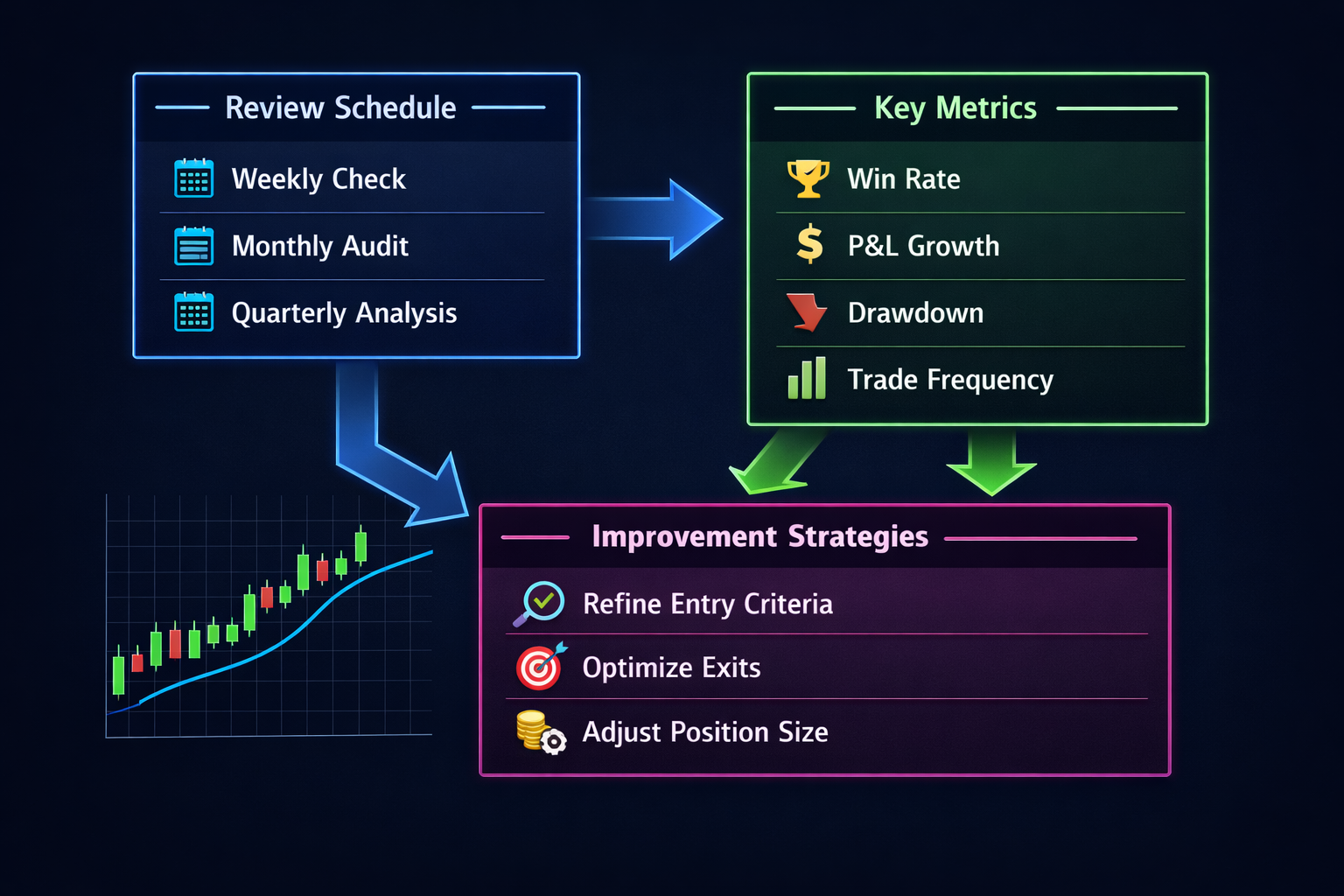
Plan to go over your trading journal entries every quarter or whenever there are major market changes. This helps you learn from both wins and losses.
When reviewing, look for patterns in your trades by analyzing factors like economic indicators and market sentiment. For example, check how GDP releases affected your trades over the past year.
Based on what you find, update your journaling practices to better capture context. Maybe add custom technical indicators or tweak your format as needed.
Think about why certain decisions didn’t work out well and adjust your assumptions accordingly. If a trade failed due to an unexpected economic event, make note of how to handle similar situations in the future.
After each review session, put any new strategies into action right away to see if they improve your performance. This iterative process helps you adapt without waiting for another major market shift.
Compare your performance before and after implementing changes from your reviews. Did your adjusted strategy lead to more consistent profits?
Keep refining your journaling practices over time. Treat it as an evolving tool rather than a static record. Continual improvement is key to getting better at trading.
Don’t fall into the trap of treating your journal just as a historical log without actively engaging with it. Regular review and reflection are crucial for catching critical lessons that can significantly improve your strategy.
Common Mistakes to Avoid When Journaling
When journaling, beginners often trip up in a few key areas that hold them back:
- Failing to track emotions: Write down how you feel before and after each trade. This helps you separate emotional reactions from logical analysis.
- Neglecting contextual details: Include economic news and market sentiment in your entries. These factors shape the outcome of trades.
- Overlooking technical indicators: Note all relevant technical tools, like moving averages or RSI values, that influenced your decisions.
- Lack of consistency: Stick to a consistent format for journal entries. Inconsistency makes it hard to spot patterns over time.
- Avoiding self-reflection: Regularly review and critique your entries without bias. This helps you identify areas where you can improve.
Each mistake can make your trading journal less effective, leading to poor decision-making and missed learning opportunities. For instance, not tracking emotions means missing crucial data about how specific triggers affect your performance.
By avoiding these common pitfalls, you keep your journal a more useful tool for refining your discretionary trading strategy.
Overreliance on Intuition Without Documentation
Relying solely on intuition without documenting your trading decisions can lead to inconsistent performance and missed learning opportunities. For example, if you decide to enter a trade because recent economic data suggests strong market growth tomorrow, there’s no record of why you made that decision.
Intuition alone is unreliable because it lacks the historical context needed to evaluate outcomes properly. According to Van K Tharp’s research, traders who document their logic see a 50% increase in profitability compared to those who don’t.[\[1\]](https://www.investopedia.com/articles/trading/08/document-decision-logic.asp)
Think about the last trade you made based on intuition. How would you know if it was a good decision without reviewing your reasoning later?
To avoid this pitfall, make sure to document every trading decision in your journal.[\[2\]](https://www.investopedia.com/articles/trading/08/recording-contextual-judgment.asp) This practice helps you identify patterns and improve future decisions.
Practical Synthesis: A Decision Framework for Effective Journaling
When deciding what to journal during each trade session, follow these steps:
- Pinpoint Key Decisions: Before placing any trades, write down why you’re making each decision. Include technical indicators like those in our technical indicators guide and chart patterns from our chart patterns guide.
- Note Contextual Factors: Write down any external factors that influenced your decisions, such as market sentiment or economic news. For example, mention how a recent GDP report affected your trading strategy for the day.
- Regular Reviews: Set aside time to review past journal entries every quarter or after significant market changes. This helps you spot patterns and areas where you can improve your trading logic.
Avoid these common mistakes:
- Not integrating journaling into your overall trading plan can lead to missed learning opportunities.
- Relying too much on intuition without proper documentation can result in inconsistent performance.
By sticking to this framework, traders can gain valuable insights from their journals and continually refine their strategies. How will you use this today?
Introduction to Journaling for Discretionary Trading
Journaling is an essential practice in discretionary trading, where traders rely on their judgment and experience rather than strict rules or algorithms. A well-kept journal can provide valuable insights into your trading decisions and help you refine your strategies over time. For beginners looking to improve their trading skills, understanding the basics of journaling is crucial. This article will explore how keeping a detailed trading journal can enhance your discretionary trading approach.
- Journaling helps traders track performance
- Provides insights into decision-making processes
- Aids in identifying patterns and improving strategies
The Importance of Journaling for Traders
As explained in this comprehensive guide from Flows Trading Academy, journaling is a powerful tool that allows traders to document their trades, analyze outcomes, and learn from both successes and failures. By maintaining a consistent record of your trading activities, you can develop a deeper understanding of market dynamics and improve your overall performance.
Technical Analysis in Discretionary Trading
Discretionary traders often use technical analysis to identify potential trade setups. This involves studying chart patterns and using various indicators such as the Relative Strength Index (RSI) or custom-built tools. For a more detailed look at how technical analysis can be applied, check out this article on the RSI indicator and its application in discretionary trading.
Related Articles
To further enhance your understanding of discretionary trading, consider exploring these related articles from Flows Trading Academy:
- Technical Analysis – Learn about different approaches to technical analysis.
- Trading Signals – Discover how trading signals can inform your discretionary decisions.
- 5 Technical Indicators for Beginners – Get started with essential tools.
Apply with Flows
Flows Trading offers a range of resources and tools to help you apply the concepts discussed in this article. By leveraging these resources, you can enhance your discretionary trading strategy and make more informed decisions.
- Use trading journal templates to keep a structured record of your trades.
- Explore custom indicators to personalize your analysis.
Further Reading
For those interested in delving deeper into discretionary trading and technical analysis, here are some additional resources:
- Learn Different Types of Chart Patterns – Understand the visual tools used in technical analysis.
- Improve Trading Decisions with Journaling – Enhance your trading performance through effective journaling.